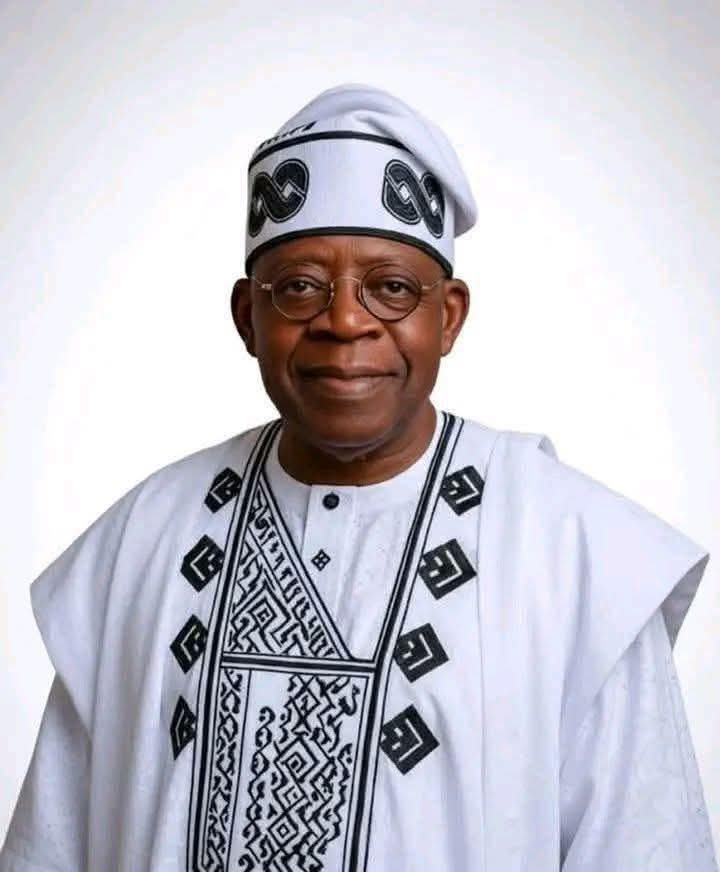
President Bola Ahmed Tinubu
By Steve Otaloro
As Nigeria gradually approaches the 2027 presidential election, it is important to assess leadership not merely by today’s hardships but by the courage to confront decades-old structural problems that previous administrations acknowledged yet failed to resolve.
Throughout Nigeria’s democratic journey, successive governments assembled committees, economic experts, and policy think tanks to recommend solutions capable of transforming the nation’s economy. Their reports consistently identified the same critical reforms: removal of fuel subsidy, exchange-rate liberalization, comprehensive tax reforms, state policing, infrastructure expansion, port revitalization, and fiscal restructuring.
The recommendations were well documented. The political will to implement them was often absent.
For years, governments recognized these reforms as necessary but repeatedly postponed them because they were politically unpopular. Choosing popularity over difficult decisions became the norm, while Nigeria’s economic distortions continued to deepen.
President Bola Ahmed Tinubu broke that cycle. Within days of assuming office, he embarked on reforms that many leaders had acknowledged privately but lacked the courage to execute publicly. Whether one agrees with every policy or not, few can deny that his administration has demonstrated uncommon political courage.
Fuel subsidy is a classic example; Contrary to popular belief, subsidy removal did not unlock a hidden reserve of money sitting somewhere. Previous administrations largely financed the subsidy through borrowing, effectively mortgaging Nigeria’s future to sustain an unsustainable system. Ending the subsidy was aimed at stopping that cycle so that national resources could increasingly be directed toward infrastructure, education, healthcare, security, and long-term development rather than recurrent consumption.
Another significant reform has been the strengthening of fiscal capacity at the subnational level. By increasing allocations to states and supporting local government financial autonomy, the Tinubu administration has created greater opportunities for governors and local councils to address community needs directly. This means citizens now have stronger grounds to demand accountability from their respective state and local governments for roads, schools, healthcare facilities, and other public services.
Leadership is often measured by the choices made when popularity conflicts with national interest. President Tinubu could easily have pursued short-term applause by postponing difficult reforms, maintaining costly subsidies, and preserving an unsustainable status quo. Such decisions might have earned immediate public approval while leaving the underlying economic challenges unresolved.
Instead, he chose the more difficult path. That decision reflects a leadership philosophy built on long-term national transformation rather than temporary political comfort.
His administration has also introduced intervention programmes such as the Nigerian Education Loan Fund (NELFUND), expanded infrastructure investments, accelerated tax reforms, promoted domestic refining capacity, and pursued policies aimed at creating a more productive and competitive economy.
Every major nation that successfully transformed its economy experienced periods of painful adjustment before the benefits became evident. History repeatedly shows that genuine reform is rarely comfortable in its early stages, but it often lays the foundation for sustained prosperity.
Great leadership is not defined solely by the ability to make people comfortable today. It is defined by the willingness to make difficult decisions that secure a better tomorrow.
As Nigerians evaluate the performance of President Bola Ahmed Tinubu ahead of the 2027 election, the fundamental question should not simply be whether the reforms have demanded sacrifices. Rather, it should be whether those sacrifices are directed toward building a stronger, more resilient, and more prosperous Nigeria for future generations.
History often remembers leaders not for choosing the easiest path, but for choosing the right one when it mattered most.
– Steve Otaloro is a public affairs analyst, media strategist, and political communications specialist. He writes on governance, leadership, public policy, and national development.