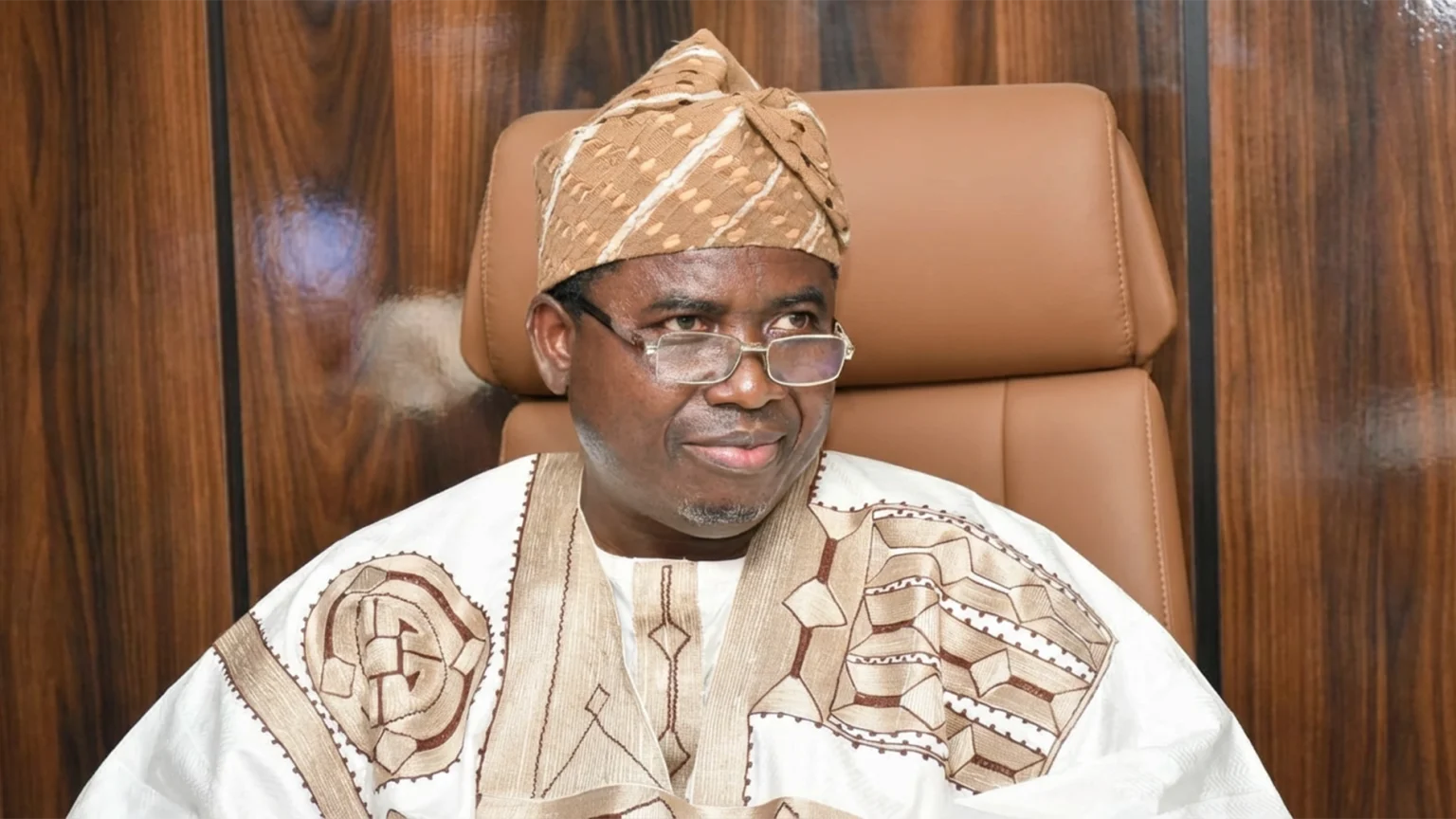
The Independent National Electoral Commission (INEC) will conduct a nationwide mock accreditation exercise in November 2026 as part of measures to test its readiness for the 2027 general elections, Chairman of the commission, Prof. Joash Ojo Amupitan, has said.
Amupitan disclosed this on Friday in Abuja when he received the Chargé d’Affaires of the Canadian High Commission to Nigeria, David Sproule, and other officials of the commission on a courtesy visit to the INEC headquarters.
According to him, the mock accreditation would subject the Bimodal Voter Accreditation System (BVAS) and other electoral equipment to a rigorous field test ahead of the general elections.
He said the exercise was designed to identify and address possible operational challenges before the elections, stressing that the commission was determined to build on the lessons learnt from recent off-cycle elections.
Amupitan said: “We will be conducting a mock accreditation in November 2026 to assess our readiness for the general election. We will be subjecting our electoral equipment, the Bimodal Voter Accreditation System (BVAS), to a rigorous field test to fortify the sanctity of the ballot during the election.”
The INEC chairman said the commission would welcome Canada’s partnership in ensuring the success of the exercise, particularly in the areas of technology, electoral integrity and capacity development.
He said the commission had treated recent off-cycle elections as crucial proving grounds for testing and improving its operational frameworks ahead of the 2027 general election.
Amupitan cited the August 15 Osun State governorship election as a major benchmark, noting that 3,556 of the state’s 3,763 polling units, representing 94.5 per cent, opened for accreditation and voting by 8:30 a.m.
He also highlighted the performance of BVAS in the election, the uploading of results on the INEC Result Viewing (IReV) portal and the commission’s crisis-management measures as areas where lessons had been learnt.
He said the commission would seek to consolidate these gains in preparation for the 2027 elections.
Prof Amupitan disclosed that INEC had established a dedicated Artificial Intelligence (AI) Unit to respond to emerging technological challenges in election administration.
He said the unit would explore the use of AI in areas including data management and voter registration, while also helping the commission confront emerging threats such as deepfakes and AI-generated disinformation.
The chairman disclosed that INEC would participate in the Global Conference on Responsible AI and Elections scheduled to take place in Ottawa, Canada, from September 9 to 11.
He appealed to the Canadian authorities to facilitate the expedited processing of entry visas for members of the INEC delegation attending the conference.
Amupitan said INEC would deploy about 1.4 million ad-hoc personnel across more than 176,000 polling units for the 2027 general elections.
In a related development, the INEC chairman sought stronger collaboration with the Konrad Adenauer Stiftung (KAS) to deepen youth and women’s participation and strengthen democratic culture ahead of the 2027 general elections.
Amupitan, made the call on Friday in Abuja when he received the Country Representative of KAS in Nigeria, Moritz Sprenker, who paid a courtesy visit to the commission.
Amupitan said the engagement came at a critical period as INEC intensified preparations for the 2027 elections, with the commission seeking to strengthen institutional capacity and improve the participation of underrepresented groups in the electoral process.
He acknowledged KAS’s longstanding contributions to democratic development and capacity building in Nigeria and across Africa.
Amupitan said the commission remained committed to improving electoral administration through collaboration with stakeholders, stressing that election management was a multi-stakeholder responsibility.
He said INEC’s priorities ahead of 2027 included strengthening civic and voter education, improving electoral technology, promoting greater participation by youths, women and grassroots communities, and expanding access for persons with disabilities.
Earlier, Sprenker said his visit was his first official courtesy engagement with INEC since assuming office as KAS Country Representative in Nigeria.
He said KAS worked with think tanks, young people, political leaders, civil society organisations, the media and inter-religious partners to strengthen democratic institutions.
Sprenker said the foundation had maintained a longstanding relationship with INEC and expressed readiness to explore further areas of cooperation.
He specifically recalled the three-day capacity-building workshop held in Lagos in March, saying KAS was pleased with the outcome and interested in identifying additional areas where both organisations could collaborate.
The Guardian