By John Dike, Osogbo
Various commercial banks in Osogbo, the Osun State capital, witnessed an unusual influx of customers on Monday, as residents queued to deposit cash believed to have circulated widely during the just-concluded governorship election.
The development, which occurred barely two days after the August 15 governorship poll, was observed at several bank branches visited by our correspondent in the state capital.
At Access Bank, Zenith Bank and Jaiz Bank, unusually long queues were observed within the banking halls as customers waited to deposit cash and carry out other transactions.
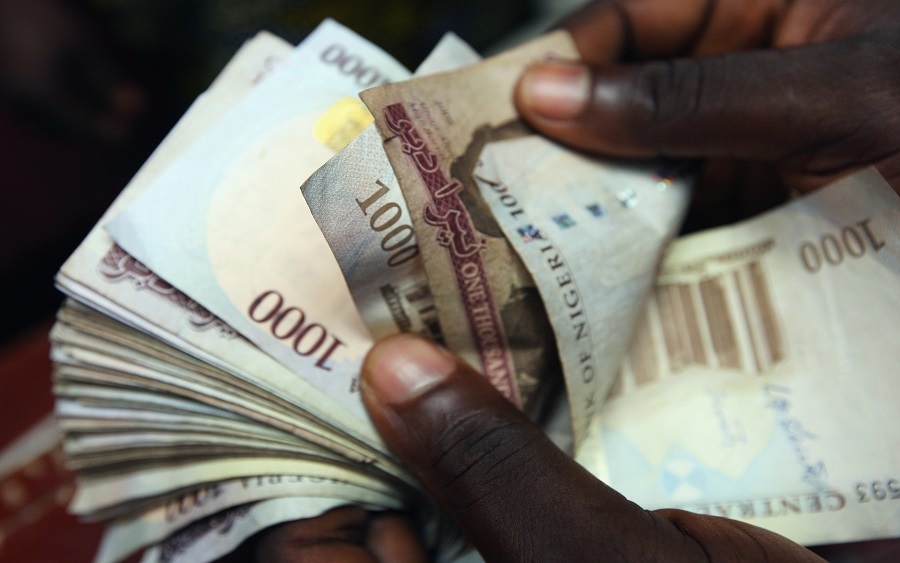
Many of the customers were seen holding bundles of naira notes, while bank officials worked continuously to attend to the large number of people waiting to be served.
Some customers reportedly spent more than 40 minutes on the queues before reaching the counters, with the heavy traffic of customers creating an unusually busy atmosphere in the banking halls.
Although the exact source of the cash being deposited could not be independently established, the development has triggered discussions among residents over the amount of money that allegedly exchanged hands during the election period.
A customer who spoke with our correspondent attributed the unusual crowd at the banks to cash received by some residents during the election.
According to him, substantial amounts of money were allegedly distributed among voters and political supporters before and during the election.
He alleged that vote-buying had assumed a more sophisticated dimension, with some voters reportedly receiving money before election day rather than waiting until the actual voting period.
He said some electorate allegedly received between N30,000 and N50,000, depending on the political actors and areas involved.
The customer, however, did not provide evidence to substantiate the specific amounts claimed, while the allegation could not be independently verified.
He expressed concern that the alleged monetary inducement of voters could have serious consequences for Nigeria’s democratic development.
According to him, the practice could gradually turn elections into contests of financial strength rather than an opportunity for citizens to freely choose leaders based on their competence, programmes and policies.
He also warned that widespread vote-buying could portray Nigeria’s electoral system negatively before the international community.
The customer said the increasing involvement of money in elections could undermine the confidence of ordinary citizens in the democratic process, particularly those who do not have the financial capacity to compete with politicians and political groups allegedly offering inducements.
However, not all the cash being deposited at the banks could be linked to electoral inducement.
Some residents who spoke about the development pointed out that several traders, transport operators, food vendors and other business owners remained active on election day.
Such businesses reportedly generated cash from sales but could not immediately deposit their proceeds because of the peculiar circumstances surrounding the election.
With the election concluded and commercial activities returning to normal, many business operators were said to have taken their earnings to banks for safekeeping.
This could also have contributed significantly to the unusual queues observed at some bank branches.
The presence of business operators among the customers therefore makes it difficult to establish that all the money being deposited was received as election-related inducement.
Cash circulation raises questions
Nevertheless, the unusual movement of cash into banking halls shortly after the election has raised questions about the volume of cash that circulated among residents during the electoral period.
The development is particularly significant given the persistent concerns over vote-buying and voter inducement during elections in Nigeria.
Election observers, civil society organisations and other stakeholders have repeatedly identified vote-buying as one of the major threats to the credibility of elections.
The practice involves offering money or other material benefits to voters in exchange for their support for a particular candidate or political party.
When widespread, such inducement could influence voters who might otherwise have voted according to their personal preferences, policies or assessment of candidates.
The customer who spoke with our correspondent alleged that the payment of money to voters was not necessarily limited to election day.
He claimed that some voters were allegedly approached before the poll and given money as part of efforts to secure their support.
If established, such a development would suggest that financial inducement could have become an increasingly organised component of electoral mobilisation.
However, allegations concerning specific payments and amounts require independent verification before they can be conclusively attributed to any candidate, political party or campaign organisation.
Long queues at banks
At the branches visited, bank officials were seen attending to customers continuously as the queues persisted.
Some customers sat in the banking halls while others stood patiently waiting for their turn.
The situation was particularly noticeable because the election had just been concluded, prompting speculation among some residents that the cash deposits could be connected to the political activities of the preceding days.
However, banking officials did not disclose details about the nature or source of the deposits observed by our correspondent.
There was also no indication that the banks had classified the transactions as election-related.
Attempts to determine the volume of cash deposited or the number of election-related transactions were not independently established as of the time of filing this report.
Concerns over Nigeria’s democracy
The development has nevertheless revived concerns about the growing influence of money on Nigeria’s electoral process.
Political analysts and civil society groups have long argued that vote-buying could weaken democratic accountability because politicians who spend huge sums to secure electoral support may subsequently prioritise recovering their financial investments after assuming office.
The practice could also disadvantage candidates with limited financial resources, regardless of the strength of their programmes or popularity among voters.
There are also concerns that vulnerable voters may become increasingly dependent on short-term financial inducements rather than demanding long-term development, employment opportunities, quality healthcare, education, infrastructure and other democratic dividends from political office holders.
For some residents, the alleged payment of between N30,000 and N50,000 to voters represents a significant amount of money in a state where many households are struggling with economic pressures.
Yet, critics argue that the immediate financial benefit of such payments could come at the expense of the broader interests of the electorate if voters are induced to support candidates without considering their records and policy proposals.
Need for stronger enforcement
The situation has therefore renewed calls for stronger enforcement of electoral laws against vote-buying and other forms of voter inducement.
Stakeholders have also called for greater public awareness to enable voters to understand the long-term consequences of selling their votes.
While cash may provide temporary relief, supporters of electoral reforms argue that voters should be encouraged to assess candidates based on their programmes, records, integrity and capacity to deliver good governance.
For the banks, the rush observed on Monday may simply reflect increased post-election cash deposits from legitimate businesses and residents.
But for observers of Nigeria’s electoral process, the development has provided another reason to examine the role of cash before, during and immediately after elections
As the dust settles on the Osun governorship election, questions remain over how much money circulated during the campaign and voting period, how much of it was linked to legitimate commercial activities and how much, if any, was used to induce voters.