

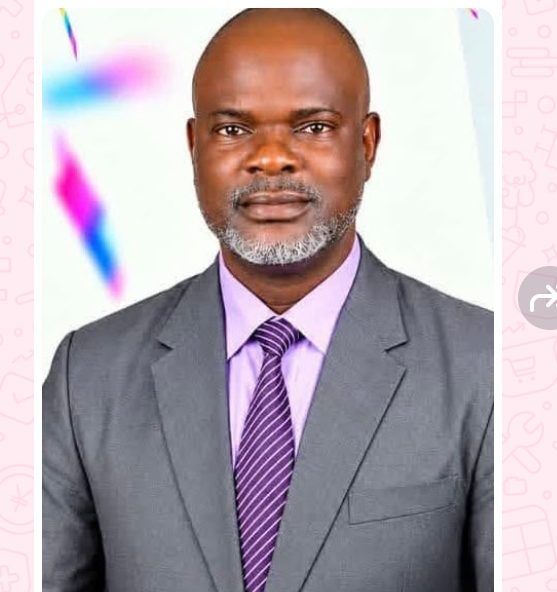
The Ondo State College of Health Technology, Akure, is to make computer studies compulsory for all students as part of efforts to improve digital literacy, strengthen academic standards and enhance their employability.
The newly appointed Provost of the college, Dr. Abayomi Logo, disclosed this in an interview with The Hope in Akure on Monday, saying his administration would also establish a standard Information and Communication Technology (ICT) centre and introduce additional health-related programmes to address manpower shortages in the state’s health sector.
He said the initiatives were aimed at improving the quality of training at the institution and aligning its operations with the development agenda of Ondo State Governor, Dr Lucky Orimisan Aiyedatiwa.
According to Logo, his administration would prioritise digital literacy, quality training, accreditation of academic programmes and the production of competent healthcare professionals.
He explained that computer proficiency would be compulsory for students across all departments, noting that digital skills had become indispensable in the modern workplace.
“Once you enter the College of Health Technology, even if you don’t know how to operate a computer, you will learn. Computer is going to be a compulsory course because, these days, you cannot get a job without computer knowledge,” he said.
The provost said the proposed ICT centre would provide facilities for teaching, examinations and other academic activities, while also serving as a centre for external examinations conducted by bodies such as the Joint Admissions and Matriculation Board (JAMB).
He added that the facility would reduce the cost and logistical challenges associated with transporting students to external examination centres, while creating opportunities for the institution to generate additional revenue.
Logo commended Aiyedatiwa for his administration’s investment in the institution, particularly in infrastructure development and the accreditation of academic programmes.
He said the government’s support had strengthened the college’s capacity to deliver quality education, adding that his administration would sustain existing accreditation efforts and seek approval for additional programmes.
The provost also announced plans to introduce more health-related courses, particularly sonography, to address critical manpower shortages in the state’s healthcare system.
According to him, the state government has invested substantially in modern medical equipment, including ultrasound machines and CT scanners, but the shortage of adequately trained personnel remains a major concern.
He said introducing sonography training would help produce skilled personnel to operate ultrasound equipment in hospitals and health centres, including facilities in remote communities.
Logo explained that trained sonography personnel could provide scanning services and refer findings to specialists for interpretation, thereby improving access to diagnostic services and ensuring that investments in medical equipment translated into better healthcare delivery.
“We are going to introduce that course because it is very important. Whatever the government has put in place for the people of the state, the human resource gap must be filled,” he said.
He added that the college would continue to explore other relevant programmes capable of producing competent health workers to meet the state’s evolving healthcare needs.
On academic standards, Logo pledged to strengthen discipline and ensure that students received quality instruction from their lecturers.
He warned that his administration would not tolerate admission irregularities, insisting that only qualified candidates would be admitted and that students must demonstrate commitment to their studies.
He said he had engaged the institution’s management on the need to improve teaching standards and ensure that lecturers remained available to perform their duties.
Describing the college as critical to the production of skilled healthcare personnel, the provost said the quality of its graduates would determine the impact of their training on communities.
He cited health information management as an example, noting that graduates in the field needed adequate computer skills to collect, process and manage health data for effective planning and policy formulation.
He said his administration would work towards providing sufficient computers and developing the proposed ICT centre, while engaging relevant stakeholders to secure the necessary support.
On infrastructure, Logo identified the poor condition of the institution’s internal road network as one of its major challenges, particularly during the rainy season.
He expressed optimism that the state government would address the problem, noting that improved roads would enhance accessibility, facilitate movement within the campus and create a more conducive learning environment.
The provost said he would engage relevant authorities and stakeholders to draw attention to the condition of the roads, expressing confidence that the necessary intervention would be made.
He also identified campus security as an area requiring attention, raising concerns about individuals who were no longer students but allegedly continued to enter the institution under the guise of being students.
He said his administration would strengthen security and introduce thorough screening measures to distinguish legitimate students from unauthorised persons who might threaten peace on campus.
Logo, however, described the college as peaceful and expressed his determination to sustain the atmosphere of calm and cooperation.
Addressing students, he urged them to remain focused on their academic pursuits and avoid distractions that could undermine their education.
He acknowledged that students, particularly young people in the digital age, faced numerous distractions but advised them to prioritise their studies while participating responsibly in extracurricular activities.
“The major reason you left your parents’ or guardians’ homes to come to the College of Health Technology is to learn. You should not allow distractions to take you away from that purpose,” he said.
He also urged student leaders to use their positions responsibly, stressing that leadership among their peers should be regarded as an opportunity to serve rather than a privilege to intimidate others.
The provost assured students of his accessibility, saying his previous engagements with the institution and its students had given him an understanding of their concerns and aspirations.
He added that his experience as a former student union leader would help him relate to their needs and promote mutual understanding.
Logo expressed appreciation to Aiyedatiwa for the opportunity to serve, describing his appointment as a responsibility to contribute to the development of the institution and the state.
He said his administration would work with the college community to implement the government’s education and healthcare objectives, stressing that the appointment should benefit the institution as a whole rather than an individual.
“The appointment is not for me alone; it is for everybody. We are going to embrace it and work together,” he said.
He pledged to bring his professional experience and commitment to public service to bear on the administration of the college, with the ultimate goal of improving training standards and producing healthcare professionals capable of meeting the needs of Ondo State and beyond.
THE HOPE


