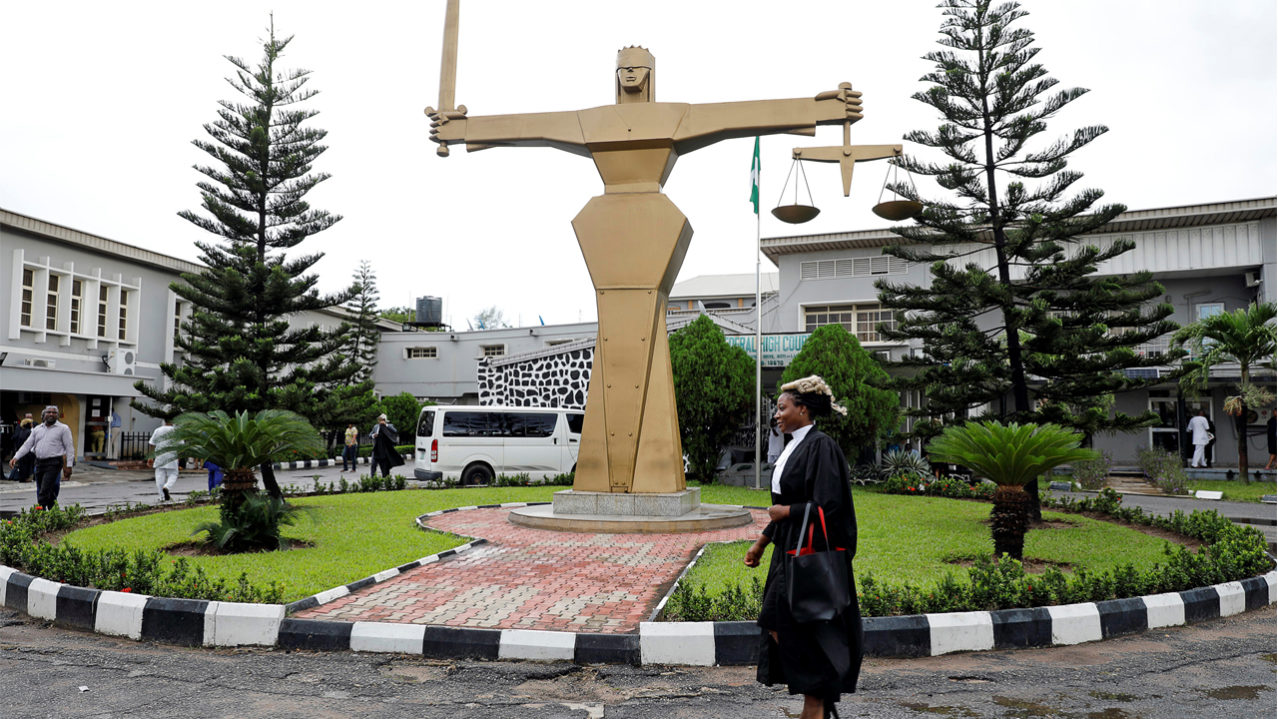
The Federal High Court in Abuja has affirmed the powers of the Independent National Electoral Commission to issue and alter election timetables for the conduct of elections, even as the electoral body appeals an earlier judgment nullifying parts of its revised guidelines for the 2027 general elections.
Justice James Omotosho, while delivering judgment on Tuesday in a suit filed by the Social Democratic Party in Suit No. FHC/ABJ/CS/720/2026, held that INEC was constitutionally empowered to issue election timetables and schedules of activities for elections.
The judge, however, ruled that while the commission possesses such powers, it must exercise them strictly within the timelines prescribed by the Electoral Act, 2026.
The SDP had, in an originating summons filed on April 9, raised five questions for determination, including “whether having regard to Sections 82 and 84(1) of the Electoral Act, 2026, the defendant’s powers to receive notices, attend, observe and monitor party primaries extend to fixing or prescribing the timetable within which political parties must conduct their primaries.”
The party sought seven reliefs, among them an order restraining INEC from enforcing timelines allegedly inconsistent with the Electoral Act, 2026.
The plaintiff also prayed the court to declare that “the defendant cannot lawfully abridge or vary the 120-day statutory period in section 29(1) of the Electoral Act, 2026 by its timetable or press release dated 27th March, 2026.”
In its defence, INEC argued that its powers extended beyond receiving notices and monitoring party primaries to include organising and supervising elections, as well as issuing election timetables to ensure compliance with the Electoral Act.
The commission maintained that its revised timetable did not conflict with the Constitution or the Electoral Act and insisted that the suit was premature and academic.
Delivering judgment, Justice Omotosho held that although subsidiary legislation must not conflict with the principal legislation, INEC was empowered under Section 151 of the Electoral Act, 2026 to issue subsidiary regulations, including election timetables.
“The issuance of a timetable is to give effect to the Electoral Act, especially with all its various timelines. The nature of the timetable ensures order and proper arrangement in the activities of political parties in the lead up to elections.
“Election timetable is a chain of events or actions starting from timeframe for the submission of membership register of political parties to be used for the purpose of the primaries and the election, timeframe for primaries and eventually gets to the real voting.
“Election timetable is not only date for voting but preparatory steps — which are conditional to valid election and nominations must be included in election timetable,” the court held.
Omotosho further declared that, “Election timetable without date for submission of parties’ membership register, timeframe for primaries, etc. is inchoate.
“Without this timetable, there would be chaos in our electoral system. This court is therefore convinced that the defendant is empowered by the Electoral Act to issue timetables for elections.
“To further buttress this, the Constitution of the Federal Republic of Nigeria, which is the grundnorm of all laws in Nigeria, alluded to this under Section 285(14) of the Constitution (as amended).”
On the issue of withdrawal and substitution of candidates, Justice Omotosho held that Section 31 of the Electoral Act, 2026 gives political parties up to 90 days before an election to submit notices of withdrawal and supporting affidavits to INEC.
According to him, INEC’s revised timetable fixed August 22, 2026 and September 19, 2026 for presidential, National Assembly, governorship and House of Assembly candidates, thereby shortening the statutory period allowed under the law.
“The defendant therefore acted ultra vires its powers by reducing the time allowed by political parties to convey withdrawal and sworn affidavit to the defendant contrary to the 90 days stipulated by the Electoral Act, 2026.
“In the final analysis, the defendant is empowered by law to issue timetable for elections but it must do so in compliance with the time frames in the Electoral Act 2026.
“Therefore, the claims of the plaintiff (SDP) succeeds in part,” the judge said.
Omotosho consequently declared that the suit was not statute-barred, holding that the March 27 press statement by INEC gave rise to the cause of action filed on April 9.
The court further declared that INEC is empowered by the Constitution and the Electoral Act to issue and alter election timetables as it deems fit, provided such alterations comply strictly with statutory timelines.
“This honourable court hereby declared that the defendant is also empowered to alter the timetable for the ultimate aim of giving effect to the provisions of the Constitution of the Federal Republic of Nigeria 1999 (as amended) and Electoral Act.
“This honourable court hereby declared that the defendant cannot lawfully abridge or vary the 90-day period for substitution of candidates under Section 31 of the Electoral Act, 2026.
“This honourable court hereby declared that the defendant cannot abridge the time stipulated in Section 29(1) of the Electoral Act, 2026 given to political parties to submit the names of their candidates at least 120 days to the date of election,” the court held.
Justice Omotosho further stated that, “This honourable court hereby declared that the defendant is hereby ordered to amend the Election Timetable 2027 and Schedule of Activities in compliance with Sections 29(1) and 31 of the Electoral Act, 2026.
“This honourable court hereby declared that the defendant requesting for membership register of political parties and giving timeframe within which to conduct primaries is not ultra vires the powers of the defendant.”
The court also declared void the deadlines fixed by INEC for the submission of nomination forms to the extent of their inconsistencies with the clear provisions of Section 29(1) of the Electoral Act, 2026.
The judgment comes days after Justice Muhammed Umar, in a separate suit filed by the Youth Party, nullified aspects of INEC’s revised timetable and schedule of activities for the 2027 general elections.
In Suit No: FHC/ABJ/CS/517/2026 between the Youth Party and INEC, Justice Umar held that the commission could not lawfully shorten the timelines provided under Section 29(1) of the Electoral Act, 2026 for the submission of party membership records and candidates’ particulars.
Following that judgment, INEC filed a notice of appeal dated May 25, asking the Court of Appeal to set aside the decision of the lower court.
According to the notice of appeal, the commission stated that it was “dissatisfied with the Judgement delivered by the Federal High Court, sitting in Abuja, FCT (by Hon. Justice M.G. Umar) on 20th May 2026, in Suit No. FHC/ABJ/CS/517/2026 between Youth Party vs Independent National Electoral Commission (INEC) doth hereby appeal to the Court of Appeal.”
INEC asked the appellate court to determine the appeal on nine grounds and grant orders allowing the appeal.
The commission also argued that its preliminary objection was not fully determined and alleged denial of fair hearing by the trial court.
The Punch