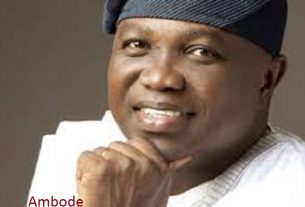
The Chief of Staff to the President, Femi Gbajabiamila, has said President Bola Ahmed Tinubu’s ongoing reforms are designed to secure Nigeria’s long-term stability rather than chase short-term political gains.
Speaking on Tuesday at the State House, Abuja, while receiving leaders of the Working People United (WOPU), Gbajabiamila said the administration’s sweeping policy choices reflect “a willingness to confront difficult realities to reposition the country’s economy and governance structures”.
He acknowledged that the measures currently being implemented have been tough on many Nigerians but insisted they are “necessary corrections to long-standing structural issues that previous administrations avoided”.
“True leadership requires taking decisions that may not be immediately popular but are ultimately beneficial to the nation’s future,” Gbajabiamila said.
He noted that President Tinubu had shown rare resolve by embarking on policies that are already reshaping national discourse. According to him, attention has shifted from questioning the necessity of reforms to discussing how best they should be implemented.
Drawing an analogy, Gbajabiamila compared the country’s ongoing economic transition to a process that “naturally comes with initial discomfort before yielding stability”, expressing confidence that Nigeria is gradually moving towards a more sustainable phase.
The Chief of Staff also commended WOPU’s approach to engagement, describing it as “a constructive model that favours collaboration over confrontation”. He said the group’s recognition of government efforts reflects a growing maturity in civic dialogue, where labour and civil movements can participate meaningfully in governance.
Gbajabiamila assured the delegation of the Presidency’s readiness to partner with stakeholders to promote unity, economic growth, and inclusive development.
In his remarks, the Coordinator-General of WOPU, Comrade Williams Akporeha, said the organisation represents a broad coalition of Nigerian workers, professionals, entrepreneurs, and youths united by a shared goal of national progress.
He explained that WOPU, which has structures across all states, local governments, and wards of the federation, is committed to mobilising grassroots support for the government’s reform agenda.
“We believe that cooperation between government and organised groups is key to strengthening democracy and building public trust,” Akporeha said.
He expressed optimism that sustained collaboration between civil society and government would accelerate national development and deliver tangible improvements in citizens’ lives.
The meeting ended with both sides reaffirming their commitment to dialogue and partnership as Nigeria navigates its current phase of economic and institutional transformation.