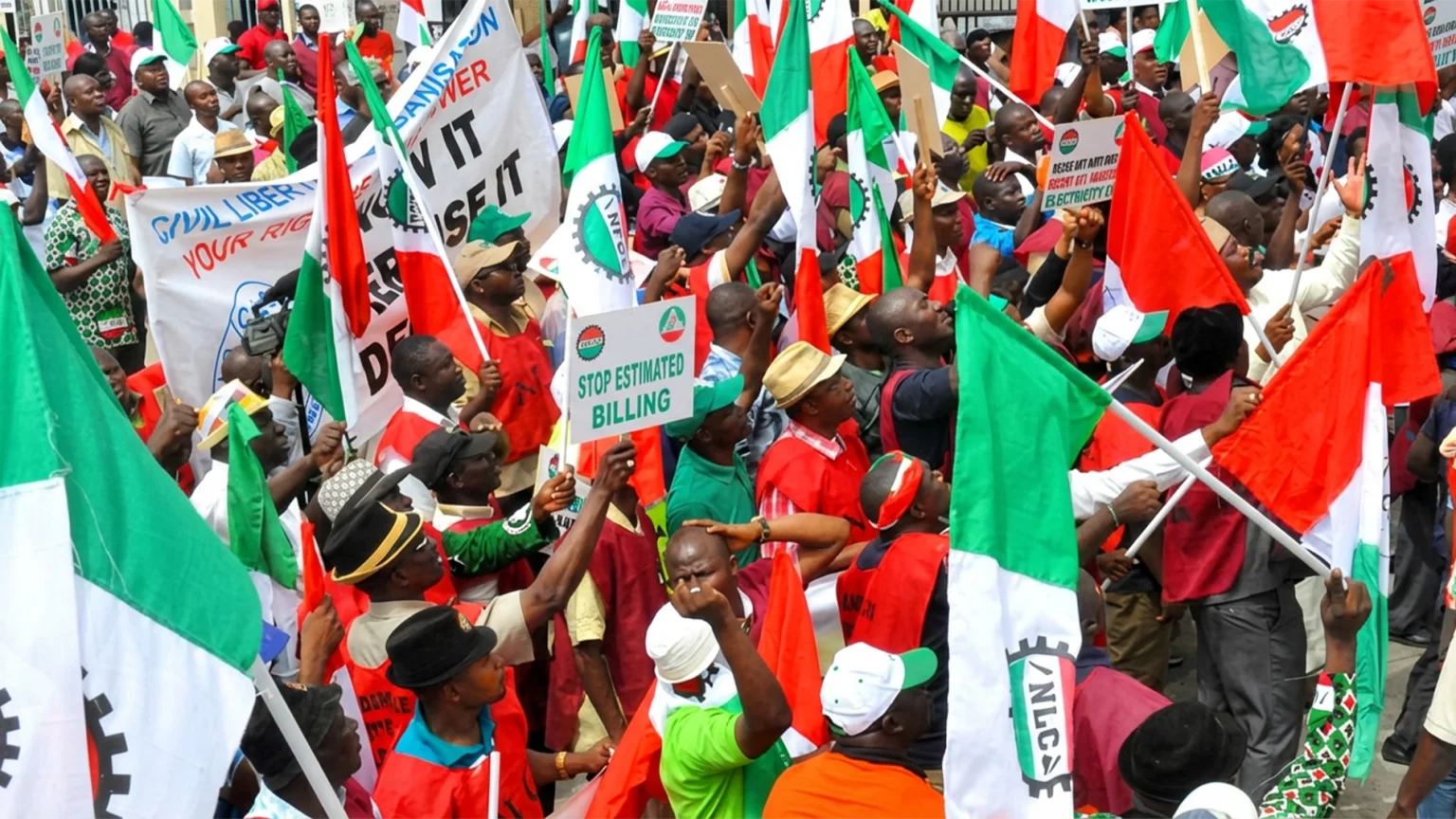
On this auspicious international May Day, the plight of Nigerian workers remains as harrowing as it is pathetic, warranting more sober reflection. The working population is the engine room of a functional society that, in turn, should grease it for efficiency. In Nigeria, workers are hard done by the culpable, inefficient state that perpetually scorns them. But inherent in the catastrophe are opportunities for beleaguered workers to push back and demand better deals from the 2027 political season. And if there is ever any time the workers need to harmonise their numerical strength in enlightened self-interest, it is now!
The fate of world workers has rarely been rosy. Karl Marx and Friedrich Engels, since 1848, repudiated the oppressive lot of workers in the famous The Communist Manifesto, concluding with the time immemorial battle cry: “Proletarians of all countries, unite!” Obedience to the slogan has significantly turned the tide of the employer-employee class conflicts in favour of workers in all civilised societies, including the 80-plus that are commemorating International Labour Day today. Sadly, the Nigerian state is an agonising exception in that triumphant struggle.
The parlous condition of the country mirrors that of its workers more. In its repressive administrative model, the state is a dichotomy between the ruling elites who live in affluence and the impoverished masses who are in squalor. In the mix are alienated workers living in a state that commoditises their very existence and pays a pittance to have them perpetually dependent on the ruling bourgeoisie. Compounded by the maladministration of the socio-economic landscape, Nigerian workers have long been swimming against the current.
First, the ruling elite has connived to undermine industrialisation programmes and scare investors away, resulting in the government becoming the largest employer of labour. Second, unfriendly business environments and other economic woes, exacerbated by policy choices of the President Bola Tinubu-led administration, not only starved the proletarian population of new opportunities but also pushed many out of work, with the unemployment rate officially pegged at 40 per cent. A lot more of the employed are actually in the underemployment circle, earning less than the N70,000 minimum wage a month!
The most harrowing aspect is that workers are also battered by high inflation, which has officially ballooned to 15.38 per cent. The cost of living is rising amid low pay, deprivation of basic amenities, and widespread insecurity. The Nigerian Living Standards Survey (NLSS) estimated that a whopping 40.1 per cent (82.9 million) Nigerians are poor by the national standard – earning below N2800 per day. As of April 2026, the number of Nigerians living in poverty has risen to an estimated 140–141 million, representing approximately 62–63% of the population. Despite recent macroeconomic reforms and easing inflation, the World Bank indicates that high living costs and weak income growth have accelerated poverty from 56% in 2023 to 63% in 2025/2026. In a country that offers very little hope, the popular option is to migrate to Europe, America, and other African countries that value and reward their competencies. Those without the means in the North are migrating to the South in droves to escape daylight terrorism, kidnapping and killings.
The perilous times for Nigerian workers notwithstanding, their unassailable relevance is not lost on their oppressors and the state. In all establishments, be it public or private, offices or homes, boardrooms or entrance gates, are categories of workers who wheel activities. They are the lifeblood of any organisation, and no right-thinking employer can take them for granted. And it is in that consciousness that abounds the unspoken power of one labour force that unionism rides on. In Nigeria, according to the National Bureau of Statistics (NBS), over 30 million Nigerians are in active employment. Another half of that figure is underemployed. Prima facie, that is an irrepressible potential for people power that no group of oppressors or repressive state can outclass. And therein lies the hope of Nigerian workers, in particular, and the country in general.
Regrettably, the labour unions have rarely had more than a superficial interest in the floundering policies of the state, nor have they attempted to gain a major foothold in the general welfare of their members. The last real activism from the unions was during the military rule. What has replaced the old unionism is corrupt hobnobbing with politicians, divide-and-rule tactics by the unions, internal wrangling, sectionalism, and a complete lack of cohesion among sister unions. Their loss has been the gains of wrongheaded officeholders who have brazenly assumed the role of emperors over general affairs. Otherwise, why should essential workers in healthcare services, university lecturers, and judicial workers embark on long-drawn-out industrial actions when a solidarity protest by the NLC or even NUPENG would have forced an intransigent administration to buckle down and act faster?
Why should scores of Nigerians and workers get killed almost daily, and the entire workers’ unions see no reason to demand accountability for national resources that are routinely railroaded into security without appreciable progress? Why is there so much poverty, unpaid salaries, outstanding pensions and gratuities in states where executive governors freely squander the state resources with reckless abandonment? Why should the power sector and refineries continue to defy solutions despite huge capital investments, with the country unable to meet its production quota, and the union of workers seeing no existential doom awaiting the state? The current labour unions have really not shown remarkable activism.
On the flip side, there is much more that the workers’ unions can do to turn the corner and change the narrative. As major stakeholders with numerical advantage in the Nigerian project, it begins with telling the ruling elites, ‘enough is enough’ in the consistent mismanagement of general concerns. It begins with formidable unity, groups and teams that cannot be bought by moneybags currently milling around. The workers must realise that the country is today facing the consequences of the wrong choices made yesterday.
And to have a better Nigeria tomorrow, and deservedly so, it needs to make choices at the next poll. The political season offers an opportunity for workers to unite to set the agenda and not settle for scoundrels. They must begin separating the wheat from the chaff, bargain, and elicit a detailed strategy for how aspirants will address each of their concerns. To these millions of workers belongs the power to rally their immediate environment to choose only those they can trust and can hold accountable.
Similarly, it is imperative to step up accountability at every level of our corporate existence. The enormity of this corruption walking on all four in Nigeria is huge, and it cuts across the board. Collectively, we must look inwards and demand probity from the system. At every segment, be it public, private and domestic, employers must learn to treat their employees well enough, and vice versa, for mutual survival.
Beyond the charade of workers’ parades that often commemorate the May Day celebration across the 36 states, the larger consciousness should revolve around an end to oppressive regimes, irresponsible leadership, and the pervasive corruption that have made living in Nigeria harrowing. It is time for workers in their numbers to push back through their bargaining power. They have nothing to lose but their misery. Nigerian workers, unite! Happy workers’ day.
The Guardian