By Wale Ojo-Lanre
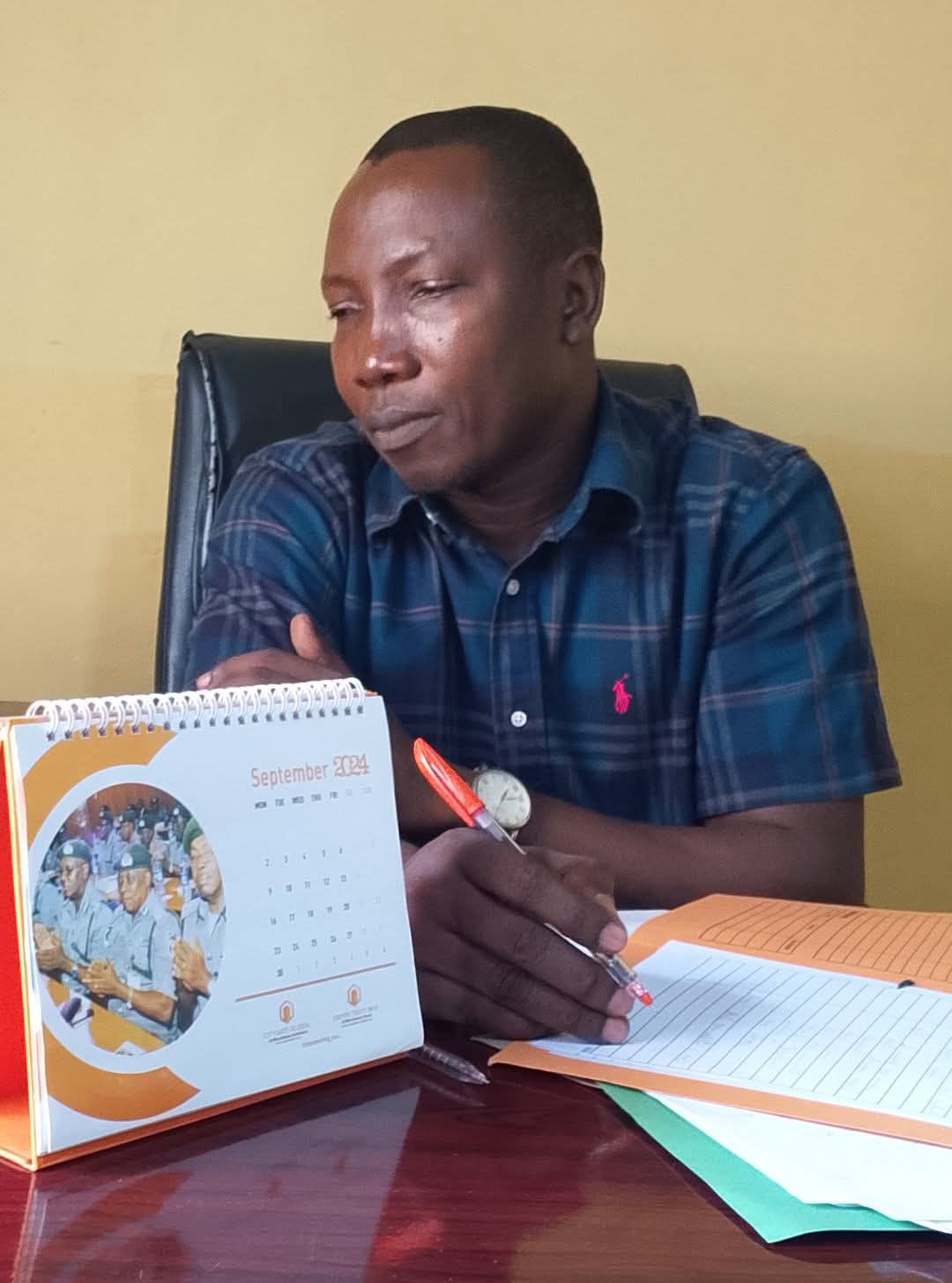
Look at his face!
What can you make of it?
Yes.
His name is Dr Tope Aladetuyi, a native of Ado-Ekiti and one of the medical doctors at the Federal Medical Centre, Ido-Ekiti, Ado-Ekiti Annex.
Look at him again.
Don’t mind that innocent face.
He looks harmless, doesn’t he?
Gentle?
Calm?
Or does he look wicked?
Well, appearances can be terribly deceptive.
That is why they warn us never to judge a book by its cover.
I encountered Dr Tope Aladetuyi recently, and what happened inside his consulting room compelled me to write this.
But before I tell you what this Ado-Ekiti doctor did, permit me to take you somewhere else.
To Ibadan.
To the University College Hospital, UCH.
My bitter experience there when my granddaughter was admitted remains painfully engraved in my memory.
The emotional humiliation and treatment we experienced were harrowing. That encounter left me with a deep apprehension about public hospitals.
Since then, whenever circumstances compel me to enter a government medical facility, something happens inside me.
I become uneasy.
Memories return.
The hostile encounters.
The hard faces.
The hurried conversations.
The feeling that a frightened patient or worried relative is sometimes treated as though asking a simple question is itself an offence.
A hospital should be a house of healing. Yet poor human relations can turn it into an inhospitable place.
So when circumstances recently required me to ferry someone to the Federal Medical Centre, Ido-Ekiti, Ado-Ekiti Annex, my mind jolted.
“Here we go again,” I thought.
My old UCH experience began replaying itself.
Worse still, we were already troubled by the gravity of what we imagined might be wrong.
You know what fear does to the human mind.
Heart attack?
Kidney problem?
Something worse?
Before a doctor diagnoses anything, anxiety has already diagnosed ten diseases!
Then we were ushered into the consulting room.
And there he was.
Dr Tope Aladetuyi.
I looked at his face.
He looked at us.
And I waited.
Perhaps, I thought, the familiar hospital drama was about to begin.
Then something happened.
The man smiled.
Not the mechanical smile of someone merely fulfilling an obligation.
It was warm and reassuring.
“Please, sit down.”
Huh?
I looked at him again.
A doctor in a government hospital welcoming us so courteously?
We settled into the chairs.
Then he turned to the patient.
“Relax. Relax. You’re here now. Tell me what is wrong.”
And that was when Dr Aladetuyi began his treatment.
No injection.
No tablet.
No prescription.
His first medication was reassurance.
He allowed the patient to speak.
He listened attentively, without interruption or intimidation.
The patient explained the symptoms while Dr Aladetuyi carefully absorbed the details.
Then came that reassuring smile again.
“There is no need to be afraid.”
Simple words.
Powerful medicine.
When the patient finished, he still asked:
“Any other complaint?”
“None.”
He proceeded methodically with the consultation, explaining his assessment and what needed to be done in clear, understandable language.
No unnecessary medical jargon.
No air of superiority.
No attempt to make the patient feel ignorant.
He examined.
He explained.
He reassured.
And then he asked:
“Are you okay now?”
The patient’s response struck me:
“Yes. You have lifted my burden. The way you spoke to me has raised my hope. You have healed me even before I use the prescribed drugs.”
You have healed me even before I use the prescribed drugs.
What a statement!
It also says something about a healthcare culture in which ordinary courtesy can sometimes appear extraordinary.
As I sat there, I found myself comparing this encounter with the fears I had carried from previous experiences.
Why should courtesy from a doctor surprise anybody?
Why should listening patiently to a sick person appear exceptional?
Why should a frightened patient consider himself fortunate merely because the doctor shows empathy?
Isn’t medicine fundamentally about care?
Then I looked at Dr Tope Aladetuyi again.
Ah!
So this was the wicked doctor whose face I had been studying!
Now I understood his wickedness.
He had wickedly dismantled my prejudice.
He had wickedly attacked the fear I carried into that hospital.
He had wickedly replaced anxiety with hope.
And, without knowing it, he had challenged a painful impression I had carried for years about public healthcare.
That is the wickedness of Dr Tope Aladetuyi!
Wickedly humane.
Wickedly courteous.
Wickedly professional.
And wickedly committed to ensuring that the person sitting before him feels like a human being, not merely another case file.
For every frightened patient is somebody’s father, mother, husband, wife, brother, sister or child.
And sometimes, before medication begins its work on the body, reassurance must begin its work on the mind.
Dr Aladetuyi demonstrated something that sophisticated equipment, technology and medical textbooks alone cannot manufacture:
Human empathy.
Our hospitals need more of it.
Because good manners are also good medicine.
A prescription may treat the body, but compassion can begin the healing before the first tablet is swallowed.
So, Dr Tope Aladetuyi:
Keep smiling.
Keep listening.
Keep reassuring.
Keep healing.
And please, remain wicked!
Nigeria’s public hospitals need more of your kind of wickedness.
God bless you.
Omo Ewi Otu!
Omo Ado Oora!
They say Ado people steal agolo agira
But your own Ado does not steal agolo agira
Rather you steal fear from patients.
You steal anxiety from troubled minds.
And you replace them with hope.
Keep it up, Dr Aladetuyi.
With humanity complementing your medical knowledge, you will soar beyond your imagination.
Káre o!
Wale Ojo-Lanre, Esq.