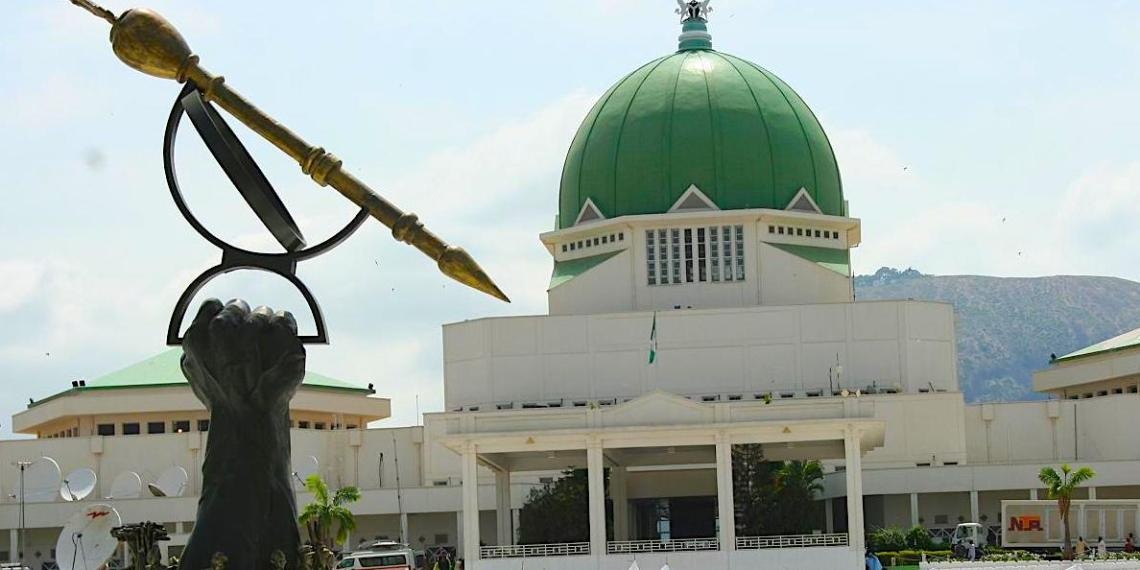
The House of Representatives on Wednesday debated the general principles of a Bill for an Act to establish a 50-year national economic plan for the country.
At a plenary session presided over by the Deputy Speaker, Benjamin Kalu, the sponsor of the bill, Amobi Ogah, lamented the poor attitude to development plans over the years, noting that the proposed legislation provides a legal framework for the sustained implementation of the nation’s development plans.
He said, “A 50-year national economic plan for Nigeria 2026–2076 represents a bold and transformative legislative initiative aimed at addressing one of the country’s persistent development challenges—policy inconsistency and short-term economic planning.
“The proposed bill seeks to establish a legally binding, long-term economic framework that will guide national development across successive administrations.
“By institutionalising continuity, coordination and accountability, the bill is designed to reposition Nigeria’s economy for sustainable growth and global competitiveness.”
Nigeria’s economy has been characterised by a succession of development plans, many of which were ambitious in conception but weak in implementation.
From Vision 2010 to Vision 20:2020 and the Economic Recovery and Growth Plan, the country has repeatedly demonstrated its capacity to plan, but not necessarily to sustain those plans.
Frequent changes in government priorities, weak institutional frameworks and the absence of legal enforceability have often led to policy reversals, abandoned projects and inefficient use of public resources.
Ogah said, “These structural deficiencies have hindered long-term economic transformation, leaving the country vulnerable to external shocks, particularly fluctuations in global oil prices.
“The proposed 50-year national economic plan addresses those shortcomings by providing a stable and predictable economic direction over an extended period. One of its most significant economic contributions is the promotion of macroeconomic stability.”
He noted that a long-term plan enables the government to articulate clear fiscal and monetary priorities, thereby reducing uncertainty and volatility.
“Stability in economic policy is essential for maintaining investor confidence, managing inflation and ensuring sustainable growth.
“By anchoring economic decisions within a long-term framework, Nigeria can better withstand external shocks and maintain steady progress.
“The absence of continuity in Nigeria’s economic policies has historically discouraged long-term investment, particularly in capital-intensive sectors such as infrastructure, manufacturing and energy.
“A legally binding 50-year plan sends a strong signal of policy credibility and commitment, thereby reducing investment risk and attracting capital inflows,” he added.
Drawing references from other jurisdictions, the Abia lawmaker said the bill reflects a synthesis of global best practices while addressing local realities in Africa.
“Countries such as South Africa, Rwanda and Botswana have adopted long-term development plans.
“At the continental level, the African Union’s Agenda 2063 provides a shared vision for development,” he added.
Specifically, the bill aims to promote diversification of the Nigerian economy, “strengthen institutional coordination in economic planning and provide legal backing for implementation, monitoring and evaluation.”
It further introduces compliance and enforcement mechanisms for all government institutions and enhances investor confidence through predictable economic policies.
In his contribution, House Leader, Prof. Julius Ihonvbere, urged lawmakers to support the bill, saying, “this is not even about the annual budget but a framework to reposition planning through discipline. This way, any party in power will not deviate from it.”
On his part, Plateau lawmaker, Yusuf Gagdi, said Nigeria witnessed much of its economic growth during the military regime of General Yakubu Gowon “through the implementation of National Development Plans. We started having problems when we abandoned agriculture for something else.”
The bill is expected to return to the floor of the House for the third and final reading ahead of its transmission to the Senate for concurrence.
The Punch