

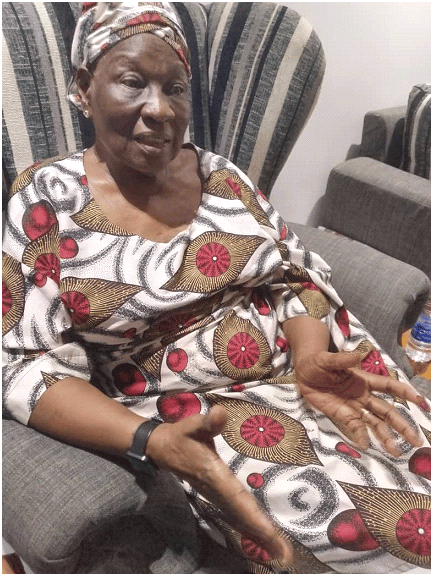
Mrs Bike Akinduro
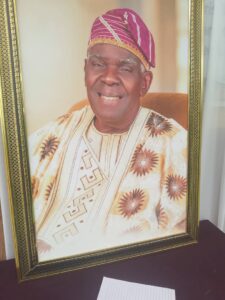
In this interview with FATIMA MURAINA, Mrs Bike Akinduro, a retired Permanent Secretary in Ondo State, speaks about her late husband, Solomon Akineye Bolodeoku Akinduro, his upbringing, career, Christian faith, family values and their 54-year marriage.
Can we meet you, Ma?
My name is Mrs Bike Akinduro. I retired as a Permanent Secretary in Ondo State. After retirement, my husband and I established Seeba Model Christian College. We started with the secondary school and later added the primary school, although most people usually start with the primary school before moving to the secondary level.
I am now retired. One of my children manages the secondary school, while a dependable person oversees the primary school.
In which ministries did you serve as Permanent Secretary?
I served as Permanent Secretary in several ministries and government establishments, including the Ministry of Women Affairs, Teaching Service Commission, Ministry of Information and Culture, the Political and Economic Department of the Governor’s Office, and the Ministry of Education.
You and your late husband celebrated 50 years of marriage. How would you describe your relationship?
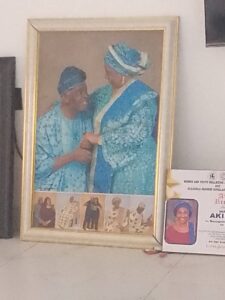
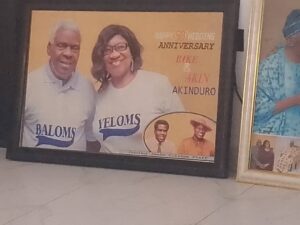
Our relationship was that of colleagues, friends, confidants and very close companions. We were in the same class at the University of Ibadan for three years. When you add those years to our 54 years of marriage, it means we had known each other for about 57 years before his death.
Our relationship was cordial and jovial. We had different names for each other, and our children also had special names for us. We related like close friends, but there was always mutual respect.
The same atmosphere existed between my husband and our children. They could approach him freely, discuss issues intelligently and ask for anything without being afraid of him. Even when he refused a request, he would explain his reasons so they could understand. Our home was like a family of friends and colleagues, with respect at its centre.
You look remarkably young for your age. What is the secret, and how old are you now?
First, I will say it is the grace of God. By His grace, I clocked 80 years on September 5.
What was your husband’s full name, and what was he popularly called?
His name was Solomon Akineye Bolodeoku. However, everybody called him Akin, a shortened form of Akineye. Some people called him Uncle Akin or Brother Akin, but I simply called him Akin.
He was particularly opposed to taking a traditional chieftaincy title because he believed it did not align with his Christian faith. I have also been offered chieftaincy titles several times, but I have not accepted any.
Where was your husband born, and what do you know about his family background?
He was born in Ondo, about 90 years ago. His family house is at 30B Sokoti Street, close to the Oba’s Market . He was the first son and the first child of his family.
His father was a cocoa farmer, and my husband inherited his love for farming. He continued farming throughout his life and remained involved in it until his health deteriorated and he could no longer leave his bed. His father’s farm was in Asoton village, Ondo State.
How many siblings did he have?
He came from a family of 10 children. However, I believe two of his siblings died before him.
What values did he acquire from his childhood and upbringing that remained with him throughout his life?
One important value was discipline, particularly the ability to assess himself honestly. He used to tell us that although his parents could neither read nor write, his father took his education seriously.
Whenever he brought home his school report, his father would ask him to interpret it before inviting an educated neighbour to assess it independently. If his own interpretation differed from the neighbour’s, his father would be displeased.
This taught him to assess himself objectively before allowing others to judge him. That attitude influenced how he related to neighbours, colleagues, junior workers, his children and me as his wife.
Were there particular childhood experiences that shaped the man he eventually became?
His father’s discipline and the experience of working on the family farm during school holidays played significant roles in shaping him.
Although his father lived on the farm with some of his wives, his mother, who was the senior wife, lived in town with the children. They had to visit the farm during holidays.
He also learnt contentment from his upbringing. The children were expected to eat whatever food was prepared for them without complaining. Sometimes, when another wife cooked, the soup might be watery, but they were expected to accept it without making comparisons or complaints.
Those experiences taught him discipline, humility, patience and contentment.
What were his educational qualifications and professional training?
He studied English at the University of Ibadan and graduated in 1971. When I returned to complete my postgraduate diploma in education, he decided to wait and prepare for our wedding. We got married shortly after I completed the programme.
Much later, he attended a programme in Edinburgh, where he obtained a Certificate in Education. He subsequently returned to the University of Ibadan for his master’s degree in English.
What was his first job, and how did he develop his career?
He was a teacher throughout most of his working life. He believed strongly in the teaching profession and was proud to be a teacher.
He also encouraged our children to consider teaching as a career. Two of our six children are professional teachers. One heads the secondary school, while the other teaches online in Lagos.
Our other children pursued professions including medicine, architecture and business. Although he would have been happy to see all of them become teachers, he supported their individual career paths.
Apart from teaching, what other leadership roles did he occupy?
His most significant leadership involvement was in the church. He took his Christian faith very seriously.
At one point, during the administration of Adefarati, we believed we were being victimised by the government because we were perceived to belong to the opposition, even though we were not involved in politics.
We eventually decided to register and vote. During that period, someone once brought a policeman to my husband, asking him to reward the officer for allegedly helping us. We rejected the suggestion because the officer had failed to perform his duty properly.
We also noticed that political meetings were often arranged in ways that excluded some members from genuine participation. After praying about the situation, we concluded that we had entered politics out of anger rather than seeking God’s guidance. We decided to withdraw, and that marked the end of our political involvement.
Did he encounter any major challenges during his career?
I cannot recall any particular challenge he faced at the beginning of his career. However, we encountered a major challenge together while we were in the state public service.
I was accused of awarding a contract to my husband, and the government set up a panel of inquiry. Following the panel’s proceedings, the government decided to retire both of us.
I refused to accept the decision and went to court. My husband supported me, saying my career as a Permanent Secretary was more important and that I should pursue justice.
Although the late Osemawe of Ondo Kingdom tried to discourage me from going to court and attempted to intervene, I insisted on pursuing the case. The court gave a judgment that effectively nullified the damaging findings against us, including directing that the panel’s report should not be quoted against us orally or in writing.
The judgement vindicated us, and I remain confident that anyone who attempts to rely on that report against us would have to answer for it in court.
Who would you say was his mentor or role model?
I do not know of any particular mentor he had outside his family. He sometimes complained that some uncles who should have supported him did not show the same concern that his father showed towards others.
From what he told me, I believe his father was his greatest role model. He followed his father’s example in farming and continued to farm until he became too weak to get out of bed.
Were there any major turning points that changed the direction of his life?
I do not think there was any major turning point that changed the direction of his life. He remained committed to teaching until the end.
There was a brief period when he served as secretary of a local teaching service commission in Owo, before he was transferred to Akure. After that assignment, he returned to classroom teaching and continued his career.
He served as principal in several schools, including Ejioba, Idanre High School in Alade-Idanre and St Dominic’s High School in Akure.
Let us talk about your marriage. Where and how did you meet your husband?
We met at the University of Ibadan, where we were classmates in the same literature class. We also studied drama as a subsidiary subject.
Although we studied drama together, he never went on stage throughout his time at the university. I, on the other hand, belonged to the Amtiya Theatre and participated in weekly productions on WNBS and WNTV.
What attracted you to him, and what was your first impression of him?
Interestingly, I was initially opposed to marrying him because he had tribal marks. I was a very jovial person at the university and gave many of the male students nicknames. I wondered why people said men were usually the ones who harassed women when I was the one teasing the boys in my class.
I gave him the nicknames “Professor” and “Omobaba Likoko”. When we eventually became friends and I started calling him Akin, my friends refused to accept the new name. They insisted that they knew him only as Professor and Omobaba Likoko.
Even when he came to express his interest in me, I initially wondered how I could marry someone with tribal marks. However, our friendship developed, and things eventually turned out differently from what I had imagined.
What would you say was the foundation of your 54-year marriage?
Our friendship, mutual respect and companionship were very important. We related closely, discussed issues freely and maintained respect for each other. That friendship also extended to our children, who were able to relate with their father without fear while understanding the importance of discipline and respect.
Looking back on your life together, what do you consider one of the most important things he left behind?
His commitment to teaching, his Christian faith, his discipline and his love for farming were important parts of his life. He remained faithful to the things he believed in and continued to practise them until his health no longer permitted him to do so.
Any further comment, Ma?
It is so painful hat he left without enjoying the newly renovated apartment done by the children. The children spent a lot of money renovating the house, including completing the first floor. I would have loved him to spend at least a week or two living in the renovated section before his death.
Although he died in the renovated section, it was not the same as having the opportunity to live there, walk around and enjoy the improvements, even if only for a week or two before saying goodbye.
The Hope


