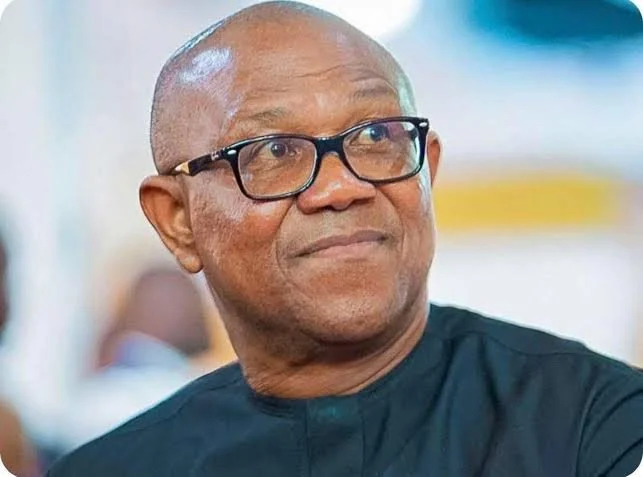
Nigeria Democratic Congress (NDC), presidential candidate in the 2027 election, Mr Peter Obi
By Banji Ayoola
Nigeria Democratic Congress (NDC), presidential candidate in the 2027 election, Mr Peter Obi, has charged the Government and People of Nigeria to use the country’s painful historical experiences as a foundation for national transformation.
To him, if properly understood, the undesirable and painful past experiences could be converted into rich lessons for effective leadership..
Obi spoke while responding to questions raised during an interview with Arise News concerning the 1966 military coup, a subject that generated reactions from some Nigerians who felt the issue was unnecessary to revisit.
The 1966 coup, which brought the military to power for the first time, wasted some notable politicians, terminated Nigeria’s First Republic, and marked the beginning of the enforcement of dictatorship on the country, which, for many years, stifled the development of democratic institutions and culture.
Reflecting on the saddening event, the former Anambra State governor said he welcomed the opportunity to discuss Nigeria’s history, stressing that leaders must remain open and accountable to the people rather than avoid difficult national conversations.
His words, “I have a commitment to serve the people, not to hide from them.”
He explained that his travels across Nigeria and interactions with citizens from different ethnic, religious and social backgrounds had provided him with deeper reflections on the country’s historical challenges, including the 1966 coup, the civil war and recurring violence in various parts of the country.
According to Obi, many of Nigeria’s tragedies were rooted in failures of leadership, particularly the inability to guarantee equal rights, justice and constitutional freedoms for all citizens.
He argued that Nigeria must confront its past honestly and use those experiences to build stronger institutions and a more united society.
“Mistakes in history are not fatal. They can become opportunities for transformation,” he said.
Obi cited countries such as Japan, South Korea and China as examples of nations that transformed difficult historical experiences into opportunities for development.
He noted that Japan used the trauma of its past to drive economic progress, while South Korea developed a strong developmental framework that helped it emerge as a global economic force.
He also referenced China’s transformation following the challenges of the Mao era, saying purposeful leadership and strategic reforms enabled the country to become one of the world’s largest economies.
The NDC candidate said Nigeria can achieve similar transformation by adopting leadership focused on unity, productivity and long-term national development.
“We need a leadership that is not trapped in the past, a leadership that focuses on what binds us together rather than what divides us,” he said.
Obi maintained that every region of Nigeria possesses enormous human and natural resources capable of driving prosperity if properly managed.
He further pointed to Rwanda as an African example of a country that has used a painful national experience to rebuild unity and pursue development.
According to him, Nigeria’s future depends on how its leaders choose to respond to its history.
“The difference in human history is having leaders who do not maximise those pasts for selfish ambition but leverage them to build a prosperous future for all,” Obi stated.
He assured Nigerians that he remains prepared to address issues important to citizens and provide leadership that protects every Nigerian regardless of ethnicity, religion or social background.
“Our past is important, but our past is not our destiny. Our future is what we do with our past. Our past is our resource for national transformation,” he said.
Obi reaffirmed his belief that a better Nigeria is achievable through responsible leadership, national unity and purposeful governance.
His words, “A new Nigeria is possible.”