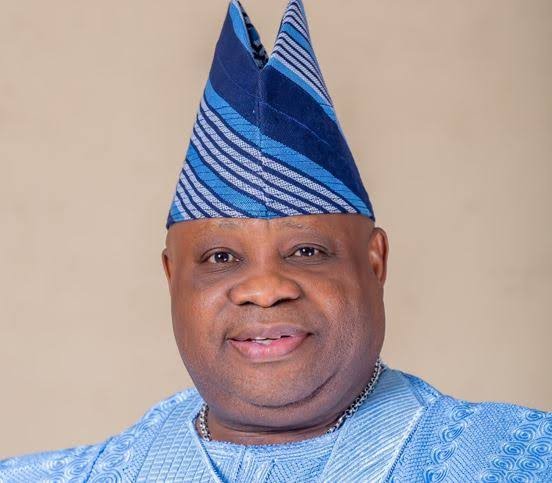
Osun State Governor Ademola Adeleke
By John Dike, Osogbo
The Chartered Institute of Transport Administration of Nigeria (CIoTA), Osun State Chapter, has commended the Osun State Government and the State House of Assembly for the passage of the Integrated Transport, Traffic and Park Management Bill 2026, describing the legislation as an important step towards resolving recurring crises in motor parks across the state.
It urges separation of union activities from park management and administration, cashless and stronger seburity
The institute also applauded the Osun State Ministry of Transportation for its role in driving the reform process, engaging relevant stakeholders and providing technical input towards the development of the new legal framework.
This was contained in a statement signed by the Chairman of CIoTA in Osun State, CTN Adewuyi Steven Opeyemi, MInstTA made a bailable to newamen on Thursday
The institute said the passage of the bill demonstrated the commitment of the executive and legislative arms of government to addressing persistent challenges affecting the state’s transport sector.
CIoTA said the legislation could provide a sustainable framework for restoring order, improving security and ensuring efficient administration of motor parks if properly implemented.
The institute noted that disputes over leadership and control among transport unions had in the past resulted in violence, loss of lives, injuries, destruction of property and disruption of transportation activities in different parts of the state.
It described such recurring conflicts as unacceptable in a modern transportation system, stressing that motor parks should provide safe, orderly and efficient movement of people and goods.
According to the institute, the recent interventions by the state government, including the suspension of union activities, deployment of security personnel and directives for conflicting groups to vacate motor parks, were necessary steps to restore peace.
However, CIoTA maintained that temporary security measures alone could not provide a permanent solution to what it described as a structural challenge in the management of motor parks.
It argued that sustainable reform required legislation, professional management, effective regulation and clear separation of responsibilities among the various stakeholders in the transport sector.
The institute specifically acknowledged the contribution of the Ministry of Transportation, saying the ministry had played a significant role in stakeholder engagement, coordination of security arrangements and provision of technical input that contributed to the drafting and passage of the Park Management System legislation.
To ensure that the new legislation achieves its objectives, CIoTA called for the establishment of a professionally managed Park Management System in line with the provisions of the law.
The institute also advocated the separation of union activities from the day-to-day administration of motor parks, saying the two functions should not be allowed to become intertwined in a manner that could create conflicts or undermine effective management.
It further called for transparent and cashless revenue collection mechanisms to reduce disputes and improve accountability in the administration of park revenues.
Other recommendations by the institute include the establishment of formal dispute-resolution mechanisms, strict enforcement of the rule of law, improved security and surveillance at motor parks and comprehensive registration of transport operators.
CIoTA also urged the Ministry of Transportation to maintain continuous engagement with transport unions and other stakeholders as the new system is implemented.
It called for the strengthening of transport regulatory institutions and the development of a comprehensive State Transport Policy and Motor Park Master Plan to guide the long-term development of the sector.
The institute said such measures would help create a transport system capable of responding to the growing mobility needs of residents while also promoting safety, efficiency and accountability.
CIoTA appealed to transport unions and other stakeholders to embrace dialogue and lawful mechanisms for resolving disagreements rather than resorting to violence or confrontation.
The institute said the successful implementation of the new park management framework would require cooperation among the state government, Ministry of Transportation, security agencies, transport unions, operators and other stakeholders.
It reiterated its readiness to collaborate with the Osun State Government and relevant agencies in establishing what it described as a professional, technology-driven, transparent and legally backed Park Management System.
According to CIoTA, the passage of the bill presents an opportunity for Osun State to transform its motor parks from areas frequently associated with disputes and disorder into centres of safe, organised and efficient transportation as well as economic activity.
The institute therefore urged all parties involved in the state’s transportation sector to support the implementation process and ensure that the objectives of the new legislation are achieved.