

- victorious in 19 LGAs, defeats Oyebamiji by 66,252 votes
- polls 511,067 votes to secure second term as APC’s Oyebamiji gets 444,815; ADC’s Najeem Salaam scores 17,180
By John Dike, Osogbo
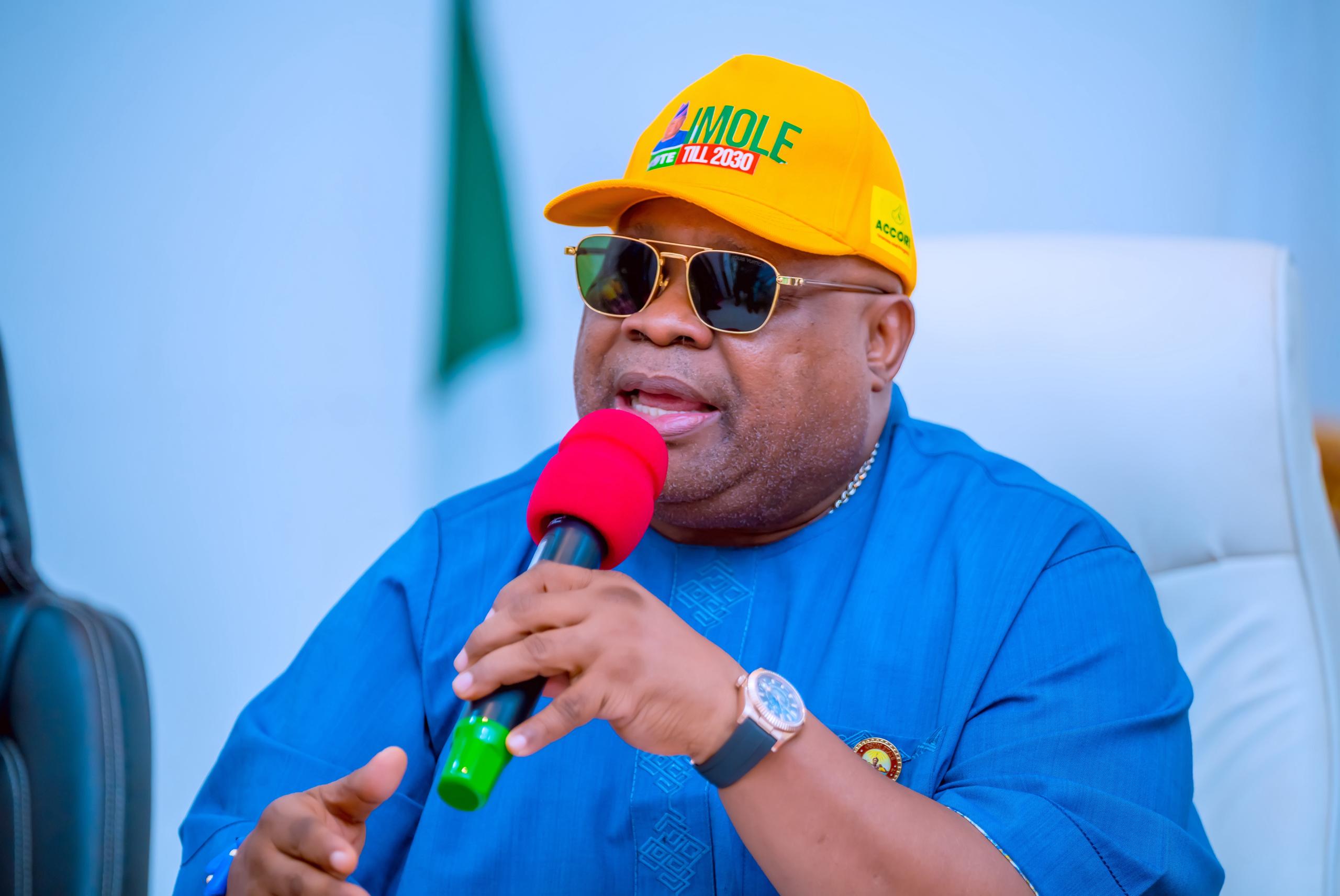
The Independent National Electoral Commission (INEC) has declared the incumbent Governor of Osun State and candidate of the Accord Party, Ademola Adeleke, winner of the 2026 governorship election held across the state on Saturday, August 15.
He defeated his closest challenger, the candidate of the All Progressives Congress (APC), Asiwaju Bola Oyebamiji, to secure a second consecutive term in office.
The governor polled 511,067 votes to defeat Oyebamiji, who scored 444,815 votes, giving Adeleke a winning margin of 66,252 votes.
The candidate of the African Democratic Congress (ADC), Rt. Hon. Najeem Folasayo Salaam, came third with 17,180 votes.
The final declaration was made by the State Returning Officer, Professor Joshua Ogunwole, Vice-Chancellor of the Federal University, Oye-Ekiti, after the completion of the collation of results from the state’s 30 local government areas.
According to the results announced by the commission, Adeleke won 19 local government areas, while Oyebamiji secured victory in 11 LGAs.
The declaration brought to an end a tense electoral process that was characterised by intense campaigns, political realignments, competing claims, security concerns and heightened anxiety during the collation of results.
The election, which was conducted across the state’s 3,763 polling units, was largely a two-horse contest between Adeleke and Oyebamiji, although Salaam remained the third major candidate in the race.
Ede axis delivers huge margin for Adeleke
A major factor in Adeleke’s victory was his performance in the Ede axis, where the Accord candidate recorded some of his largest margins against the APC.
In Ede North, Adeleke reportedly polled 35,427 votes, while Oyebamiji obtained 10,283 votes, giving the governor a commanding margin of 25,144 votes.
The governor also dominated Ede South, securing 26,188 votes against the APC’s 6,219 votes. The result gave Accord a margin of 19,969 votes in the local government.
The combined margin from the two Ede local government areas provided a substantial boost to Adeleke’s overall tally and reinforced the governor’s dominance in his political base.
Adeleke also recorded significant victories in other parts of the state.
In Ife East, Accord reportedly obtained 27,201 votes, compared with 18,600 votes for the APC, giving Adeleke a margin of 8,601 votes.
At Egbedore, the Accord candidate secured 19,278 votes, while Oyebamiji polled 11,194 votes, producing an 8,084-vote margin.
Adeleke also prevailed in Iwo, where Accord reportedly scored 27,085 votes, against 19,660 votes for the APC, giving the governor a margin of 7,425 votes.
Accord wins Osogbo
One of the notable results was recorded in Osogbo, the state capital, where Adeleke’s Accord Party reportedly defeated the APC..
Accord obtained 36,480 votes, while the APC secured 30,474 votes, giving Adeleke a margin of 6,006 votes.
The Osogbo result was particularly significant because the state capital had been regarded as one of the key battlegrounds in the election.
Adeleke’s performance in Osogbo, combined with his strong showing in Ede and parts of the Ife axis, helped strengthen his overall position as the local government results were collated.
Other local government areas won by Accord included Ayedaade, Ayedire, Boluwaduro, Ejigbo, Ife Central, Ife North, Ifedayo, Ifelodun, Ila, Ilesa West, Odo-Otin, Oriade and Orolu, among others.
APC records strong victories
Although the APC lost the overall contest, Oyebamiji recorded substantial victories in several local government areas.
The party’s strongest reported performance came in Irewole, where Oyebamiji polled 29,972 votes, against Accord’s 10,934 votes.
The APC therefore won Irewole by 19,038 votes, one of the largest local-government margins recorded during the election.
In Boripe, the APC also secured a significant victory, polling 19,963 votes against Accord’s 12,448 votes, a margin of 7,515 votes.
The APC further won Obokun, where it obtained 16,120 votes, against Accord’s 12,023 votes, giving Oyebamiji a margin of 4,097 votes.
Other local government areas reportedly won by the APC included Ife South, Ilesa East, Irepodun, Isokan, Ola-Oluwa, Olorunda, Atakumosa East and Atakumosa West.
The results showed that although the APC failed to secure the overall victory, it maintained considerable strength in several parts of the state.
Close contests in several LGAs
The election also produced a number of closely contested local government results.
In Boluwaduro, Accord reportedly defeated the APC by only 68 votes, polling 7,118 votes against 7,050.
Adeleke also narrowly defeated the APC in Ifedayo, where Accord scored 7,427 votes, against 6,836 votes for Oyebamiji, a margin of 591 votes.
In Isokan, however, the APC edged Accord by 298 votes, polling 14,063 votes against Accord’s 13,765.
The relatively narrow margins in some local government areas demonstrated the competitiveness of the election and highlighted the importance of voter mobilisation in the respective strongholds of the two major parties.
Tension during collation
The final declaration came after a tense night in Osogbo, where sporadic shootings were reported around some collation centres.
The incidents reportedly disrupted collation activities temporarily and caused panic among residents, election officials and political supporters.
The development prompted heightened security around strategic locations and collation centres as officials continued with the process.
The tension was further fuelled by the circulation of unofficial results on social media, with supporters of the two major parties separately claiming victory.
The APC subsequently accused supporters of the Accord Party of circulating what it described as fake and AI-generated election results.
In a statement signed by its Director of Media and Information, Mogaji Kola Olabisi, the APC warned the public against accepting results not officially announced by INEC.
The party insisted that the electoral commission remained the only constitutionally authorised body to announce the final result.
Accord campaign claims victory
The Imole Campaign Council, however, had earlier maintained that its internal situation room had established Adeleke’s victory.
The council called on Oyebamiji to accept the verdict of the electorate and concede defeat.
Its spokesman, Pelumi Olajengbesi, said the figures collated from polling units and wards showed that the people of Osun had renewed Adeleke’s mandate.
The APC, before the final declaration, maintained that its supporters should remain calm and await the official announcement by INEC.
The competing claims contributed to the heightened tension surrounding the collation process.
Adeleke’s second consecutive victory
The victory represents another major milestone in Adeleke’s political career.
In the 2022 Osun governorship election, Adeleke, then the candidate of the Peoples Democratic Party (PDP), defeated the incumbent APC governor, Adegboyega Oyetola.
Adeleke polled 403,371 votes, while Oyetola secured 375,027 votes, giving Adeleke a winning margin of 28,344 votes.
Four years later, Adeleke contested under the Accord Party following the political realignment that preceded the 2026 election.
His latest victory therefore gives him a second consecutive governorship mandate and, based on the announced figures, a significantly wider margin than the one recorded in the 2022 election.
A new political equation
The outcome is also expected to reshape the political calculations in Osun State ahead of the next electoral cycle.
By winning 19 of the 30 local government areas, Accord has emerged from the election with a significant geographical spread across the state.
The APC’s victory in 11 LGAs, however, shows that the opposition remains a formidable political force and retains important areas of support.
The election also demonstrated the importance of political strongholds, local mobilisation and the ability of candidates to secure large margins in their areas of strength.
For Adeleke, the fresh mandate comes with expectations from voters who backed his administration at the polls.
The governor is now expected to consolidate his political gains while continuing with his administration’s programmes and projects across the state.
For the APC and Oyebamiji, the result is likely to trigger an assessment of the party’s strategy, campaign structure and performance across the 30 local government areas.
The 2026 election was therefore more than a contest for the Government House in Osogbo. It was also a major test of the political strength of the Accord Party and the APC following months of intense political realignment.
With INEC declaring Adeleke the winner, the electoral contest has now moved into a new phase, with attention expected to shift to the governor’s renewed mandate, the opposition’s response and the possibility of any legal challenge to the outcome.
For now, the official figures announced at the collation stand at 511,067 votes for Adeleke, 444,815 for Oyebamiji and 17,180 for Najeem Salaam, with Adeleke winning 19 LGAs against the APC’s 11.


