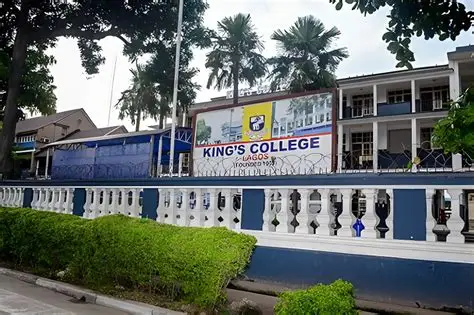
NIGERIA’S disturbing repudiation of the age-old principle that education is the bedrock of society lies at the heart of the controversy over the concession of King’s College, Lagos. Founded in 1909, the iconic school’s predicament is not an isolated failure. It is a symptom of the deeper rot in Nigeria’s education system.
Whether the well-heeled old boys of the school, who have reportedly mobilised N30 billion to revamp their alma mater, are eventually given control or not, the fundamental issue remains unresolved.
One of the government’s foremost duties is to educate its young citizens and equip them to build the prosperous country of tomorrow.
Nigeria, however, continues to treat education as a residual responsibility.
In the 2026 fiscal year, N3.5 trillion was allocated to education, including N155 billion for the 104 Unity Schools.
At a time of steep inflation, high operating costs and declining purchasing power, the allocation raises questions about whether the country is investing enough in the human capital on which its future depends.
The Federal Ministry of Education ignited the present controversy shortly before the commencement of the 2026/2027 academic session when it granted the King’s College Old Boys Association a 35-year concession to manage the school.
The old students said the college had become badly run down and required urgent intervention. That assessment is hardly controversial.
King’s College has suffered a disgraceful decline in infrastructure and academic standing, while teachers operate under difficult conditions and low morale. Students, in some instances, endure conditions that are scarcely compatible with the dignity of a modern school.
The KCIOBA, therefore, deserves commendation for mobilising resources to rescue its alma mater. But its intervention raises questions about whether citizens’ willingness to rescue a failing public school becomes an excuse for the government to surrender its responsibility.
It should not.
Across many Unity Schools, Parent-Teacher Associations and old students routinely provide huge sums to keep facilities functioning. This has become so commonplace that its fundamental wrongness is barely questioned.
The government establishes and controls these institutions. It must therefore remain principally responsible for their funding and standards.
It is particularly galling that public officials enjoy lavish privileges while schools that produced generations of Nigerians are left to decay.
Lawmakers and other public office holders enjoy generous remuneration and extensive perks, while the institutions that educated many of them, often free of cost, struggle to provide basic facilities.
Parties opposed to the concession, however, also have a legitimate point. The contribution of old students should not automatically translate into ownership or control of a public institution.
Philanthropy and public-private partnership can complement government funding, but they should not become a route for government to withdraw from the system.
The controversy has already assumed wider dimensions. Protesters recently converged on the FME in Abuja, while uncertainty surrounded the resumption and operation of the Unity Schools.
The situation worsened after the PTA chairman of King’s College, Peter Oluwaleye, said the ministry had indicated that the government would cease funding the institution once the concession was completed.
Predictably, anxiety spread through the school community. Staff unions shut the college and resisted the entry of the old students. The Federal Government subsequently deployed the police and suspended implementation of the concession for two weeks after consultations with education-sector unions.
This is precisely why such a major policy should not have been introduced in such a hurried manner.
Nor is this the first time the FME has sought to shift the management of Unity Schools towards the private sector.
In 2006, under the Olusegun Obasanjo administration, the then Minister of Education, Oby Ezekwesili, proposed the privatisation of the 102 Unity Schools in collaboration with the Bureau of Public Enterprises. The stated objective was to allow competent private-sector education organisations to manage the schools while government retained regulatory control.
President Umaru Yar’Adua subsequently halted the policy in 2007, stressing the national integration and unity objectives behind the establishment of the schools.
The return of essentially the same idea nearly two decades later should prompt serious reflection.
Is government pursuing a sustainable public-private partnership, or is it searching for a convenient way to transfer an increasingly expensive responsibility to old students and other private actors?
The question is particularly pertinent in the North, where the out-of-school population remains a major national challenge. If public schools increasingly depend on private financing and management, what happens to children whose families cannot afford such arrangements?
The failure to adequately fund education is especially difficult to reconcile with spending on airports, official aircraft, SUVs and political administration.
The FME has also acquired an unfortunate reputation for policy reversals, hurried initiatives and decisions that generate controversy before being suspended or reviewed.
The Minister of Education, Tunji Alausa, should therefore proceed with greater consultation and caution.
There are lessons from elsewhere in Nigeria.
The Abia State Government’s 2014 decision to hand Government College, Umuahia, to its old students’ association through a Deed of Trust and Memorandum of Understanding, initially excluding other stakeholders, generated resistance. The government subsequently had to bring other stakeholders into negotiations, including over tuition.
Similarly, the Oyo State Government faced opposition after entering into a Manage, Operate and Develop arrangement with the Government College Ibadan Old Students Association.
These episodes point to a recurring tendency for Nigeria to create public institutions without adequately planning for their long-term financing, maintenance and sustainability.
That was evident in the evolution of the Unity Schools.
From the three pioneer schools established in Warri, Sokoto and Okposi in 1966, the number rose to 14 after 11 more were added in 1973 during the oil boom. Over subsequent decades, the network expanded to 104.
Successive governments expanded the system without adequately confronting the financial implications of maintaining such a vast network. When the bills eventually became burdensome, the government began looking for ways to shift the responsibility elsewhere.
That is not strategic planning. It is deferred failure.
The timing of the King’s College concession was particularly problematic.
Initiating such a fundamental change less than a month before the commencement of a new academic session, while allowing only a six-month transition period, was an invitation to confusion.
Teachers, students, parents and administrators were unnecessarily thrown into uncertainty, and the academic programme was disrupted almost immediately.
The proposed duplication of staffing under the suspended arrangement further exposes the absence of adequate planning.
The public therefore deserves clear answers. Is the King’s College concession an isolated intervention designed to mobilise private resources for one historic institution, or is it the beginning of a broader programme to place Unity Schools under PPP or concession arrangements?
If it is the latter, the government must explain how the policy will protect access and standards, particularly for children from poor and vulnerable families.
Nigeria should learn from countries that have treated human capital as a strategic investment. China’s use of educational technology to prepare its young people for global competition and the extensive public funding of education in many European countries illustrate the same principle: countries that plan for prosperity invest in the capacity of their people.
Nigeria’s federal education allocation reportedly fell to about 6.1 per cent of the 2026 budget, from 7.08 per cent in 2025 and 7.9 per cent in 2024. At a time when the country needs better-skilled workers, scientists, entrepreneurs, teachers, engineers and technicians, this should concern policymakers.
For the KCIOBA, the appropriate lesson from other countries is not to retreat. It should continue supporting its alma mater through a model that strengthens rather than supplants public responsibility.
Alumni can provide endowments, scholarships, laboratories, libraries, technology and infrastructure without taking over ownership of public institutions.
The old boys should be partners in rebuilding King’s College, not substitutes for government.
The Punch