By John Dike, Osogbo
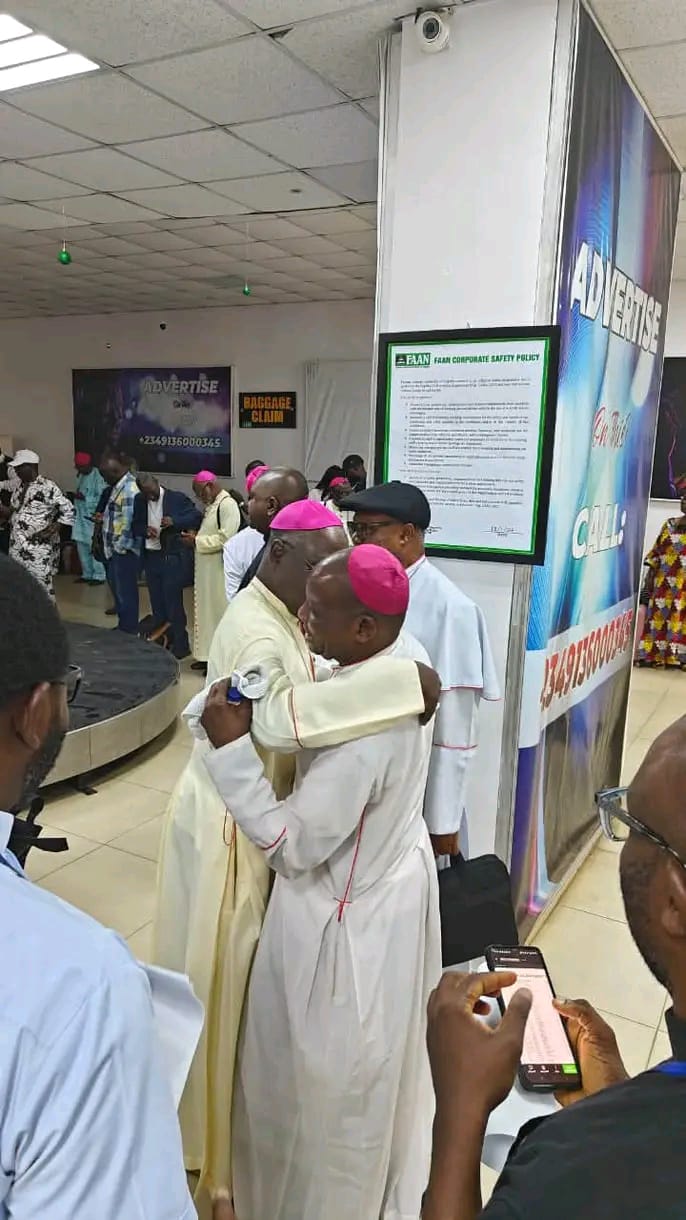
Catholic bishops from across Nigeria are already arriving Osogbo, ahead of the 2026 Catholic Bishops’ Conference of Nigeria (CBCN), scheduled to take place in the Osun State capital between September 10 amd 18.
At least no fewer than 80 Catholic bishops, Archbishops, Cardinals, and Priests working at the Catholic Secretariat would also be around for the conference.
The week-long event is one of the major gatherings of Catholic leaders to be hosted in the state.
It is being hosted by the Catholic Diocese of Osogbo under the leadership of its Local Ordinary, Most Rev. Dr. John Akinkunmi Oyejola, Bishop of Osogbo Diocese.
The arrival of the senior Catholic clerics has heightened activities within the diocese, with the local Catholic community making preparations to welcome the bishops and ensure a successful hosting of the national ecclesiastical gathering.
The conference is expected to provide a major platform for the Catholic leadership in Nigeria to deliberate on issues concerning the growth and development of the Church, as well as matters affecting the Nigerian society.
The bishops, who serve as the Local Ordinaries of various Catholic dioceses across the country, are expected to review developments within their respective dioceses and examine challenges confronting the Church in the discharge of its spiritual, pastoral and social responsibilities.
Issues relating to peace, social justice, morality, human development, family life, education, healthcare and the general wellbeing of Nigerians are also expected to feature prominently in the deliberations.
Beyond the internal affairs of the Church, the conference is expected to provide an opportunity for the Catholic hierarchy to reflect on the state of the nation and the role the Church can continue to play in promoting peace, good governance, justice, human dignity and peaceful coexistence.
The bishops are also expected to discuss ways of strengthening the unity and cooperation among Catholic dioceses and developing common pastoral responses to emerging challenges confronting the Church and society.
Priest-Laity Relationship
An important aspect of the gathering is expected to be the relationship between priests and the laity.
Members of the laity are expected to have an opportunity to engage with the bishops on issues concerning the growth and development of the Church and contribute their perspectives on how the Catholic community can become stronger and more effective in fulfilling its mission.
The interaction is also expected to provide an avenue for the faithful to share their experiences, raise concerns and discuss issues affecting the relationship between priests and members of the laity.
The relationship between the clergy and laity is considered an important component of the life and mission of the Church, with both expected to work together in advancing evangelisation, pastoral care and the social mission of the Catholic Church.
Consequently, the Osogbo gathering is expected to examine ways of improving mutual understanding, cooperation and effective collaboration between priests and lay faithful.
Participants are also expected to evaluate various activities of the Church, identify emerging challenges and consider strategies for improving the spiritual and socio-economic wellbeing of Catholic faithful.
For the Catholic Diocese of Osogbo, hosting the CBCN conference represents a significant ecclesiastical milestone.
The gathering provides the diocese with an opportunity to showcase its hospitality while receiving the country’s Catholic leadership and strengthening its relationship with other dioceses.
The event is also expected to attract Catholic faithful from different parts of Nigeria to Osogbo, with members of the host diocese expected to participate in various activities associated with the conference.
Bishop Oyejola is expected to lead the diocese in welcoming the visiting bishops and coordinating the local arrangements for the conference.
The hosting is particularly significant because national Catholic bishops’ conferences of this nature are not held in the same diocese every year.
Under the rotational arrangement reportedly followed in hosting the conference, a diocese may have to wait roughly three decades or more before another opportunity to host the gathering.
A cycle of about 30 years would mean that a diocese could host the conference at approximately 30-year intervals, while a 35-year cycle would make the waiting period even longer.
This means that, over a period of about 100 years, a particular diocese could host the conference only about two or three times, depending on the applicable rotation and other considerations.
The relatively long interval makes each hosting an important occasion for the diocese and its Catholic community.
It also means that an individual bishop serving in a diocese may have only one opportunity to host the national gathering during his tenure.
Catholic bishops are generally required under Church law to submit their resignation to the Pope upon reaching the age of 75. Given the length of the rotation between host dioceses, a bishop may therefore serve his entire episcopal tenure without having the opportunity to host the national conference, making such an occasion particularly significant when it occurs.
The conference is taking place at a time when the Catholic Church in Nigeria continues to play an active role in national discourse and social intervention.
Through its institutions and various diocesan structures, the Church has remained involved in education, healthcare, humanitarian intervention, poverty alleviation, peacebuilding and advocacy for vulnerable members of society.
The bishops are therefore expected to use the gathering to reflect on how the Church can further strengthen its contribution to national development while remaining faithful to its spiritual mission.
The outcome of the deliberations is expected to be of interest not only to Catholic faithful but also to the wider Nigerian public, particularly where the bishops address matters of national concern.
At the conclusion of the conference, the Catholic Bishops’ Conference of Nigeria may communicate its position on some of the issues deliberated upon and issue statements on matters concerning the Church and the country.
The Osogbo conference is consequently expected to serve both as an important internal gathering of Nigeria’s Catholic leadership and as an opportunity for the bishops to reflect collectively on the challenges facing the nation and the responsibilities of the Church towards the people.
For the Catholic Diocese of Osogbo, however, the gathering represents a historic moment of hospitality, fellowship and service, as the diocese welcomes Catholic bishops from across Nigeria to the Osun State capital.