By Olusola Adeyegbe
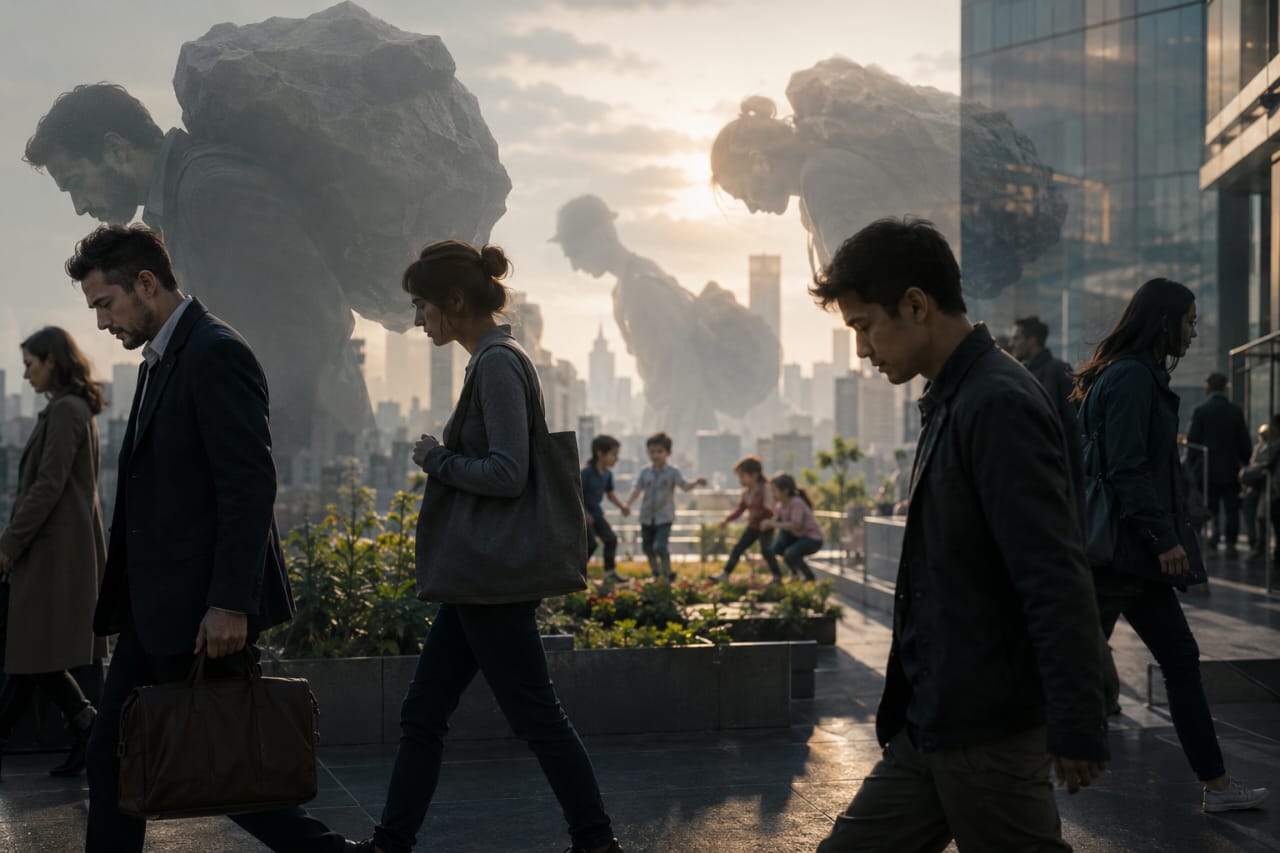
There is a quiet shift happening in ordinary life that many people feel but struggle to name. Life is not necessarily collapsing, yet it no longer feels light. The effort required to maintain a basic standard of living now feels disproportionately high, both financially and emotionally, and simply getting through a normal day carries a weight that did not exist in the same way a generation ago.
Three layers explain this heaviness. The first is financial compression. Income rarely expands at the same pace as expenses. What used to be routine decisions now require calculation. Transportation, food, rent, education, healthcare. Each carries more uncertainty than before. The result is not always visible hardship, but constant mental arithmetic.
The second is psychological fatigue. Modern life demands not only labour but attention, responsiveness, and emotional availability around the clock. Work, family, social obligations, and personal ambition now overlap in ways that leave little space for genuine recovery.
The third is the pressure of dignity. Many people are managing significant strain without allowing it to show. The effort to appear stable becomes an additional burden layered silently on top of everything else.
Yet when we step back from the surface, a deeper question emerges. Could this condition reflect something more fundamental about how we have collectively organised life? When heaviness touches nearly everyone, even in different degrees, it invites reflection on whether certain underlying principles have been neglected.
The condition we are describing is not simply bad luck or poor economic management. It is the accumulated consequence of choices made collectively over time. A society cannot endlessly invest its best energies into competition, conflict, and extraction without consequences in the quality of everyday life. When disproportionate energy flows into speculation and inefficiency, less remains for foundational needs such as food systems, education, health, and meaningful work.
The response therefore is not only personal adaptation but collective reorientation. We must begin to sow differently: mindful contribution rather than unchecked consumption, cooperation rather than fragmentation, long-term thinking rather than short-term gain. Prosperity is not merely a financial outcome. It is a reflection of alignment with deeper laws of balance.
The weight people feel today is uncomfortable but instructive. It invites a return to what sustains life, not just what accelerates it. Ultimately, what secures true human welfare is the recognition and faithful adherence to the fundamental Laws of Creation, which govern balance, consequence, and renewal in all things.
The heaviness is a signal. The question is whether we are listening.