By Femi Kusa
I would have been a near illiterate about PALM oil as many Nigerians are but for Dr Udo Erasmus and two young women I mentor about HEALTH BATTLE GROUNDS that the earth has become. The Polish born American Dr Erasmus who naturalised in the United States was once taught by some Ibibios in South South Nigeria to come from Akwa Ibom State. He wrote the book fats that HEAL and fats that kill. The two young women from Akwa Ibom State who are resident in Lagos are really learning that the earth is, indeed, a BATTLEGROUND since they joined the palm oil value chain to eke out a living.
I have been encouraged to write this column by the Dirty tricks palm oil storage traders play on us the consumers. These tricks may be some of the causes of rising waves of blood vessel diseases, heart problems, liver disease and even strokes and death. There is as yet no definitive official view about this assumption which, at this point, is purely observational. Please pay attention to the quality of the palm oil you consume in home or outdoor cuisine.
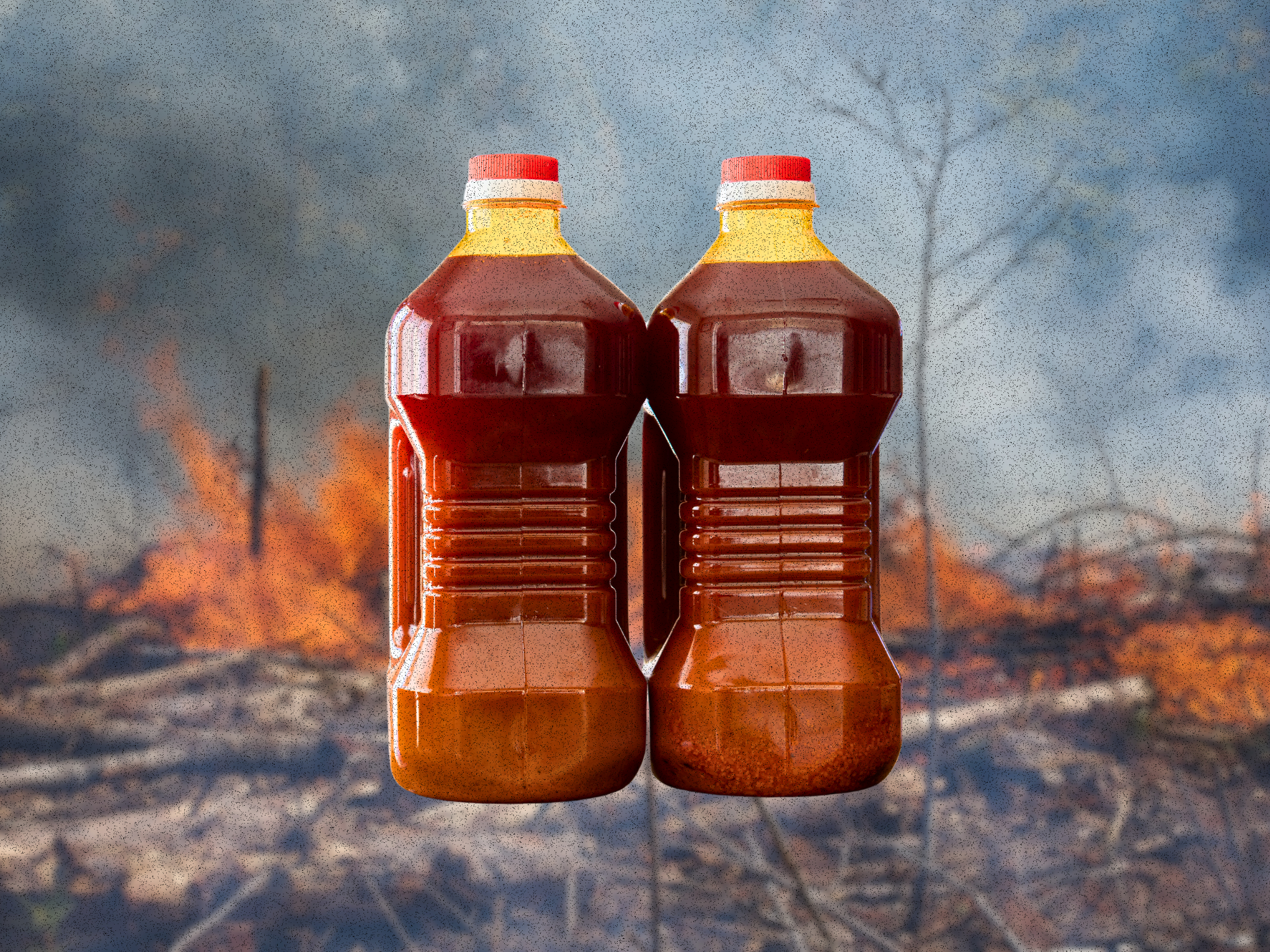
What is the viscosity like? Viscosity is about how thin or about how likely to flow it is. It is more about that, though. For it is also about whether it would congeal or “sleep” when it is stored in the refrigerator. If it congeals there, does that mean, or does it not mean, that it may congeal or “sleep” in your blood vessels and in the heart and the brain as well, blocking circulation and causing high blood pressure and its follow-up problems? When I ask if the palm oil in your food congeals or remains in stable condition at room temperature or in the refrigerator, I think, for example, of solid state margarine. Pure palm oil is semi solid at room temperature and comprises about 50 percent saturated fats and 50 percent unsaturated fats. The unsaturated fat composition in stable palm oil is about 0.3 percent omega 3, 10 percent omega 6 and about 40-50 percent omega 9. Omega 3 challenges inflammation. Omega 6 supports inflammation. Omega 9 supports cholesterol and heart health. Prolonged storage of palm oil especially in wrong packaging and exposure to inhospitable environment may alter or damage these components and make palm oil become dangerous to health.
What about the AROMA? Is it FRESH and LIVING or dead and lifeless? Do you eat so that what you eat would give you Life or take LIFE away from you? The GRADE of the palm oil you consume would determine its quality and the benefits your health may derive from it. What the Nigeria’s palm oil value chain calls FIRST GRADE palm oil comes from the natural palm fruit Tree grown in several parts of Nigeria.
The second GRADE comes from genetically modified palm fruit seed kernel, the dwarf species. It fruits in only about two years and can be harvested with the stretch of the hand, whereas in Traditional Nigeria, the first GRADE palm oil fruit Tree was mounted and climbed and the fruits harvested with strokes of the cutlass or the matchette on the bunch in which the fruits grow.
It is natural to assume that the dietary nurture from this second GRADE palm oil fruit would be second GRADE as well.
Then, there is the STORAGE business palm oil. The peak of the palm oil business comes when the rain season gives way to the dry season or retreats, somewhat, with Light, intermittent showers. The palm trees are glad, or so it seems, and they produce more fleshy fruits with smaller kernels or no kernels at all. This means more palm oil per measure of palm fruit Than in the rain season when the palms are more difficult to access and the nuts are bigger, the flesh smaller. Right now, the rain season has receeded and there is more palm oil in the market. However, Price should crash as supply exceeds demand. The excess supply is stored in metal drums or 25 liter plastic kegs and hidden away from the market. This is what the market calls the STORAGE SEASON. It prevents a glut in the open market, to protect the farmer against too much loss, and makes the merchant or middle-man to earn tremendous profit in the future. The end consumer , that is you and I, also profit, because Price crashes a little.
However, STORAGE PALM OIL is to health dangerous palm oil for no fewer Than four reasons. The first is possible long term contamination of the palm oil in the STORAGE tank. In some cases, the inside of the metal tank is painted to prevent direct contact between the palm oil content and the metal container.
Acids in the palm oil may react with the paint or the metal container, as the case may be, and leach them. When such palm oil is consumed in food, the leached paint or metal may find its way into the BODY’S physiology and biochemistry, poisoning tissue and organs. It is worse when pepper for cooking is ground in steel machines and the metal grinding sheets degrade into the pepper, causing metal toxicity when consumed. Today, many persons go about their daily lives with heavy metal load in their blood and tissues, especially the brain. In Europe, this can be easily detected from samples of hair taken from the scalp or from blood check techniques. Such tests are rare in Nigeria. Thus, many persons express common symptoms of metal toxicity without realising this may be their problem. Such symptoms may include headaches, muscles weakness and fatigue, digestion and nerve problems and joints pains, to mention a few. So, they and their doctors may be chasing shadows and not the Real substances of their health challenges. That is why, once in a while, it is advisable to chelate or detoxify the body of heavy metals with CHLORELLA and CILANTRO or CORRIANDER which yorubas call efo ebolo ( d:m r:d:d). Most often nowadays, storage palm oil is kept in 25-liter plastic containers. Many of the plastics are inferior GRADE. This is to enable them to expand under pressure from the content overtime to accomodate more Than 25 liters to the profit of the palm oil merchant. Petroleum residues from such plastics leach into the palm oil, causing possible soft plastic poisoning in the consumer of such palm oil. Some of the symptoms of microplastics in human bodies have been established as gastro intestinal problems, IMMUNE system disruption, respiratory issues, cardiovascular risks and reproductive and hormonal questions.
Some day, when the rain season returns and the palms are not fruiting well and fleshy again as in the dry season and palm oil is scarce in the market, the sediment or fermented oil is pushed into the market at prime prices and profit. Thus, if you invest N40,000 per 25 liters of palm oil, N5000 on the empty keg and N5000 for transportation from Akwa Ibom to Lagos, implying N50,000 investment per 25 liters of palm oil and you can sell the keg and content for N65,000, this would oblige N15,000 per keg which is good money at 1.5 million Naira every week in a business involving hundred kegs.
That was in the dry season peak of the business one or two years ago. Since colonial times, the Eastern Region of Nigeria has held the aces in Nigeria’s palm oil business. Today, the sky- line has changed. Many palm oil producers of today’s South Eastern states are aging or have aged, have abandoned the business and their offspring have not taken it up, preferring white collar jobs which they believe is more respectable or befitting for their University Education. Akwa Ibom State now holds the aces. Its aborigens resident in Lagos and elsewhere buy palm oil at home for sale wherever they live.
Lagos State, with a population hovering at about 25 million or slightly Higher, is the prime market.
In the 2026 dry season palm oil market, however, something still nebulous has happened. Palm oil production in Akwa Ibom state has shot up as usual. Traditional supply has exceeded Traditional demand, but Price has not crashed. What is happening?
NEW MARKET TRENDS
The market of Akwa Ibom State has been bombarded with buyers from the South east and from the North. The South- Easterners are stockpiling palm oil as STORAGE PALM OIL for the next rain season or possibly for export where prices are at an all time high. It is not clear what the Northerners are doing with the huge volumes they are purchasing in Akwa Ibom State. Are they exporting it to the Sahel region, or are they, too, now into STORAGE palm oil business? They are not new to storage business. Under military President Ibrahim Babangida’s Administration, they got the Federal Government to build SILOS for GRAIN STORAGE in the North. One of their target grains was MAIZE. In the MAIZE season, they purchased as much MAIZE as they could find in the South and stored it in these SILOS. Southern MAIZE farmers were happy. Southern MAIZE served many purposes in the South…Traditional corn pap breakfast, Boiled corn on the cob, or other snacks such as the AaDUN of the Ijebus (corn flour, palm oil and salt) or animal feed, among others. MAIZE was a big deal in animal feed. At that time, Nigeria was not growing enough MAIZE and had to import from the United States to fill the gap. As soon as the Northern grains SILOS were ready, the government banned MAIZE imports. This drove maize Price up to the benefit of Northern MAIZE STORAGE business class. Southern poultry farmers groaned under high prices. The prices of poultry products went up, the market resisted them and favoured imports from Brazil and other Countries…and the Southern poultry business dwindled, if it did not crash!
Since then, other sectors in Nigeria’s food value chain have joined the STORAGE culture. They are food sector mafias, to say the least and, backed by the Power of technology for speedy and wide spread communication, have made a previous IMPERFECT MARKET super PERFECT with their WHATSAPP platforms. So, everyday, members of these mafias are told how much to sell, say, one liter of first GRADE, second GRADE or storage PALM oil, or Bakassi or Oron Crayfish, Benue groundnut, Orange, yam or Mango.
MYSTERY IN THE MARKET
A new trend has hit the market, and this is the heart of this column. Lagos palm oil Price has declined, rather than rice in tandem with rising Akwa Ibom Price, since Akwa Ibom market feeds Lagos market. As South-Easterners and Northerners mopped Akwa Ibom stocks and Prices rose, Prices significantly dropped in Lagos by about N500 from N2000 per one liter bottle when Price should have risen, all things being equal. Thus, for the first time, in Akwa Ibom, aborigens who dominate the Lagos palm oil trade are finding themselves logged out. It is not about Donald Trump’s war in the Middle East and current hikes in transportation fares. Palm oil is suspected to be flooding into Lagos from Ghana, Cote d’ivoire, China, Malaysia, Edo State and Okitipupa in Ogun State. Export by South Eastern speculators is doubtful, even as world market Price hit 1 million USD per metric tonne in February 2026. Nigeria cannot meet home demand which global financial intelligence estimates at 2.61 million metric tonnes, warranting imports last year of 500,000 metric tonnes at a cost of 600 million USD. Half of the imports came from Malaysia, a former mentee of Nigeria in oil palm farming. Of an estimated domestic demand of 2.61 million metric tonnes, Nigeria produces only 1.57 million metric tonnes, say the reports. Between December last year and February this year, a space of 3 months, Nigeria imported 500,000 metric tonnes at a cost of 30 million USD.
It is obvious from the foregoing that palm oil is flooding into Nigeria and may have been responsible for crashing prices in Lagos. Meanwhile, Nigeria’s Traditional palm oil storage merchants are clearing old, degrade storage stocks for new storage stocks and this, too, has flooded the Lagos market. The market is thereby faced with a collision of different grades of palm oil. The average consumer knows little or nothing about quality and the importance of quality for health. He or she is interested in Saving money. This rules out quality palm oil out from the market. That’s the battlefield in which the two quality palm oil Akwa Ibom women I mentioned earlier have found themselves.
I, too, have found myself on a health BATTLEGROUND. I believe you, too, are on this BATTLEGROUND but may not know you are. That was why, earlier, I asked you about the colour, AROMA and viscosity of healthy palm oil.
ADULTERATED PALM OIL
Many of the traders locked out of this dry season’s palm oil business in Lagos believe adulterated palm oil is in circulation. They are not clear about what palm oil is being adulterated with. Some speak of chemical Flavours and thinners. They believe these can double volume and native prices. Poor quality palm oil will be gummy on the fingers, smell funny and taste irreverently. In the soup pot on a burning stove or cooker, and sizzling hot, this palm oil has an inviting appearance. However, it has a repulsive look “sleep”, according to local description, within five or ten minutes of the pot getting taken off the stove. If it is eaten with a “swallow” meal with the fingers, it sticks on when the hand is washed with plain water afterward. On the other hand, quality palm oil erases its trace on the hand and fingers rinsed with plain water.
A LUCKY ME
Courtesy of these two Akwa Ibom mentees, I eat first GRADE palm oil. Sometimes, I even add a spoonful or a half to my whole grain corn pap to which I also add cocoa powder or any other medicinal plant powder for their benefits. When I do not add palm oil, it is possible palm fruit boiled with salt is on the breakfast Bill. From the palm fruits, I am sure to obtain lots of Vitamin A and E ALPHA mixed tocopherols and mixed tocotrienols. These are Vitamin E fractions with vast anti-oxidant potentials good for the heart, muscles, brain and other parts of the body, including the breasts, ovaries, testes, prostate gland and the eyes, among others. They are lost in the production of palm oil under high Heat process and in prolonged storage.
Dr Udo Erasmus
His book , FATS THAT HEAL and FATS THAT KILL, set against the background of belief and confusion about dietary fats, is a unified fat theory. The unified theory is that there are good fats and there are Bad fats. The good fats do not congeal at room temperature or in the refrigerator.
COPING WITH RANCID OIL
Dr Erasmus and other nutrition authorities give us only two escape routes…a) Avoidance of RANCID oils b) Consumption of anti-oxidant food and drinks. They suggest we do not re-use cooking oil for frying or other purpose(s). We should not fry oil or get it heated for too long while preparing a meal. Even when I cook concotion rice or beans or soups, oil is the last ingredient I add, even then only when it is about two minutes or so before I remove the pot from the stove. My wife hardly stopped eating palm oil more Than one decade ago. She cooks her meals dry and adds about one table spoonful virgin pressed coconut oil or olive oil to the food when it is served. I eat palm oil but with lots of edible, raw green leaves for anti-oxidant values, as I often write, as accompaniment to the meal. This meal, may include, but are not limited to… Pawpaw leaves and even Black seeds, bitter leaf, Basil leaf, oregano leaves, Dandelion leaf, chanka piedra leaf, shiny bush leaf, miracle plant leaf, nettle leaf etc. The diet is not deficient in lightly cooked vegetables, nuts and peels (Orange, banana, plantain and peanut peels. As for the peanut, I do not mean the shell but thin Brown covering or the nut. Google its nutritional values, and you would be amazed and never like to Eat naked peanuts.
As for anti-oxidant food supplements, there are too many to always keep handy. Lately, I added THORNTINA 74 to the pack which included Vitamin D3, Vitamin K2, REGENERATING Drink, Wheatgrass, Grape seed extract, ALFALFA LIQUID CHLOROPHYLL, Milk thistle, unsweetened cocoa powder, sagbadewe syrup, barley grass, zinc, Magnesium, Vitamin C (encapsulated, powdered or in the Aloe vera and lime juice drink, not to mention fruits in season.
The best safety valve, in my view, as Dr Erasmus and the nutrition authorities tell us, is to avoid, smelly, sticky and rancid palm oil. We should not overcook even the good stock. Our stock should be in dark glass bottles and kept away from direct Heat and Light sources.