

By Olusola Adeyegbe
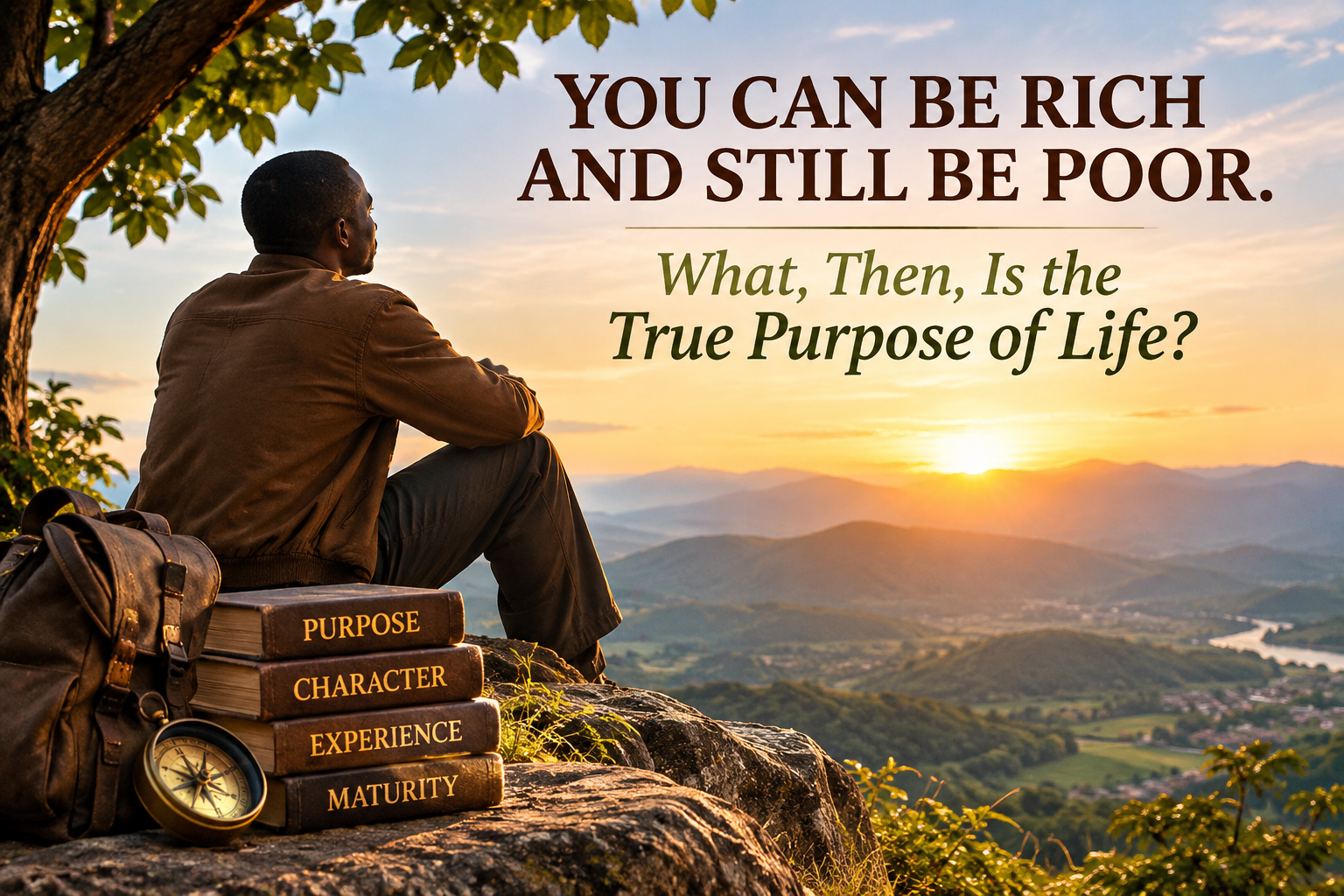
There is a peculiar tragedy in human existence: a person may spend an entire lifetime pursuing wealth, attain everything once considered desirable, and still discover an emptiness that no amount of money can fill. The houses are magnificent, the bank accounts impressive, the possessions abundant, yet something essential remains missing. How can someone possess so much and still feel so poor?
Consider, on the other hand, a person of modest means who wakes each morning with gratitude, works conscientiously, enjoys meaningful relationships and goes to bed with a peaceful heart. Such a person may possess little by society’s standards, yet experience a richness of existence that money cannot purchase. Which of these two people is truly wealthy?
Let us be clear. There is nothing inherently wrong with material prosperity. Money provides comfort, security, opportunities and the means to serve others. Poverty is neither a virtue nor a necessary condition for spiritual growth. The real question is not whether we should acquire wealth, but whether acquiring it should become the overriding purpose of our existence.
We live in a world that measures success largely by accumulation. We celebrate those who own more, earn more and command greater influence. From childhood, we are encouraged to prepare for careers, establish ourselves financially and secure our futures. These are legitimate aspirations. Yet how often are we encouraged to ask the more fundamental question: Why are we here at all?
Surely, human existence cannot be merely an elaborate exercise in acquiring possessions that we must eventually leave behind. If everything we accumulate remains on earth when we depart, then the ultimate purpose of our earthly journey must lie beyond what we can physically possess.
Perhaps we have misunderstood the significance of life itself.
We are not here merely to occupy space, consume resources, pursue pleasures and eventually disappear. We are here to experience Creation, to encounter its wonders, discover its Laws and mature through everything life brings our way. Earthly existence is not simply a destination to be enjoyed. It is an extraordinary opportunity for development.
Seen from this perspective, prosperity and adversity acquire deeper meanings. Wealth offers opportunities to practise generosity, responsibility and humility. Poverty may awaken resourcefulness, perseverance and compassion. Good health enables purposeful activity, while illness may prompt reflection on neglected priorities. Joy can deepen gratitude, just as sorrow can enlarge our understanding of others.
This does not mean that suffering should be romanticised or injustice accepted without resistance. Rather, it means that no experience need be spiritually wasted. What matters is how we respond, what we learn and what we become through it.
A person who emerges from prosperity arrogant and indifferent may have gained the world while impoverishing the inner self. Another who passes through difficulty with courage, integrity and growing understanding may have acquired something infinitely more enduring than material possessions.
And this brings us to the question we seldom confront: What are we becoming as we live?
Every encounter presents an opportunity to develop our character. Every decision strengthens or weakens something within us. Every act of kindness, every temptation resisted, every responsibility faithfully discharged contributes to the person we are gradually becoming.
Our earthly years are therefore not merely time to be spent. They are opportunities entrusted to us, precious beyond calculation because they cannot be recovered once lost.
We must learn to lift our eyes beyond the immediate concerns of earthly existence and consider where our journey ultimately leads. Only then can we begin to appreciate why our experiences matter and why even an apparently ordinary day may carry extraordinary significance.
True wealth, therefore, is not measured solely by what we have accumulated, but by the maturity, understanding and inner richness we have gained through living.
By all means, work diligently. Build enterprises. Create prosperity. Provide for your family. Contribute to society. But never become so absorbed in building your fortune that you neglect the far greater task of developing yourself.
For when our earthly journey ends, the decisive question may not be how much we possessed, but how much we grew through the privilege of having lived.
May prosperity find you without possessing you. May every experience deepen your understanding of Creation, and may you recognise in each passing day another precious opportunity for your inner ascent.
And as always, I wish you well.


