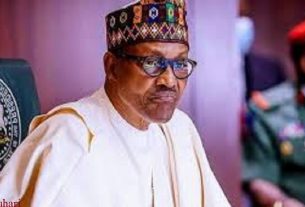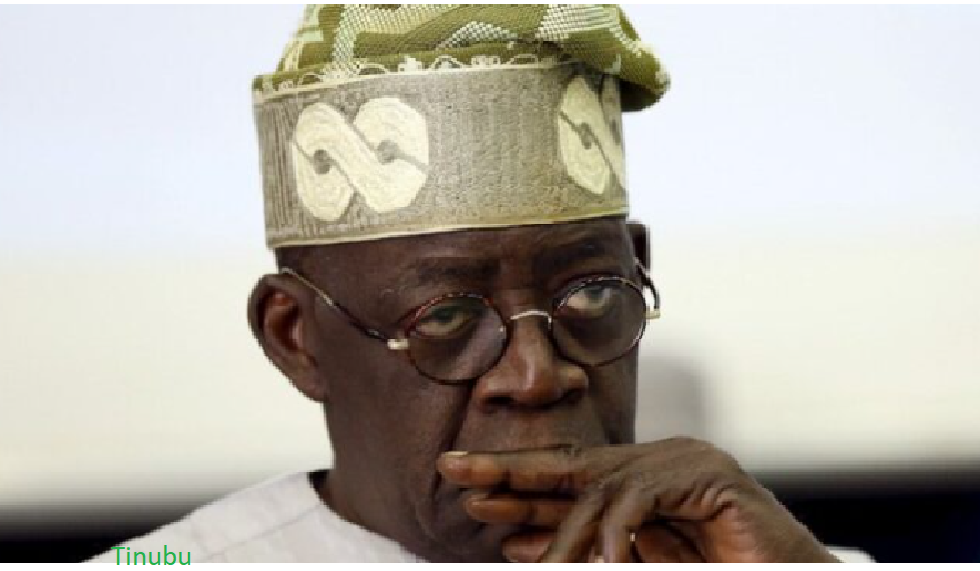
President Bola Tinubu
A fresh xenophobic violence in South Africa has claimed the lives of two Nigerians, triggering fear and panic within the diaspora community and prompting urgent diplomatic engagement by the Federal Government.
The development comes as Nigerians living in South Africa demanded protection by the Federal Government, saying that protecting Nigerians abroad is both a constitutional and moral obligation of the government.
The Nigerian Consulate General in Johannesburg confirmed that Amaramiro Emmanuel and Ekpenyong Andrew were killed in separate incidents linked to rising anti-foreigner tensions.
The Consul-General, Ninikanwa Okey-Uche, disclosed in a statement on Monday that Emmanuel died from injuries allegedly sustained after being beaten by personnel of the South African National Defence Force on April 20.
Andrew, she said, was apprehended on April 19 in the Booysens area of Pretoria following an alleged altercation with members of the Tshwane Metro Police, and his body was later discovered at the Pretoria Central Mortuary.
The consul-general said the separate cases, involving security personnel, have left the victims’ families, the Nigerian community, and diplomatic missions in shock.
A formal case has since been opened with the South African Police Service, while the Nigerian mission has urged the Independent Police Investigative Directorate to ensure a thorough, transparent, and impartial investigation.
“We call on South African authorities to thoroughly investigate the matter and bring the perpetrators to justice.
“No matter the allegations, there are lawful processes. Everyone should be presumed innocent and granted a fair hearing in a court of law. No one should take the law into their hands,” she said.
The Consul General added that the consulate was engaging relevant authorities and would provide necessary support to the families of the deceased, while warning against the growing trend of profiling Nigerians as criminals.
Okey-Uche also urged Nigerians in South Africa to remain calm and law-abiding as investigations continue.
The killings come amid escalating xenophobic hostility, with multiple viral videos showing threats, intimidation, and attempts by mobs to target foreign nationals.
In one such video, a Nigerian trader was confronted during an anti-immigrant protest and ordered to leave the country with his family.
“How come you are here in South Africa to continue selling goods?” one of the men asked.
Despite explaining his long stay and livelihood, the trader’s plea was dismissed.
“I didn’t come to South Africa today. I have been here for a long time. The only thing is what I’m doing to feed my children,” he said.
The group, however, insisted that foreigners were no longer welcome.
“From now on, we don’t want foreigners in this town. We are fixing our South Africa now,” one voice declared.
“Take your wife and go back to your country. Take your children and go and raise them at home,” a second voice said.
In another disturbing development, an Ethiopian national was shot dead in what appeared to be a targeted killing in downtown Johannesburg, further heightening concerns over the safety of foreign nationals.
CCTV footage circulating online showed the victim being approached and shot at close range at a busy intersection, with no immediate provocation or robbery, suggesting a deliberate attack.
Authorities confirmed that no arrests had been made and investigations were ongoing.
Amid the violence, the South African Police Service condemned acts of intimidation against foreigners.
“These actions are not only unlawful, but they stand in direct opposition to the values of dignity, equality, and human rights upon which our democracy is founded,” the police said.
Nigerians seek help
Reacting, the Nigerian Citizens Association in South Africa warned of increasing hostility, harassment, and alleged police brutality against Nigerians and other African nationals.
NICASA President, Frank Onyekwelu, described the situation as alarming and called for urgent intervention by Nigerian and African leaders.
“We are alarmed by the increasing normalisation of hostility, manifested through inflammatory rhetoric by certain political actors, unlawful intimidation, and discriminatory enforcement practices by some law enforcement personnel.
Related News
Group seeks South-West states’ collaboration to bridge GBV gaps
Presidency lists rail, road, health investments, says Tinubu not neglecting N’West
Ex-Oyo LG chairman joins Reps race, donates new APC secretariat
“These actions not only undermine human dignity, but also threaten the long-standing bonds of African solidarity.
“On behalf of the Nigerian community, I appeal to President Bola Tinubu, Minister of Foreign Affairs, Chairman/CEO of the Nigerians in Diaspora Commission, Nigerian Senate and House of Representatives to act with urgency, firmness, and strategic diplomacy in tackling these developments,” he said.
Onyekwelu further called for stronger diplomatic engagement, accountability for erring officers, and the creation of mechanisms to document and address xenophobic abuses.
“Nigerians in South Africa are law-abiding, economically contributing, and socially integrated members of society. The reckless stereotyping and collective criminalisation of our people must stop.
“NICASA reiterates its commitment to peace, lawful conduct, and constructive engagement within our host nation. We urge compatriots to remain calm, vigilant, and compliant with the laws of South Africa, while we pursue diplomatic and institutional remedies,” he said.
Safety advisory
The Nigerians in Diaspora Commission also issued safety advisories, warning of escalating protests in parts of South Africa, including Durban, Cape Town, and KwaZulu-Natal, where incidents of looting, property damage, and violence have been reported.
“Nigerian nationals are also urged to remain law-abiding always,” the commission stated.
The agency advised Nigerians to avoid confrontations, monitor local developments, and, in some cases, temporarily shut down businesses to prevent losses.
Despite the tensions, Nigeria’s Acting Ambassador to South Africa, Alexander Ajayi, maintained that the situation was under control and not a coordinated siege against Nigerians.
“Let me first make the point that right now, Nigerians are not under siege in South Africa. The situation is currently under control. The governments are working on it.
“The two governments are working on it. Actually, the priority right now is to ensure the safety and well-being of every citizen, including foreigners,” he said.
He described the incidents as “isolated tension” and urged caution, noting that authorities had taken steps to contain unrest in affected areas.
Ramaphosa cautions
On his part, South African President Cyril Ramaphosa urged foreign nationals to respect the country’s laws and traditions while reaffirming his commitment to international law and human rights.
In a video during his address on Monday, on the occasion of Freedom Day, he said, “To those who are here legally, respect us as South Africans, respect our laws, respect our conventions and our traditions, as you would want us to respect the laws and traditions of your own country,” he said.
FG engages S’Africa
The Federal Government of Nigeria has formally called on South Africa to ensure the protection of the lives and property of Nigerians and other foreign nationals.
The call was contained in a statement issued on Monday in Abuja by the spokesperson of the Ministry of Foreign Affairs, Kimiebi Ebienfa.
“Nigeria recalls the recent attacks on foreign nationals in some major cities in South Africa.
“As brotherly countries, Nigeria wishes to use the occasion of the anniversary of Freedom Day to call on the Government of South Africa to protect the lives and property of foreigners from fellow African countries currently residing in their country.
“Nigeria remains confident that the enduring partnership between both nations will continue to contribute to peace, stability, and sustainable development across the African continent.
“The government and people of the Federal Republic of Nigeria extend their best wishes to the government and people of South Africa for continued unity, progress, and prosperity,” the statement read.
It noted that Nigeria and South Africa share deep historical ties rooted in the anti-apartheid struggle and have since built a strong bilateral relationship spanning trade, defence, education, and cultural exchange, as well as cooperation within the African Union and United Nations.
It also highlighted ongoing collaboration through frameworks such as the Bi-National Commission, while stressing the importance of continental unity and collective progress.
Congratulating South Africa on its Freedom Day, Nigeria said the occasion marked the historic 1994 democratic elections that ended apartheid and ushered in majority rule.
The statement added that the 2026 celebration reflected 32 years of democratic governance and the country’s commitment to constitutionalism, rule of law, equality, and human dignity.
“On this auspicious occasion, Nigeria reaffirms its commitment to further strengthening bilateral relations with South Africa and deepening cooperation across strategic sectors for the mutual benefit of both countries,” the statement stated.
The Punch