

By Oluwafemi Diekolopemi with additional reports
Rising accommodation costs and additional agency charges put pressure on students, workers and low-income earners.
Securing a decent accommodation in most metropolitan cities of the South West and even other parts of Nigeria, Akure inclusive, is almost beyond the reach of an average man.
In Akure metropolis, the price fixed for the rent of a 3 bedroom flat was about ₦170,000 annually five years ago.
In 2026, that same flat according to our investigation costs ₦350,000, without any visible renovation or significant improvement made to the building. The house remains in virtually the same condition, yet the rent has more than doubled.
This raises an important question: Are the increases in rent justified by prevailing economic realities, or are tenants being forced to pay more for houses that have barely changed?
For many residents of Akure, finding accommodation is becoming more than a search for shelter. It is a crucial financial decision that requires a strategic calculation on how much money would remain for food, transportation, education and other basic needs after coughing out an humongous amount for rent.
As rents continue to rise, tenants are increasingly concerned about the cost of securing affordable accommodation. For students, young workers and families living on limited incomes, paying rent often means making difficult and almost impossible choices about other necessities.
Consider a civil servant earning less than ₦200,000 monthly and responsible for a family of four children. Beyond paying rent, such a person must provide food, clothing, school fees and other household necessities. When the time comes to renew the tenancy, another rent increase could place additional pressure on an already thinly-stretched income.
For low-income earners, the struggle to secure a roof over their heads is becoming increasingly difficult.
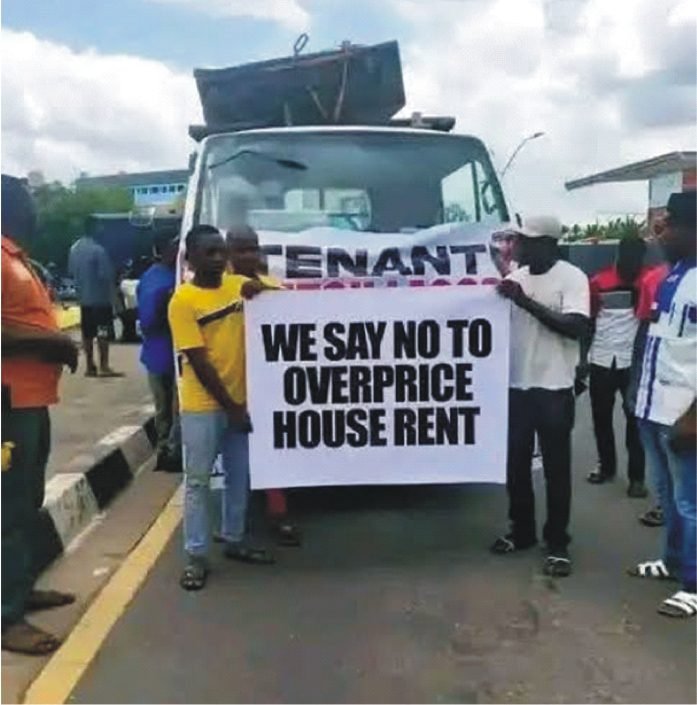
Earlier in 2026, young people in Akure protested against rising house rents. In response to concerns about housing affordability, Olajide Oguntodu, who represents Akure South Constituency I, announced plans to sponsor a bill aimed at regulating arbitrary rent increases and establishing housing oversight boards.
However, the existence and implementation of any applicable rent-control framework in Akure require further verification.
Despite growing concerns about affordability, areas such as Ijapo, Oda, FUTA and Ijoka continue to attract prospective tenants. However, accommodation in some parts of these areas is becoming increasingly difficult to afford for people on average incomes.
Residents shared their experiences of searching for accommodation, paying additional charges and struggling to meet their housing needs.
Students groan under additional charges
For some students, the cost of securing accommodation goes beyond the rent itself.
“Agent fees, agreement fees and the actual rent are the major expenses involved. While looking for a house, we were made to understand that utility fees were not included in the already high amount agents asked us to pay,” some students explained.
These additional charges often increase the financial burden on students, many of whom depend on their parents, guardians or limited personal earnings to meet their accommodation needs.
Civil servant perennial dread of rent increase as year closes
For workers with family responsibilities, the situation is equally worrying.
Mr Idowu Agunbiade, a civil servant, said annual rent increases leave him anxious whenever his tenancy is due for renewal.
“As a civil servant whose earnings are not even enough to cater for feeding, I become apprehensive whenever it is time to pay rent because of the possibility of an increase,” he said.
Another resident explained that finding affordable accommodation had become difficult because of the high prices demanded by landlords and estate agents.
A young adult said he would rather live in a family-owned house than rent accommodation in Akure, adding that he had no intention of renting until prices became more affordable.
These experiences illustrate how rising rents affect household budgets and influence how people distribute their limited incomes among competing needs.
Rising rental costs: what the figures show
A study published in November 2019 examined the relationship between income and housing costs among low-income workers in Akure.
The study found that more than 73 per cent of respondents had monthly household incomes below ₦100,000, while 81.3 per cent lived in rented accommodation. It also reported that 62.7 per cent considered their housing unaffordable, with rent payments affecting their ability to meet other household needs, including food and children’s school fees.
More recently, a report published by Nigerian Tribune on January 28, 2026, highlighted the rising cost of accommodation in Akure.
According to the report, a self-contained apartment cost between ₦250,000 and ₦350,000 annually, while a two-bedroom flat could cost between ₦500,000 and ₦1.3 million annually in prime areas.
The figures raise concerns about the relationship between earnings and housing costs. However, the 2019 study cannot, on its own, establish the current housing affordability situation in 2026.
Estate agents defend charges
While tenants complain about rising rents and additional charges, estate agents maintain that their services come at a cost.
During the investigation, it was discovered that agency and inspection fees form part of the expenses prospective tenants may encounter when searching for accommodation.
Samson Adedire, a housing agent, defended the payment of agency fees, insisting that agents deserved compensation for their services.
“That is what we do for a living. Are people expecting us not to get payment for the services rendered?,” he countered.
While tenants are concerned about the various charges involved in securing accommodation, agents argue that their professional services should be adequately compensated.
However, agents fees vary, with some agents charging modest amounts and others demanding sums considered excessive by prospective tenants.
Although estate agents provide services that deserve payment, concerns remain about the transparency, fairness and regulation of the charges imposed on prospective tenants.
Landlords blame rising maintenance cost, expensive building materials for rent increase
While tenants complain about increasing rents, landlords argue that the rising cost of building materials, property maintenance and general living expenses has also affected their ability to keep rental charges low.
Some property owners maintain that rent increases are sometimes necessary to cover the cost of maintaining buildings, repairing damaged facilities, paying artisans and meeting other expenses associated with property ownership.
A landlord based outside Akure, who spoke on condition of anonymity, explained that property owners also face economic challenges and cannot always maintain previous rental rates when the cost of maintaining their buildings continues to rise.
According to him, landlords should not be portrayed as insensitive to tenants’ financial difficulties, as they also contend with rising expenses.
He argued that although tenants deserve affordable accommodation, landlords should also be allowed to adjust rents reasonably to reflect prevailing economic realities.
Another property owner said some tenants expect landlords to maintain buildings without considering the increasing cost of repairs and replacement of damaged facilities.
He, however, acknowledged that landlords should give tenants reasonable notice before increasing rents and avoid imposing arbitrary charges.
The landlords’ position highlights the other side of the housing debate: while tenants struggle with limited incomes, property owners also face increasing maintenance and operational costs.
The rising cost of building materials has also contributed to the financial challenges facing landlords and property developers in Nigeria. A comparison of prices between 2023 and 2026 shows a significant increase in the cost of essential construction materials.
A three year comparison of price of building materials show sharp increase
In June 2023, a 50kg bag of cement sold for about ₦4,600, while a tonne of iron rods cost approximately ₦470,000 and a nine-inch block sold for about ₦400. By November 2026, indicative market prices put a bag of cement at about ₦13,700, a tonne of iron rods at ₦1.05 million and a nine-inch block at approximately ₦1,000.
This represents increases of about 198 per cent in cement prices, 123 per cent in iron rods and 150 per cent in nine-inch blocks.
Other materials have also recorded significant increases. A 2023 market report by BusinessDay showed that granite, sharp sand, roofing sheets, tiles and paint had become considerably more expensive compared with their 2021 prices.
The increases have been attributed to inflation, naira depreciation, transportation expenses, energy costs and the rising prices of imported raw materials.
For landlords, the financial burden extends beyond construction to the maintenance of existing buildings, including roof repairs, plumbing, electrical installations and painting. These expenses are among the factors that may influence rental charges.
However, while rising construction and maintenance costs provide some explanation for rent increases, they do not automatically justify arbitrary increases or excessive charges imposed on tenants. The challenge remains finding a balance between landlords’ investment interests and tenants’ ability to afford decent accommodation.
Rising need for affordable housing
Finding accommodation within a limited budget has become increasingly difficult.
At the same time, landlords depend on rental income to maintain their properties and earn returns on their investments.
The challenge, therefore, lies in balancing the legitimate financial interests of property owners and estate agents with the housing needs of ordinary residents.
From students struggling with additional charges to civil servants worried about annual rent increases, affordable accommodation is becoming increasingly difficult to secure.
There is a need for appropriate regulatory measures to promote transparency in agency charges, discourage arbitrary rent increases and protect tenants from exploitative practices without undermining the legitimate interests of landlords and estate agents.
A house may be a landlord’s investment, but for the person paying the rent, it is home. And when the cost of that home becomes too much to bear, the struggle extends far beyond the search for a roof over one’s head.
Oluwafemi is on internship with The Hope
The Hope


