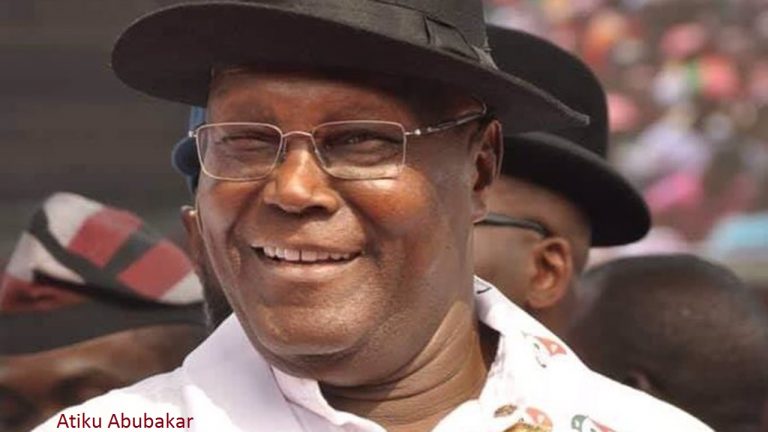
Former Vice President Atiku Abubakar has defended his proposed production subsidy model, saying it is designed to support Nigerian refineries, reduce domestic production costs and make fuel more affordable without forcing refiners to sell at a loss.
Speaking on Friday through his Senior Special Assistant on Public Communication, Phrank Shaibu, Atiku said concerns raised by Dangote Refinery about arbitrary price controls highlighted the need for a structured intervention rather than a blanket subsidy.
The presidential candidate of the African Democratic Congress (ADC) said the plan shifts subsidy support from importation to domestic production.
“The difference is simple. Import subsidy spends public money supporting petrol refined abroad and brought into Nigeria. Production subsidy supports crude refined here in Nigeria so that Nigerian refineries can produce fuel more cheaply and Nigerians can pay less,” he said.
He likened it to supporting local rice production rather than making imported rice cheaper, arguing that the approach would lower prices while also creating jobs and strengthening local businesses.
“We are restoring subsidy through a production subsidy model, not an import subsidy model. The subsidy follows the barrel refined in Nigeria,” he stated.
According to Atiku, the proposal would reduce the cost of crude feedstock supplied to qualifying domestic refineries through a transparent, capped and independently verified mechanism.
“If the crude entering a refinery becomes cheaper, the cost of producing petrol should also come down. That reduction should then reach the average Nigerian while preserving legitimate refining costs and a reasonable commercial margin,” he said.
He added that the plan does not involve fixing an arbitrary pump price or compelling refineries to absorb losses.
“If government wants to provide additional relief beyond what lower crude-input costs can deliver, then government must pay for that relief openly. It must be budgeted, capped and audited,” he said.
Atiku said the production subsidy would include strict safeguards, including a fiscal ceiling, maximum support per barrel, independent verification of supported crude, electronic tracking of crude intake and output, domestic supply obligations, transparent pricing, independent audits, and penalties for diversion or fraud.
“We will know how many barrels receive support, which refinery receives them, what is produced, what it costs the taxpayer and what benefit Nigerians receive. No mystery barrels. No endless claims,” he said.
He said support would be tied strictly to crude refined in Nigeria.
“Under our plan, Nigerian refineries will benefit. Nigerian workers will benefit. Nigerian businesses will benefit. Nigerian consumers will benefit. If you do not refine in Nigeria, you do not qualify,” he said.
Atiku added that protecting the commercial viability of Dangote Refinery, modular refineries and other domestic investments is central to the plan, while ensuring consumers also benefit from local crude production.
“We reject the false choice between a profitable refinery and an affordable pump price. A competent government should be able to protect both the producer and the consumer,” he said.
The former Vice President said the discussion around subsidy should focus on reducing production costs rather than returning to the import subsidy regime.
“Our proposal is clear: support domestic production, reduce the cost of crude going into Nigerian refineries, protect legitimate refinery margins and ensure that lower production costs translate into lower costs for Nigerians,” he said.
He said the production subsidy model aims to increase refining capacity, create jobs and make fuel, transport and food more affordable.
“Subsidise Nigerian production, not foreign importation. Produce here. Refine here. Create jobs here. Pay less here,” the statement said.
Tribune