- All school payments to go electronic from 2026/2027 session
- Govt begins school re-accreditation, digital database exercise
As primary and secondary schools across Ondo State prepare to commence the 2026/2027 academic session, the state Ministry of Education, Science and Technology has announced measures to curb sharp practices in schools.
The measures include a crackdown on illegal fees collection, excessive charges for graduation ceremonies and profiteering from textbook sales.
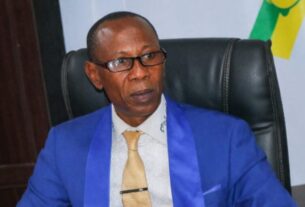
The Commissioner for Education, Science and Technology, Prof. Igbekele Ajibefun, unveiled the policies during an interactive session with journalists at the Ministry’s headquarters in Akure on Wednesday.
The commissioner stated that the ban on illegal fees collection in schools remained sacrosanct, as a way of reducing the financial burden on parents, reiterating that all payments in schools would be made electronically, beginning from the 2026/2027 academic session.
“The money will still go to the school’s account. The schools will still spend the money the way they have planned it, but we want evidence.
“We want the parents to have evidence of the money they pay because a lot of issues came up last year that some money was collected without receipt. Any money that passes through an electronic system will get a receipt,” he said.
Speaking on the ban imposed on graduation ceremonies for pupils and students who are not in their final year, Ajibefun emphasised that the ban was informed by the need to bring sanity to the schools, stressing that children who lacked an understanding of the meaning of graduation were made to participate in the ceremonies, with parents having to pay exorbitant amounts.
“During the last academic year, some reports came to us where some students were charged over N70,000 per pupil for graduation ceremonies. We summoned the school involved and it was quickly revised.
“I received a number of other calls, but some of them were not very clear. In this new academic year, we are going to take a very strong step against this.”
The commissioner equally warned that the ministry would take a firm stand against sharp practices in textbook sales in schools, saying that a book used by a student could still be used by a younger sibling subsequently.
He stressed that schools were established for teaching and learning, not for commerce, adding that bookshops were available for parents to purchase books needed by their children.
Ajibefun, however, pointed out that schools might sell uniforms to their pupils or students to ensure that every child wore the right quality of uniform, provided that the schools would not overcharge parents for such uniforms.
The commissioner also announced the introduction of a digitalisation exercise for schools, geared towards preventing the registration of ineligible students for examinations, a measure he said was being taken at both federal and state levels.
According to him, all students, teachers and facilities are captured, with a unique number given to each student by the Federal Ministry of Education.
While warning that the ministry would soon go out to enforce the digitalisation policy, Ajibefun stated that once the portal closes, any school that had not been captured would no longer be recognised.
In line with that, the commissioner also disclosed that applications for the approval of new schools would henceforth be made online to ensure greater transparency, boost the quality of education in the state and ensure a proper database for schools.
Speaking further on the database, the commissioner said that students entering secondary schools would have to receive their admission letters from the ministry.
He said, “The ministry will know the year a pupil entered primary school, so that if such a pupil is going to take a common entrance examination meant for Primary Six pupils before completing six years, we will have to know the reason why such a pupil should be allowed.
“During the registration exercise for all these examinations, their records will be properly verified. But when there is no record, it becomes a big problem.”
He also announced that in the new session, there would be a reaccreditation exercise for all schools, both public and private, a move he said would entail officials visiting schools to check if they meet the minimum requirements.
He noted that schools that fell below the minimum requirements would be identified and asked to make up for the deficiencies, saying, “For those that fall extremely below the requirements necessary to ensure quality, steps will also be taken to address the problems. But one thing that is certain is that the quality of our schools must meet the minimum requirements.”
The Hope