By Ade Oyeyemi
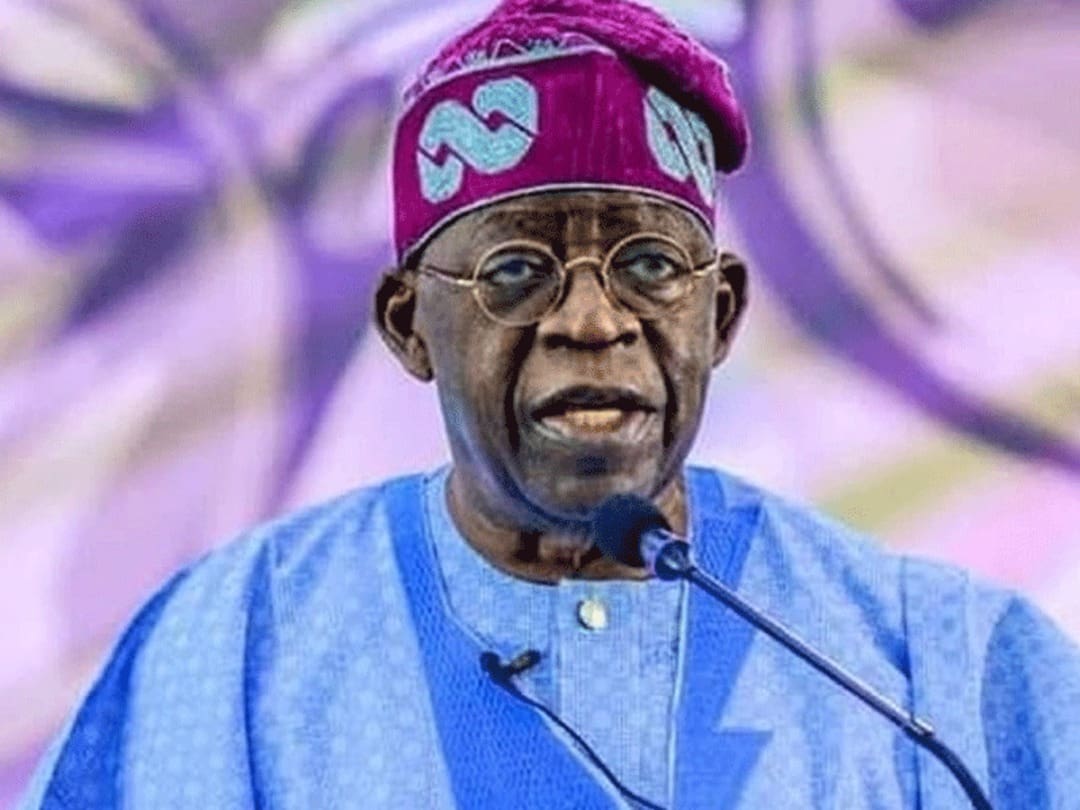
President Bola Tinubu has announced that reducing the cost of living will be the major priority of his administration as it enters the next phase of its economic programme.
The President made the declaration on Thursday in his Independence Day address to Nigerians as the country celebrated 66 years of independence.
Tinubu said the Federal Government would concentrate on lowering the cost of producing and transporting goods, arguing that cheaper production and improved distribution would eventually translate into lower prices for consumers.
“Our priority is to bring down the cost of living. We will achieve this by lowering the cost of producing and moving the things Nigerians consume,” he said.
He said the government would pursue the objective through increased agricultural production, including mechanised irrigation and dry-season farming, while improving farmers’ access to seeds, fertiliser and machinery.
Tinubu also listed investment in storage and transportation infrastructure as part of the measures aimed at reducing losses and improving the movement of farm produce from rural areas to markets.
Tinubu defends economic reforms
The President defended the economic reforms undertaken since he assumed office, saying they were necessary to address long-standing weaknesses in the Nigerian economy.
According to him, successive administrations had postponed difficult decisions, allowing economic distortions to deepen until the situation became critical.
He said the country was already facing rising poverty and diminishing hope in 2023 when his administration began implementing its reforms.
Tinubu likened Nigeria’s economic situation to that of a cancer patient, saying previous governments had often treated the symptoms of the problem rather than confronting its underlying causes.
“Nigeria was like a sick patient who receives the terrible news that he has cancer,” he said.
He maintained that his administration chose to confront the structural problems despite the hardship associated with the treatment.
“For too long, Nigeria’s leaders chose morphine while praying for a miracle that never came,” Tinubu said.
The President acknowledged that the reforms had produced difficult consequences but argued that they exposed and addressed weaknesses that existed before his administration.
“Our reforms did not create the weaknesses in our economy. They confronted them,” he said.
He also rejected calls for a return to what he described as the “abuse of addictive subsidies,” urging Nigerians to remember the reasons behind the reforms.
Food, transport costs top agenda
Tinubu said the government’s next objective was to ensure that economic growth translated into tangible improvements in Nigerians’ living conditions.
He said reducing production costs in agriculture, manufacturing and transportation would be critical to lowering the prices of goods.
The President noted that the government was constructing and completing roads, railways and ports to improve the connection between farms, factories and markets.
He said lower farming costs, reduced post-harvest losses, cheaper electricity for manufacturers and faster movement of goods would create savings that could eventually be reflected in market prices.
“Our logic is simple. When a farmer produces more cheaply, when fewer crops are lost between the farm and the market, when a manufacturer spends less on electricity, when a truck reaches its destination faster, and when the business environment fosters fair competition, all those savings will ultimately find their way into the price of goods in the market,” he said.
He stressed, however, that economic prosperity could not be achieved through lower prices alone.
“Prosperity requires more than cheaper goods. It requires productive work,” the President said.
President targets industries, youth employment
Tinubu said job creation, enterprise and industrial expansion would remain key areas of focus, particularly given the growing number of young Nigerians entering adulthood and the labour market.
He said Nigeria’s gas resources would be deployed to support new industries, while the government would assist businesses seeking to restart factories and expand digital connectivity.
The President also promised increased investment in skills development to equip Nigerians with abilities required by employers.
“I want to see more Nigerians making things. I want to see more Nigerian farms feeding our cities and supplying our factories. I want to see Nigerian businesses selling Nigerian goods to the whole world,” he said.
Tinubu said the government wanted young Nigerians to establish businesses capable of creating employment and expanding opportunities within the country.
He further claimed that the Nigerian economy grew by more than four per cent in 2026, with both the oil and non-oil sectors contributing to the growth.
He cited reduced oil theft, falling inflation, increased foreign reserves and improved stability in the foreign exchange market among the developments recorded by his administration.
According to him, Nigeria also recorded more than $6bn in non-oil export revenue in 2025, which he described as the country’s highest-ever figure.
“These are not idle claims. International observers, journalists, NGOs and multilateral institutions can see the change,” Tinubu said.
‘We cannot erase four decades in four years’
The President acknowledged that millions of Nigerians continued to struggle with the cost of food, school fees, medical expenses and transportation.
He said the challenges were the result of problems that had accumulated over several decades and could not be completely eliminated within four years.
“We cannot erase in four years what accumulated over generations. But we can change its course,” Tinubu said.
He promised to strengthen direct support for poor households and improve the National Social Register to ensure that government assistance reached the intended beneficiaries.
Tinubu also pointed to the Nigerian Education Loan Fund as part of efforts to expand access to higher education for students from low-income families.
He said the Consumer Credit Corporation was providing working Nigerians with access to credit for essential assets such as vehicles, solar power systems and digital devices.
The President added that the Federal Government would continue to collaborate with state and local governments to improve primary healthcare, basic education and other essential public services.
He said salaries and pensions had been paid “on time and in full” since 2023, while reforms to the pension system were being implemented.
“These programmes are not substitutes for prosperity. They are a bridge to aid our nation’s citizens on their path towards it,” Tinubu said.
“Our objective is not to manage poverty more efficiently. We will defeat it.”