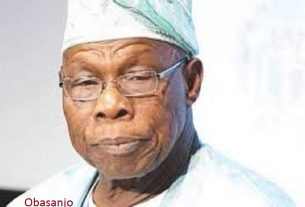
Chief Moshood Kashimawo Olawale Abiola, the winner of the 1993 presidential election, which was conducted on June 12, 1993. It was Nigeria’s most credible election ever conducted, but it was annulled by the military regime. The annulment threw the nation into tortuous and bloody pro-democracy struggles during which many pro-democracy activists were either killed or forced into exile. Chief MKO Abiola was arrested and detained in the process. He died in detention. Abiola has since been the symbol of Nigeria’s Democracy Day, which is celebrated annually every June 12.
By John Dike, Osogbo
As Nigerians mark another Democracy Day anniversary, prominent stakeholders have called for deep reflection on the state of the nation, warning that insecurity, poor governance, weak institutions and declining public trust continue to undermine the country’s democratic aspirations.
A Professor of Political Science at Osun State University, Prof. Bolaji Omitola; the Presiding Bishop of Sufficient Grace and Truth International Ministries and former Chairman of the Nigeria Union of Journalists (NUJ), Osun State Council, Bishop Seun Adeoye; and the Executive Director of Social-Economic and Civic Rights Advocacy (SECRA), Mr. Olowu Emmanuel Aiyedun, made the call in separate interviews with our correspondent in Osogbo.
The trio emphasized that while Nigeria has sustained democratic governance since 1999, the country must confront lingering challenges threatening the dividends of democracy.
Prof. Omitola attributed the growing wave of insecurity, political instability and governance challenges to leadership failure Om”@ ¥ what he described as Nigeria’s defective political structure.
According to him, Nigerians must first examine whether the country truly operates a democratic system that serves the interests of ordinary citizens rather than those of a privileged political elite.
“The question to ask is whether we have a democratic structure in place in the first instance,” Omitola said.
“What we have as political parties are platforms to capture power and serve the interests of the elites. There is very little consideration for the generality of the people in terms of meeting their demands.”
The political scientist argued that many political parties have abandoned their role as institutions for policy development and nation-building, becoming platforms through which influential individuals compete for power.
He noted that the inability of political leaders and institutions to adequately address the needs of citizens has contributed to widespread public dissatisfaction and declining confidence in governance.
Speaking on insecurity, Omitola explained that crime and criminality are products of several interrelated factors, including socio-economic hardship, political tensions, religious extremism, ethnic divisions and governance failures.
“Crime and criminality have multifactorial causes. Socio-economic challenges, political, religious and ethnic factors all play significant roles,” .
The professor further blamed the country’s centralized security structure for limiting effective responses to security threats.
“Of course, it is partly a result of leadership failure and also due to the defective structure of the country. Criminality would have been reduced if we had a decentralized security architecture,” he added.
He advocated constitutional and institutional reforms that would allow greater autonomy in security management, arguing that sub-national governments are often better positioned to understand and address local security concerns.
Omitola also urged political leaders to embrace transformational leadership and become more responsive to the needs of citizens.
“Politicians need to be more responsible, responsive and transformational as leaders because without this, the worsening situation could consume them in the long run,” he warned.
He equally advised citizens to reject political inducements, hold leaders accountable and become more involved in governance and community security.
“For the masses, they should eschew immediate gratification, hold leaders accountable and be more involved in what is going on around them both in politics and security,” he said.
Also speaking, Bishop Seun Adeoye called for a sober observance of Democracy Day, insisting that the nation’s current realities do not justify extravagant celebrations.
The cleric said the persistent challenges of insecurity, poverty and economic hardship require reflection and prayers rather than festivities.
“We should celebrate it solemnly. We cannot see our children in captivity and then roll out drums singing and dancing,” Bishop Adeoye stated.
The former NUJ chairman lamented the plight of victims of kidnapping, banditry and other violent crimes, noting that many families continue to suffer the pain of uncertainty.
According to him, Democracy Day should be an opportunity for leaders to evaluate their stewardship and recommit themselves to addressing the country’s challenges.
“Our leaders should use the day to reflect on the present predicament,” he said.
He stressed that leadership should be guided by compassion, accountability and a genuine commitment to improving the welfare of citizens.
Bishop Adeoye also urged Nigerians to support efforts toward national development through prayers and active participation in democratic processes.
“Followers should join by seeking God’s intervention,” he added.
The cleric expressed confidence that with responsible leadership, national unity and divine guidance, Nigeria would overcome its present challenges.
On his part, the Executive Director of Social-Economic and Civic Rights Advocacy (SECRA), Mr. Olowu Emmanuel Aiyedun, argued that democracy itself is not failing in Nigeria, contrary to growing public perceptions.
According to him, what is failing is the collective commitment of leaders, institutions and citizens to the principles and values that sustain democratic governance.
“As discussions continue across the country about the state of governance and democratic practice, many citizens have begun to ask a critical question: Is democracy failing?” Aiyedun said.
“The answer, in my view, is no. Democracy itself is not failing. Rather, what appears to be failing is our collective commitment to the principles, institutions and values that make democracy work.”
He acknowledged that Nigeria has recorded significant democratic achievements since the return to civilian rule in 1999, including uninterrupted democratic governance, regular elections, peaceful transfers of power and expanded civic participation.
However, he noted that democracy extends beyond elections and requires strong institutions, accountability, transparency, respect for the rule of law, protection of human rights and active citizen engagement.
According to him, corruption, weak institutions, electoral malpractice, vote-buying, political violence, poverty and unemployment have contributed significantly to public frustration and declining confidence in democratic governance.
“The result is widespread frustration among citizens who expected democracy to bring improved living conditions, security, economic opportunities and social justice,” he stated.
“For many, the gap between democratic promises and daily realities has become increasingly difficult to ignore.”
Despite these challenges, Aiyedun maintained that democracy remains the most viable system for ensuring popular participation and peaceful political change.
He emphasized that the solution lies not in abandoning democracy but in strengthening it through reforms and institutional development.
“This requires building independent institutions, promoting responsible leadership, deepening civic education, ensuring credible elections and encouraging citizens to remain actively engaged beyond election periods,” he said.
He further described democratic consolidation as a continuous process that requires persistence, reforms and civic vigilance.
“The real challenge before Nigeria is not whether democracy should continue, but how to make democracy work better for the people,” he added.
“Democracy has not failed. What is failing is our commitment to the ideals that sustain it. The task before us is to renew that commitment and build a democratic culture capable of delivering justice, accountability, development and prosperity for all.”
As Nigerians commemorate Democracy Day, the submissions of Omitola, Adeoye and Aiyedun reflect growing concerns about insecurity, governance deficits and economic hardship, while underscoring the urgent need for institutional reforms, responsible leadership, active citizenship and national reflection.
Their message is clear: democracy can only deliver meaningful dividends when leaders and citizens alike commit themselves to the principles of accountability, justice, transparency and service to the common good.