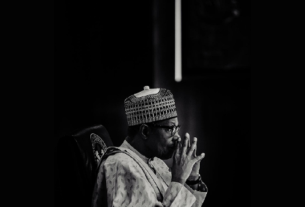
Late Gen. Sani Abacha
NIGERIA must never endure another Sani Abacha.
That is the stark warning contained in the memoir, DSS @40: My Journey Behind the Shield, by former Department of State Services officer Dennis Amachree. The book once again casts a harsh light on the brutal dictatorship of former Head of State, Sani Abacha, from November 1993 until his death in June 1998.
That regime remains one of the darkest chapters in Nigeria’s political history, a byword for repression, impunity, corruption and the reckless abuse of state power.
These chilling recollections should strengthen the country’s resolve to resist every attempt to sanitise the Abacha era.
One of Africa’s most vicious military rulers must not be recast, as some have sought to do, as a misunderstood patriot or nation-builder. Abacha was a sinister tyrant. Rewriting history insults the memory of the thousands who suffered detention, torture, exile, persecution and death under his iron-fisted rule.
Before becoming Head of State, Abacha was a central figure in Nigeria’s cycle of military coups beginning with the December 1983 overthrow of President Shehu Shagari.
He was also a key member of the Ibrahim Babangida regime that annulled the June 12, 1993 presidential election, widely acknowledged as Nigeria’s freest and fairest, which MKO Abiola indisputably won.
The annulment plunged the country into political and economic turmoil. Strikes paralysed the economy, protests spread across the country, businesses shut down, banks struggled, and ethnic tensions intensified.
Abacha exploited the chaos. On November 17, 1993, he toppled the weak Interim National Government led by Ernest Shonekan and established the most authoritarian regime in Nigeria’s history.
He suspended the Constitution, dissolved the National Assembly, removed elected governors and state legislatures, banned political activities and concentrated extraordinary powers in his own hands.
His government quickly became synonymous with fear. Politicians, journalists, labour leaders, students, academics and human rights activists became targets of systematic intimidation. Newspapers were shut down, media houses raided and journalists detained without trial.
The persecution of Abiola remains one of the regime’s greatest atrocities.
After declaring himself the rightful winner of the June 12 election in June 1994, Abiola was arrested on treason charges. He remained in detention until his mysterious death on July 7, 1998, barely a month after Abacha himself died.
The Abacha years were also marked by a string of assassinations and suspicious deaths.
Kudirat Abiola, the courageous wife of MKO Abiola and a leading figure in the pro-democracy struggle, was assassinated in Lagos on June 4, 1996.
Businessman and democracy activist Alfred Rewane was murdered in his Ikeja home in October 1995.
While Abraham Adesanya survived an assassination attempt, Toyin, the son of Olu Onagoruwa, a Minister of Justice under Abacha, did not. Shehu Yar’Adua died in Abakaliki Prison in December 1997 while serving a sentence imposed after a controversial coup trial. Olusegun Obasanjo, who later became a two-term civilian president, narrowly escaped death in Abacha’s gulag by providence.
The execution of Ken Saro-Wiwa and eight other Ogoni activists on November 10, 1995, marked one of the lowest points in Nigeria’s history.
Those hangings led to Nigeria’s suspension from the Commonwealth and transformed the country into an international pariah.
Characteristically, the regime responded with greater repression. Its chief security officer, Hamza al-Mustapha, and members of the notorious Strike Force became enduring symbols of state terror. Bombs exploded in public places. Countless Nigerians were arrested without warrants, tortured in secret detention facilities and denied even the most basic legal protections.
The dictatorship also sought to perpetuate itself. By 1998, all five officially recognised political parties had adopted Abacha as their sole presidential candidate in a thoroughly discredited transition programme.
The late Bola Ige memorably described them as “the five fingers of a leprous hand.”
Beyond political repression, Abacha presided over one of the greatest episodes of official corruption in Nigeria’s history.
After his death on June 8, 1998, investigators uncovered billions of dollars looted from the public treasury through fraudulent security votes, inflated contracts and direct withdrawals from the Central Bank.
Successive Nigerian governments, working with foreign partners, have recovered billions of dollars in what has become globally known as the “Abacha loot.” Yet substantial sums remain hidden and unrecovered.
Numerous conspiracy theories have surrounded his death. Some blamed foreign intelligence agencies or visiting diplomats; others claimed he died in the company of foreign sex workers.
Amachree’s memoir instead claims the military ruler died in the private company of a local female entertainer.
None of these accounts has been subjected to forensic scrutiny. What is beyond dispute is that his sudden death abruptly ended one of Africa’s cruellest dictatorships.
The spontaneous celebrations that erupted across parts of the country following the announcement of his death spoke volumes about the hatred Nigerians had for his reign of terror.
Today’s public office holders should draw an enduring lesson from that moment. Death is the ultimate leveller. No ruler, however powerful, escapes history’s judgement.
Abacha did not act alone. Security agencies, senior officials and state institutions enabled his excesses. One top government official is Abacha’s “bag boy.” Others who actively sustained the regime are still celebrated in some quarters despite helping the self-styled “Maximum Ruler” devise and execute his machinery of oppression from Aso Rock.
The defence of “following orders” must never excuse unlawful detention, torture, extrajudicial killings or the suppression of legitimate political opposition.
Some civilians, including many of Abiola’s associates, also collaborated with the dictatorship. Yet many courageous Nigerians resisted the regime at enormous personal cost. They remain the true heroes of Nigeria’s democratic struggle.
Attempts by some individuals, including members of Abacha’s family and certain former public officials, to portray that era as a golden age must be firmly rejected.
Nigeria must never again tolerate a government that criminalises dissent, silences the media, imprisons political opponents or places one man’s will above the Constitution and the rule of law.
The country must finally exorcise the ghosts of the Abacha years through accountability, justice and an unwavering commitment to democratic governance.
The dark-goggled dictator belongs in history’s dustbin, not among its heroes. Nigeria must never allow that tragic era to return.
The Punch Editorial