- Power is not personal property, public office is a sacred trust, says Oyejola
By John Dike, Osogbo
The Catholic Bishop of Osogbo Diocese, Most Rev. John Akin Oyejola, has challenged political leaders and citizens across Nigeria to embrace accountability, integrity and moral responsibility towards the peope they elected to governed
He warned that the country cannot overcome its numerous challenges if public positions continue to be regarded as avenues for personal enrichment.
Oyejola also declared that no responsible government could expect citizens to remain peaceful when it failed to adequately protect their lives and property, stressing that security of the people remained one of the fundamental responsibilities of government.
The bishop spoke during the Second Catholic Bishops’ Conference of Nigeria Plenary held in Osogbo, where he delivered a strongly worded prophetic reflection on the liturgical readings for the 21st Sunday in Ordinary Time, Year A.
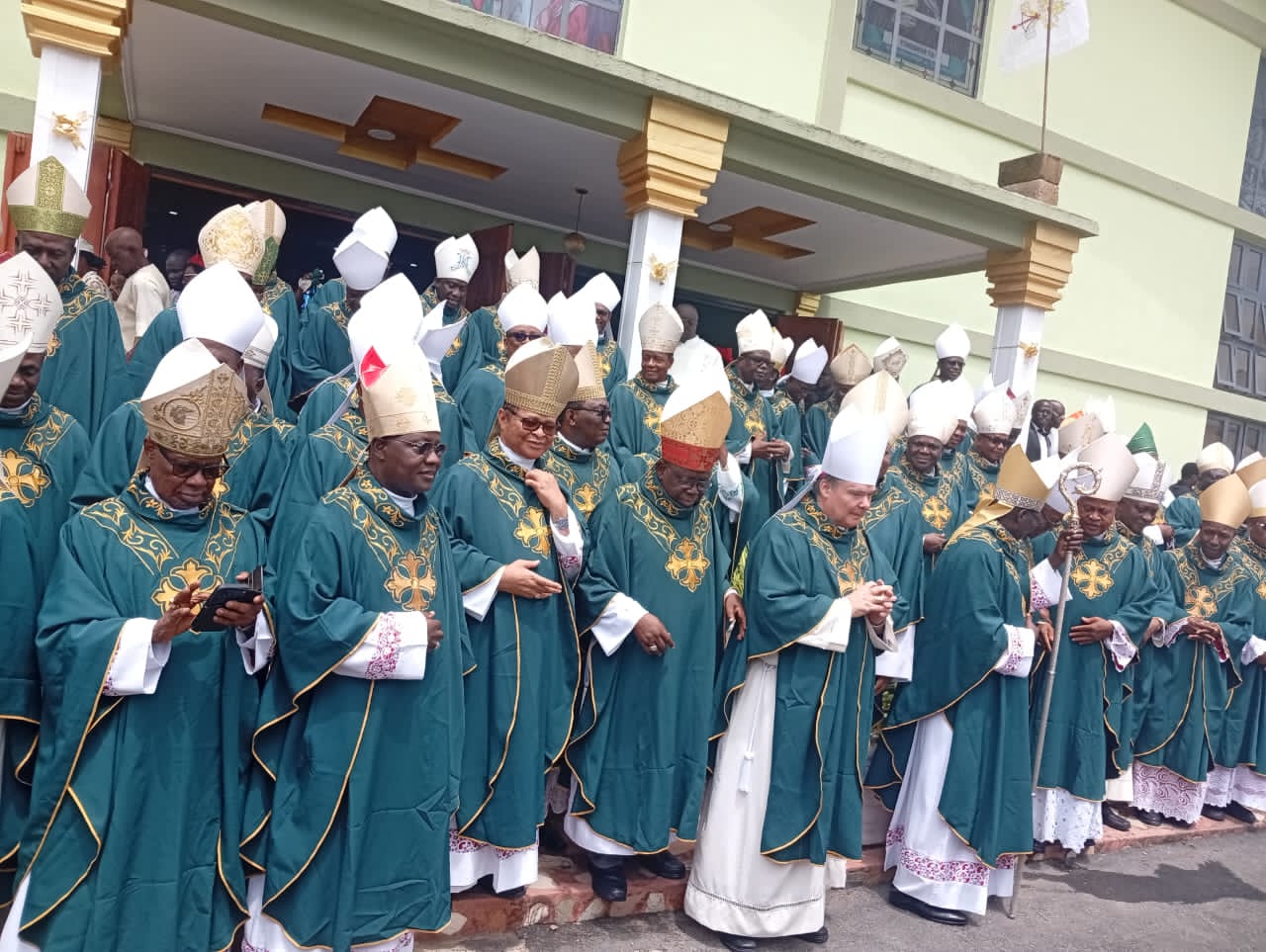
The conference brought together Catholic bishops and representatives from dioceses across the country for reflection, prayer and discussions on the state of the nation, governance, morality, peace and the responsibilities of both leaders and citizens.
The opening Mass of the plenary was celebrated by the President of the Catholic Bishops’ Conference of Nigeria, Archbishop Matthew Man-oso Ndagoso, with about 70 bishops and representatives of dioceses in attendance, alongside the representative of the Pope in Nigeria, the Papal Nucio, Archbishop Michael Francis Crotty
While some bishops were physically present at the gathering, others were represented by delegates from their respective dioceses.
Speaking against the backdrop of the prevailing political, economic and security challenges in the country, Oyejola said Nigeria was at a critical point in its democratic journey and required both leaders and citizens to undertake serious moral reflection on the direction of the country.
He said the biblical passages for the day’s liturgy were particularly relevant to Nigeria’s present circumstances, especially issues of bad governance, insecurity, corruption, violence, vote-buying, impunity and the growing disregard for the dignity of citizens.
According to him, the message of the Scriptures should not merely be viewed as a source of spiritual comfort but as a mirror through which political leaders, religious authorities and ordinary citizens should examine their conduct and the consequences of their actions.
The bishop warned that Nigeria would continue to struggle with underdevelopment, injustice and insecurity if personal interests remained above the common good.
He lamented what he described as the widespread mentality that political, religious, institutional and private positions were opportunities for self-enrichment.
Oyejola said the culture had contributed to the weakening of public institutions, encouraging impunity and undermining merit.
He observed that many Nigerians had become increasingly convinced that knowing the right person was more important than possessing the right qualifications.
According to him, such a situation had created a society where people often had to rely on personal connections before accessing opportunities to which they were legitimately entitled.
Power Is Not Personal Property
The Catholic bishop reminded political leaders that public office was neither personal property nor family inheritance, but a sacred trust entrusted to individuals for the benefit of the people.
He said those who occupied positions of authority should always remember that political power was temporary and that every leader would eventually give an account of his or her stewardship.
Drawing from the biblical admonition to remember one’s last days, Oyejola said those in positions of power should not behave as though they would remain in office forever.
“None of us lives forever,” he said, stressing that earthly power, wealth and influence were temporary.
He warned political leaders against using violence, intimidation, manipulation and fraudulent practices to acquire or retain political power.
According to him, political authority obtained through the blood of innocent citizens or through the subversion of the people’s will could never deliver genuine development.
He said political actors might succeed in deceiving institutions, intimidating communities or manipulating political processes, but they could never deceive God.
The bishop therefore urged politicians preparing for future elections to abandon politics of violence and manipulation and instead present credible programmes capable of addressing the challenges confronting Nigerians.
Why Protect Politicians and Leave Citizens Vulnerable?
Oyejola also questioned the disparity between the level of security provided for political leaders and the vulnerability faced by ordinary citizens.
He observed that politicians often moved around with heavily armed security personnel and convoys while ordinary Nigerians who elected them continued to face kidnappers, criminals and other threats.
He said the situation raised serious moral questions about the responsibility of government towards the people.
According to him, security should not be a privilege reserved for those in positions of power but a fundamental right that must be enjoyed by every citizen.
“No government can ask citizens to remain calm and peaceful if it fails to protect them. This is why it is the responsibility of any responsible government to protect its citizens,” he said.
The bishop stressed that while citizens had a responsibility to reject violence, government also had an obligation to create an environment where people could live without fear.
He described peace as a two-way responsibility between government and citizens.
While citizens must reject violence, revenge and destruction, he said government must provide protection, justice and security.
“Justice requires action. Justice demands protection. Justice insists that the vulnerable must not be abandoned,” Oyejola said.
He expressed concern over families that had lost loved ones to insecurity, communities whose homes and businesses had been destroyed and millions of Nigerians living under the fear of criminal attacks.
He called on government authorities to move beyond promises and take concrete steps to protect citizens.
Bishop Condemns Vote-Buying
The Catholic bishop also condemned the increasing practice of vote-buying, describing it as one of the major threats to Nigeria’s democracy.
He specifically referred to the recently concluded Osun State governorship election, saying he had repeatedly appealed to citizens to exercise their civic responsibility and resist the temptation to sell their votes.
Oyejola expressed disappointment that some voters still exchanged their votes for money, food items, clothing materials and other temporary benefits.
He warned that the consequences of vote-buying extended far beyond election day because voters who sold their votes could lose the moral authority to demand accountability from elected officials.
According to him, a vote is not merely a piece of paper used to select a political candidate but a moral decision capable of determining the future of society.
He described the vote as a seed planted for the next generation.
The bishop said citizens who exchanged their votes for cash, bags of rice, wrappers or other material benefits were effectively trading away their dignity, voice and future.
He urged Nigerians to interrogate political candidates before elections, examine their records, character and competence, and vote according to conscience and merit rather than immediate financial gain.
He said citizens should demand to know what candidates intended to do about insecurity, unemployment, education, healthcare, poverty and other challenges confronting the country.
Mercy Must Go With Justice
Reflecting further on the Gospel message, Oyejola said mercy and justice should not be regarded as contradictory principles.
He said both were necessary for healing a wounded society.
The bishop urged Nigerians who had suffered injustice not to resort to revenge, warning that vengeance could create a cycle of hatred, violence and destruction.
He, however, stressed that forgiveness must not be interpreted as an excuse to allow wrongdoing to continue unchecked.
According to him, mercy without justice could become weakness, while justice without mercy could become cruelty.
He said genuine reconciliation could only take place when justice was pursued and the dignity of victims was respected.
“Forgiveness does not mean ignoring wrongdoing or abandoning victims,” he said.
Oyejola called for a justice system that would give citizens confidence that institutions could protect them and ensure that perpetrators of wrongdoing were held accountable through lawful processes.
“When mercy and justice meet, society is healed,” he said.
Religious Leaders Also Accountable
The bishop extended his message of accountability to religious leaders, saying members of the clergy and other religious authorities were not exempt from the moral responsibilities they demanded from political leaders and citizens.
He said religious leaders must also examine their leadership, stewardship, divisions and even their silence in the face of wrongdoing.
According to him, religious authorities would ultimately give an account of how they exercised their responsibilities and guided their followers.
He urged religious leaders to provide moral leadership by speaking truth to power, defending vulnerable people and encouraging citizens to act responsibly.
Oyejola said the Church must continue to remind society that leadership was fundamentally about service rather than privilege.
He also called on religious institutions to ensure that their internal leadership structures reflected the values of integrity, justice, accountability and service which they preached to society.
The bishop said the responsibility for building a better Nigeria could not be placed entirely on government officials, stressing that citizens also had an important role to play in determining the quality of leadership and governance.
He urged Nigerians to reject corruption, favouritism, violence and other practices that undermine national development.
According to him, citizens must demand accountability from elected officials while also holding themselves accountable for their own actions.
He warned against the hypocrisy of condemning corruption in government while simultaneously participating in corrupt practices at individual and community levels.
Oyejola called for a renewed culture of integrity in which Nigerians would insist on merit, fairness and justice rather than seeking personal advantage through connections and influence.
He said the future of Nigeria depended not only on the quality of its political leadership but also on the moral choices made by citizens.
“Remember Your Last Days”
Drawing from the biblical admonition contained in the day’s liturgical readings, Oyejola repeatedly urged Nigerians, particularly those in positions of authority, to remember their mortality.
He said awareness of the temporary nature of life should encourage leaders to govern with humility, compassion and responsibility.
He warned those who accumulated wealth through corrupt practices that material possessions would not follow them beyond the grave.
Similarly, he said political power acquired through intimidation, manipulation or violence could not provide permanent security for its beneficiaries.
The bishop urged leaders to consider the consequences of their decisions on future generations rather than focusing solely on immediate political and personal interests.
He said public office should be seen as an opportunity to serve humanity and contribute to the development of society.
Oyejola described the message of the liturgy as a prophetic call to Nigeria at a crucial period in the nation’s political history.
He said the country needed leaders who would respect the dignity of citizens, protect public resources, provide security and govern with compassion.
He equally called for citizens who would reject inducements during elections, resist violence and make informed decisions at the ballot box.
The bishop maintained that meaningful change would remain difficult if Nigerians continued to tolerate the same practices that had contributed to the country’s problems.
He stressed that national transformation required responsible leadership and responsible citizenship.
Oyejola therefore called on political leaders, religious authorities and ordinary Nigerians to embrace a new culture of accountability, integrity and moral responsibility.
He urged Nigerians to reject wickedness and vengeance, promote justice, pursue reconciliation and work collectively for the common good
He prayed for divine intervention in the affairs of Nigeria, asking God to heal the country, protect its people and raise leaders capable of governing with justice, compassion and integrity.
The bishop said Nigeria’s prospects for peace and development would become stronger when mercy and justice worked together and when both leaders and citizens accepted their responsibilities to the nation, humanity and God.
The Second Catholic Bishops’ Conference of Nigeria Plenary in Osogbo consequently provided a platform not only for spiritual reflection but also for the Catholic hierarchy to draw attention to the moral, political and social responsibilities required to move Nigeria towards a more just, peaceful and accountable society.