

By Dapo Olorunyomi
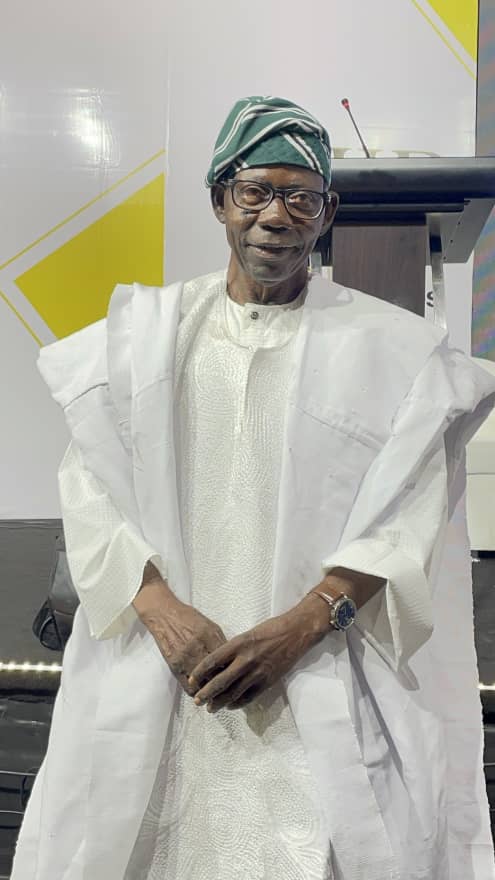
Good morning, distinguished ladies and gentlemen, and welcome. I want to extend a special welcome to the revered Ladbone, Mr. Lade Bonuola, the star boy of today’s gathering, and to his beautiful family and their friends. I will not keep you long; I only want to put today’s events into some perspective for us all.
First, this is a mini journalism festival, of sorts. We are here to recognise, once again, the life, times and work of perhaps the most consequential editor in the late twentieth-century history of the Nigerian print press. It is, therefore, a moment of gratitude for the life in print of Mr. Lade Bonuola, a life that began in 1976 at the Daily Times and ran through The Guardian, The Comet and Compass.
That half-century, fifty years of a profoundly demanding and momentous professional life, is being marked today, in part, by family, friends and mentees with a biographical anthology of essays. In about 750 pages, it explores six dimensions of Ladbone’s life: his moments of excellence, his life as a legend, the architecture of his editorial genius, his extraordinary record of mentorship, the power and meaning of his courage, and the reality that behind that granite posture lies, as one contributor, Ben Tomoloju, aptly puts it, a greatness of spirit as a father, grandfather, husband, friend and neighbour. The book is titled LADBONE: A Life in Print.
We leave it to thoughtful scholars of Nigerian media history to decide whether there was a greater editor in that era. But as more than 60 contributors have asserted, Ladbone had few equals, if any. We are deeply grateful for his labour of love to the country, to the profession, and to the unfinished task of building a resilient democracy in our land.
The idea for this book grew out of our continuing effort to help remake Nigerian journalism, which has travelled in many directions since the birth of the newspaper press in this country in 1859. In 2011, Mr. Musikilu Mojeed, who is unavoidably absent today, and I co-founded Premium Times as an intervention to strengthen fact-based reporting. By 2014, it had become clear that only an ecosystem-wide intervention could deliver the ambition we had in mind: to build a spirit of innovation into the very innards of our media system, in how we cover news, how we distribute content, and how, more broadly, we finance journalism in the digital age.
In 2020, we renamed the organisation to keep pace with the spirit of the age, recognising the centrality of technology to the future of our media. That vision has since found substance in an expansion that today places the Centre for Journalism Innovation and Development [CJID] in 15 programme offices across Africa.
Last year, as we began documenting our own work in the field, we launched the Living Archives Initiative. Among its broader goals, it will digitise and preserve the works, times and personalities that have given meaning to our part of the world, Africa. Fittingly, we began with our own constituency, the media, and with someone who remains a veteran on active duty. The choice was inescapable: Lade Bonuola, the great Ladbone!
Those who know him will know he is a man of very few words, so this project was, frankly, an act of insurgency. He first heard about it from the people we had asked to write essays. He was initially shocked and probably considered shutting the whole thing down. But, wise man that he is, he quickly realised that resistance was futile. Then came the task of gathering photographs and documents, for which we relied on the kind collaboration of co-conspirators within the family. We even arranged for his wife to visit their children and grandchildren in Abuja, purely, of course, so she could help us fill a few gaps in the family history.
Today, we thank his six daughters and eleven grandchildren for their help and support in making this book possible. We thank the contributors, some of whom helped shape the project through early interviews before writing their own essays. We thank our board members, who approved this work. And we must not forget the tireless and remarkable management and staff of CJID and Premium Times, the backbone of our growth and continued success. Thank you all.
Shortly, a panel will take the stage for a deep dive into the future of Nigerian journalism beyond the Ladbone generation. We designed it as a broad, intergenerational and gender-balanced conversation, to prod us on the omissions, the gaps we must fill, and the challenges still awaiting resolution as we march on toward building an inclusive, liveable and more democratic country. I thank my friends and colleagues of many years who agreed, at such short notice, to join the panel: Kadaria Ahmed, Azubuike Ishiekwene, Ifeanyi Mbanefo and the adorable Chiamaka Ozurumba.
My last word is the one statement Ladbone will surely dispute: that we are also here to celebrate eighty years of a meaningful, substantive and healthy life. Yes! Today is Ladbone’s birthday. Happy birthday, sir, and our best wishes for many more years of good health, sound mind and continued service.
Being the speech delivered by the Publisher, Premium Times/CEO, CJID, Mr Dapo Olorunyomi, at the launch of a book LADBONE: A Life in Print in honour of former Managing Director of The Guardian, Mr Lade Bonuola (Ladbone), and the celebration of his 80th birthday on Thursday, October 22, 2026, at the Civic Centre, Victoria Island, Lagos


