By Ade Oyeyemi
Some Republicans are considering postponing their presidential ambitions until 2032, arguing that the political climate following the party’s heavy losses in the 2026 midterm elections could make a Republican victory in 2028 difficult.
The discussions come amid growing concerns within the party over President Donald Trump’s declining popularity and the impact of his policies on the Republican Party’s electoral prospects.
According to Republican strategists and political operatives, potential presidential candidates are increasingly uncertain about challenging for the White House in 2028, particularly as they would have to navigate their relationship with Trump and his influence over the party’s supporters.
A Republican operative close to a lawmaker considering a future presidential bid described the prospect of running in 2028 as politically dangerous.
“How can a candidate run in 2028 when they have to criticise the policies of a sitting president with a large amount of sway with the Republican base? It’s a suicide mission,” the operative said.
The source argued that unless the administration makes significant progress on major issues, including the war in Iran and the rising cost of fuel and groceries, credible Republican contenders may prefer to wait until 2032.
“There is a strong feeling that the best chance a Republican has to win is in 2032 after these problems can be addressed and Trump is no longer a factor,” the operative added.
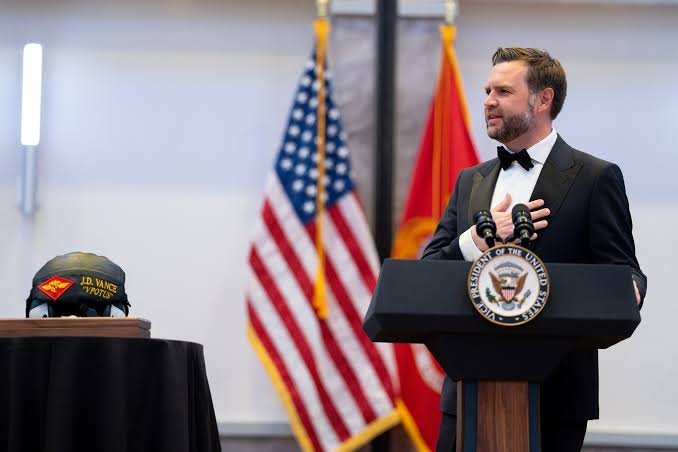
The uncertainty has also extended to Vice President JD Vance, widely regarded as an early frontrunner for the Republican presidential nomination.
Although Vance, 42, has been weighing a possible White House bid, some of his political allies are reportedly questioning whether 2028 is the right time for him to enter the race following the party’s midterm setbacks.
A former Trump aide said the political environment could prove particularly challenging for any Republican seeking the presidency in the next election cycle.
“It may not be his time. It’s going to be a tough time for any Republican to run for president in 2028 based on what happened last week,” the former aide said.
CNN reported on Friday that Vance had seriously considered not contesting the 2028 election, although he had yet to reach a final decision.
The report said the Vice President was weighing the future of the Make America Great Again movement, his role in rebuilding the Republican Party and the demands of political life on his family, including his four young children.
According to the report, Vance wants to play a significant role in the party’s recovery but remains uncertain whether he should lead that process.
Veteran Republican strategist Susan Del Percio said the uncertainty surrounding Vance and the reluctance of other potential contenders reflected the difficult position facing the party.
She argued that any Republican candidate in 2028 would be expected to demonstrate absolute loyalty to Trump, despite uncertainty over the President’s political positions.
“Trump will be the downfall of any 2028 nominee because they have to be 100 per cent MAGA, and pass the MAGA loyalty test and no one can do that because you don’t know what the President will be for or against at any given moment,” Del Percio said.
She added that Trump’s approval ratings could deteriorate further, describing the current situation as only the beginning of the challenges confronting the party.
Trump has yet to endorse Vance or any other potential Republican presidential candidate, and his allies do not expect him to make an early endorsement.
Del Percio said the absence of an endorsement could provide Vance with an opportunity to withdraw from the race without appearing politically weakened.
She also suggested that Vance could use the uncertainty to push Trump towards endorsing him early if he decided to contest.
“If he does want to run, he has to get his endorsement and he needs to start running soon. He can’t leave room for speculation,” she said.
Despite the pessimism among some party members, other Republican strategists have cautioned against writing off the party’s chances in 2028, arguing that the political situation could change before the next presidential election.
They said Republicans would continue investing in electoral campaigns, particularly congressional contests, while hoping that Democrats would struggle to manage their new control of the House of Representatives and Senate.
Some Republicans believe the Democratic leadership could overreach while exercising its legislative power, potentially creating political difficulties for the opposition party.
However, the presidential contest presents a separate challenge because Trump will remain in the White House for the next two years, giving Democrats a clear political target.
A national Republican consultant who worked on the midterm campaigns said party members were still struggling to recover from the scale of their defeat and remained unconvinced that the 2028 election would produce a significantly better outcome.
The consultant said Republicans would invest heavily in future campaigns and could improve on their midterm performance but expressed doubts about their ability to regain control of key institutions or win the presidency.
Another former Trump campaign aide rejected the suggestion that Republicans should abandon the 2028 race, describing such a position as premature.
The aide said members of the Republican National Committee were already examining strategies to rebuild the party and improve its electoral performance.
The former aide also criticised those advocating that Republicans should give up on 2028 before the newly elected Democratic Congress had even been sworn in.
Meanwhile, concerns over the party’s prospects have been compounded by what one Republican consultant described as widespread donor fatigue following the midterm defeats.
Some Republicans are also worried that the direction of Trump’s administration could further damage the party’s public image.
A former Trump aide expressed doubts that the President would moderate his approach, arguing that his decision to double down on his political positions could make the next two years difficult for Republicans.
“The general consensus is that we’re f***ed until Donald Trump leaves office,” the former aide said.
The aide suggested that some Republican aspirants might nevertheless enter the 2028 contest, not necessarily because they expect to win, but to build national recognition, attract donors and position themselves for a stronger campaign in 2032.
Such candidates, the aide said, could effectively become sacrificial contenders while waiting for a more favourable political environment.
The former aide added that Republicans might have a better chance in 2028 if Democrats made unpopular political decisions or nominated a candidate perceived as too far to the left.