By Ade Oyeyemi
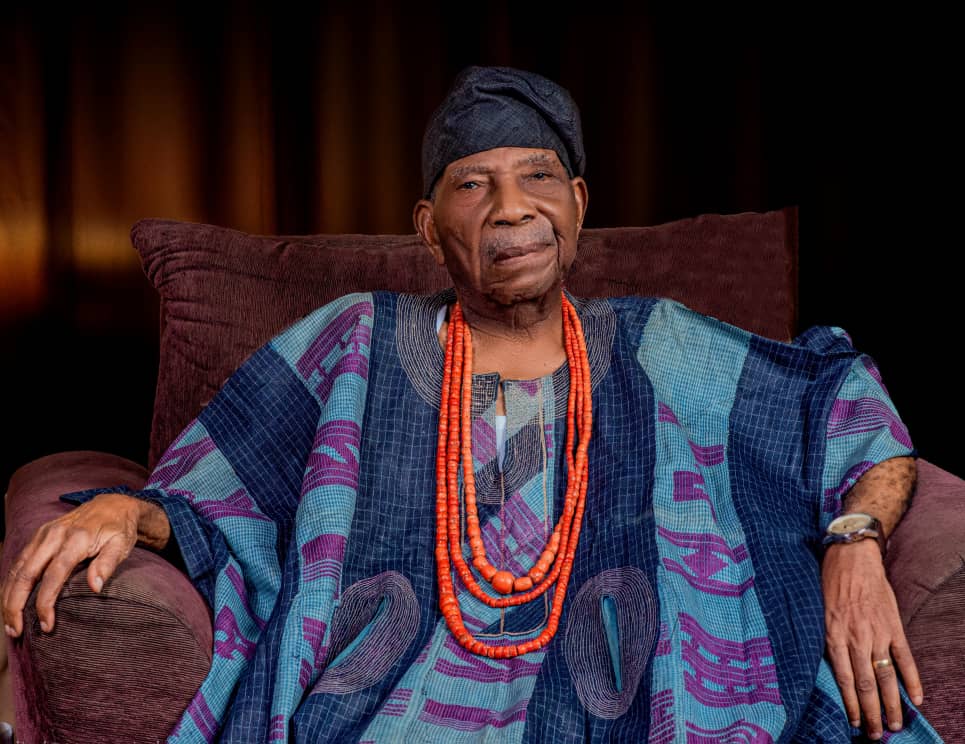
When Pa Reuben Famuyide Fasoranti breathed his last in Akure, Ondo State, on Tuesday at the age of 100, Nigeria lost more than an elder statesman, Radiating The Truth reports.
His death marked the departure of a generation of political leaders whose convictions were shaped by the struggle for self-government, the ideals of progressive politics and an enduring belief that public service must be anchored on integrity.
From President Bola Tinubu to former President Olusegun Obasanjo, Vice President Kashim Shettima, Senate President Godswill Akpabio and several former governors, traditional rulers, political organisations and professional bodies, tributes have continued to pour in for the late Afenifere leader, whose influence spanned generations and political divides.
Fasoranti, a teacher, administrator, politician and pro-democracy advocate, lived through some of Nigeria’s most consequential political transitions.
His life connected the First Republic to the current democratic dispensation, while his association with the progressive tradition of the late Chief Obafemi Awolowo helped define his political identity.
Radiating The Truth had reported that the deceased’s son and Secretary to the Ondo State Government, Dr Taiwo Fasoranti, announced that his father died peacefully in his sleep at about 4pm on Tuesday.
He described him as a man of few words but great wisdom and disclosed that the family would sustain the Reuben Fasoranti Foundation, established 10 years ago.
For many Nigerians who paid tribute to him, the significance of Fasoranti’s life lay not simply in his longevity but in his steadfastness, his willingness to defend his convictions and his commitment to the political ideals he embraced.
President Tinubu, in his condolence message, described the deceased as a father, elder statesman and one of the foremost figures in the progressive political tradition associated with Awolowo.
Tinubu recalled that Fasoranti had predicted in 2022 that he would become President while the elder statesman was still alive. He also commended the late Afenifere leader’s contributions to the struggle against military dictatorship and the restoration of democratic rule in Nigeria.
The President noted that Fasoranti remained committed to true federalism, social justice and national development throughout his public life, principles that continue to feature prominently in debates about Nigeria’s political structure and governance.
Former President Obasanjo, in a statement issued by his Special Assistant on Media, Kehinde Akinyemi, described Fasoranti as one of the last great figures of a generation distinguished by sacrifice, integrity and commitment to national progress.
Obasanjo recalled the late elder statesman’s courage in opposing military dictatorship and his consistent advocacy for federalism, justice and equity. He also acknowledged that although they occasionally differed politically, their relationship remained grounded in mutual respect.
His tribute captured the historical significance of a man whose political life extended across different administrations, political movements and periods of national uncertainty.
“There are men who live through history, and there are those whose lives become part of history itself. Pa Reuben Fasoranti belonged to the latter,” Shettima said.
The Vice President described the centenarian as a member of a generation that regarded public service as a lifelong obligation rather than a means of personal advancement.
According to Shettima, Fasoranti’s life reflected the struggles and sacrifices that shaped modern Nigeria, while his contributions to education, democratic governance and progressive politics transcended regional boundaries.
He urged Nigerians to preserve the values of dialogue, mutual respect and responsible citizenship exemplified by the late elder statesman, particularly at a time when political disagreements continue to test national cohesion.
Senate President Akpabio also described Fasoranti as a patriot whose contributions to Nigeria’s democratic development would endure beyond his lifetime.
He said the late Afenifere leader’s commitment to democratic ideals, social justice and principled leadership made him an influential figure whose legacy extended beyond his immediate community and the Yoruba nation.
“At 100, Baba Fasoranti leaves behind an enduring legacy of service, courage and fidelity to his convictions,” Akpabio said.
The tributes from the nation’s highest political offices reflected the broad recognition of Fasoranti’s place in Nigeria’s history, even as his political beliefs and associations remained rooted in the progressive tradition that shaped his early public life.
A life shaped by progressive politics
Fasoranti’s political journey began with the defunct Action Group during the First Republic and continued with the Unity Party of Nigeria in the Second Republic. His association with Awolowo’s political philosophy influenced his commitment to education, social welfare, accountable governance and the restructuring of Nigeria’s federal system.
He later served as Commissioner for Finance under the administration of the late Governor Michael Ajasin in the old Ondo State, a role that further established his place in the state’s political history.
Former Ondo State Governor Olusegun Mimiko, in his tribute, described Fasoranti as a custodian of political tradition whose life embodied discipline, courage, integrity and selfless service.
Mimiko said the late elder statesman believed politics should be guided by principle and directed towards improving the welfare of the people, rather than serving the personal ambitions of those in power.
“Never for once were personal ambition or greed markers of his leadership philosophy or direction; it was all about fidelity to principle and an abiding concern for the future of the nation,” Mimiko said.
He added that Ondo State had lost a father figure whose life linked contemporary politics to some of the most important chapters in the state’s history.
The former governor’s tribute underscored one of the recurring themes in the reactions to Fasoranti’s death: the belief that his political relevance was built not merely on the offices he held but also on the consistency of his convictions.
Former Ogun State Governor Gbenga Daniel also mourned the centenarian, describing him as a father figure and moral compass whose life was defined by integrity, courage and dedication to the progressive cause.
Daniel recalled visiting Fasoranti in 2019 to commiserate with him following the killing of his daughter, Funke Olakunrin. Despite the personal tragedy, the former governor noted, the elder statesman continued to provide leadership within the Yoruba socio-political movement.
His recollection highlighted the personal resilience that accompanied Fasoranti’s public identity, particularly during periods of grief and uncertainty.
A voice for the Yoruba nation and Nigeria
As national leader of Afenifere, Fasoranti occupied a prominent position in the Yoruba socio-political movement, which has historically advocated restructuring, true federalism, social justice and the protection of the interests of the Yoruba people within a united Nigeria.
His leadership also placed him at the centre of debates over the future of the federation, the distribution of political power and the place of regional interests in national governance.
Lagos State Deputy Governor, Dr Kadri Obafemi Hamzat, described him as a distinguished educationist and principled leader who devoted his life to justice, fairness and the preservation of Yoruba values.
Hamzat said Fasoranti earned the respect of generations through his courage, wisdom and commitment to principle, adding that his counsel would remain relevant to future leaders.
The Chairman of the South-West Agenda for Asiwaju, Senator Dayo Adeyeye, also described the deceased as one of the last great figures of the Awo political tradition.
The group, which campaigned for Tinubu ahead of the 2023 presidential election, recalled Fasoranti’s support for the President’s ambition, describing his endorsement as a source of moral encouragement for the movement.
Minister of Youth Development Ayodele Olawande, meanwhile, urged young Nigerians to draw lessons from the deceased’s commitment to justice, accountability and community development.
Olawande said Fasoranti’s life demonstrated that the value of leadership should be measured by its impact on society rather than the number of years spent in public office.
The message from the younger generation of political leaders was significant in its own right. As many of the figures who shaped Nigeria’s early post-independence politics pass away, the question of how their values will be preserved has become increasingly important.
Akure mourns a distinguished son
Beyond the national political arena, Fasoranti’s death has left a profound sense of loss in Akure, where he spent much of his life and built a reputation as an influential son of the community.
The Deji and Paramount Ruler of Akure, Oba Aladetoyinbo Ogunlade Aladelusi, described his passing as the end of a golden era of service and exemplary leadership.
In a condolence statement, the monarch said Fasoranti was a custodian of wisdom and a champion of progressive ideals whose contributions to education, public administration and democratic governance would remain part of the collective history of Akure, Ondo State and Nigeria.
The monarch also recalled the deceased’s aspirations for the development of Akure, including the establishment of the Federal University Teaching Hospital, Akure, and the upgrading of the city’s College of Agriculture to a full-fledged university.
For the traditional ruler, Fasoranti’s life was a reminder that the legacy of a public figure should be measured by the institutions strengthened, the lives touched and the principles defended.
The Ooye Development Initiative, a socio-cultural organisation representing Akure indigenes, described the death as an irreparable loss to the kingdom.
Its president, Tokunbo Jegede, said in a statement issued after a condolence visit to the family that Fasoranti had made enduring contributions to the development and recognition of Akure.
“For us, it is like the sun setting at noon for the people of Akure Kingdom. Though Papa Fasoranti left this world at a desirable age, having lived to attain the advanced age of a centenary, Akure could not have had enough of his imperishable imprints on the sands of time,” the organisation said.
It added that the late elder statesman brought honour to Akure through his national influence and public service, noting that the community would continue to cherish his contributions.
The Ondo State chapter of the All Progressives Congress also described Fasoranti’s death as a monumental loss to the progressive political family, the education sector and Nigeria.
The party recalled his participation in the Action Group and the Unity Party of Nigeria, describing him as one of the distinguished followers of Awolowo whose political philosophy helped shape the progressive movement in the South-West.
An educationist whose legacy endures
Fasoranti’s contributions were not confined to politics. His career as an educationist formed an important part of his public identity, reflecting his belief in the transformative power of learning and its role in social development.
The University of Ibadan Alumni Association Worldwide mourned him as a revered leader and one of the institution’s pioneer students.
The association noted that it had honoured him with its Most Distinguished Alumnus Award and Lifetime Achievement Award in recognition of his contributions to the university, the country and humanity.
Its Ondo State branch expressed condolences to his children, family members and associates, describing him as a distinguished alumnus whose legacy would continue to inspire generations.
The recognition from his alma mater added another dimension to the tributes, highlighting a life that combined education, public administration, political activism and community development.
The Commander of the Ondo State Security Network Agency, also known as the Amotekun Corps, Akogun Adetunji Adeleye, described Fasoranti as one of the finest leaders of his generation.
Adeleye said his death was a major loss to Ondo State, the Yoruba nation and Nigeria, adding that his contributions to society and commitment to good leadership would remain indelible.
The Oodua Youth Coalition also described his passing as a monumental loss, while the Bishop of the Anglican Diocese of Owo, Rt Rev Stephen Ayodeji Fagbemi, said the death marked the end of a remarkable era of integrity, selfless service and principled leadership in Nigerian politics.
The Nigeria Union of Journalists, Ondo State Council, similarly described Fasoranti as a symbol of exemplary leadership, integrity and selfless service, saying the Yoruba nation would greatly miss him.
The family carries the torch forward
Amid the national outpouring of grief, the decision by Fasoranti’s family to sustain the Reuben Fasoranti Foundation offers a possible avenue for preserving aspects of his legacy beyond the political arena.
His son, Taiwo, described his father as a man whose wisdom was evident despite his reserved disposition. The foundation, established 10 years ago, is expected to remain part of the family’s effort to preserve his memory and ideals.
For a man whose life spanned a century of profound change, the tributes from political leaders, traditional institutions, professional associations and youth organisations reveal the breadth of his influence.
Yet, the significance of his passing extends beyond the number of years he lived or the prominent figures who have mourned him. It raises a larger question about the survival of the values associated with his generation of public servants: integrity, restraint, courage, accountability and fidelity to principle.
From the struggle against military dictatorship to the advocacy for true federalism and democratic governance, Fasoranti remained associated with a political tradition that insisted public leadership should serve the people.
His death closes a remarkable chapter in Nigeria’s political history. Whether the ideals he defended will continue to shape the country’s future will depend not only on the tributes paid to him but also on the willingness of succeeding generations to put those principles into practice.