By Banji Ayoola
A veteran journalist and spokesman of the Federal University of Technology, Akure, FUTA, Mr. Adegbenro Adebanjo has listed golden rules of professional conduct for journalists across Nigeria in their coverage and reportage of the incoming 2027 election.
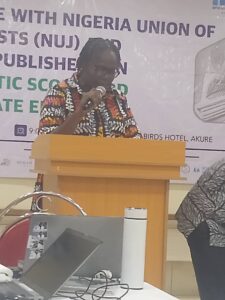
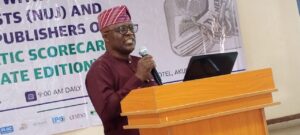
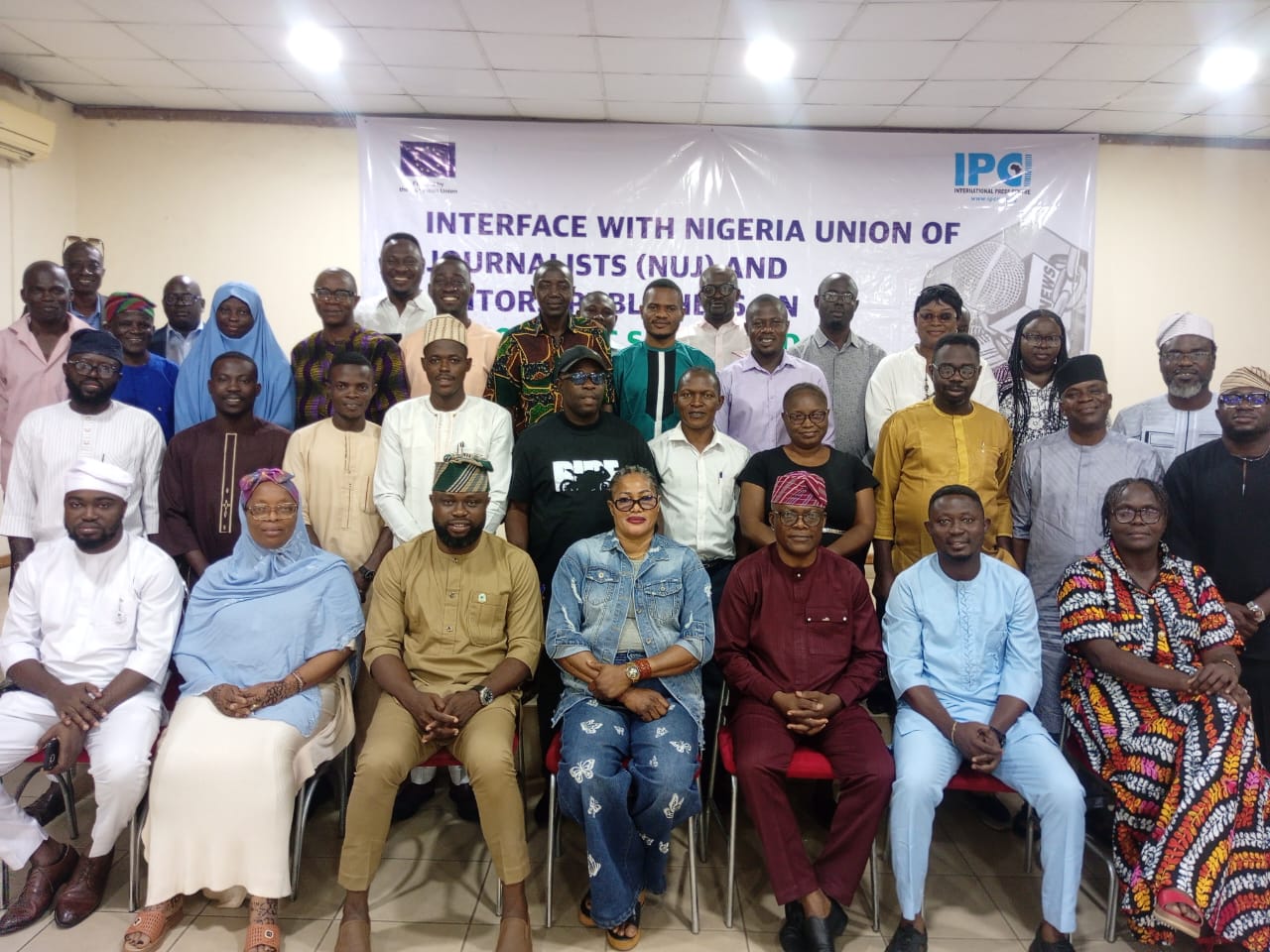
He spoke in Akure on Friday during the Ondo State Edition of the Interface with the NUJ and Editors/Publishers on Democratic Scorecard, organized by the International Press Centre, IPC, and sponsored by the European Union, EU, noting that the incoming election would test the journalists’ professionalism.
Adebanjo, a former Political Editor of Tell Magazine, who is also an IPC resource person, described journalists’ role as watchdog of society and guardians of the Fourth Estate of the Realm as fundamental in protecting democracy against abuse, and ensuring the building of a society where the rule of law, joy and peace flourish for all without discrimination.
His delivered a paper titled “2027 Election in in the Context of Democratic and Accountability Reporting: Scanning the Electoral Environment and Reporting Citizens’ Priority Concerns”.
The former Political Editor stressed: “It is the constitutional responsibility for journalists to be part of the electoral process to build a better society. It is our duty.”
Specifically, he outlined for his colleagues who will be on election duties before, during and after the 2027 exercise six golden rules of neutrality, fairness, balance, objectivity, accuracy or precision, and usefulness.
Besides, he stressed the need for them to scan the environment in which they will operate.
He admonished that neutrality matters most for journalists in the general performance of their constitutional duties, and particularly in covering and reporting elections.
Adebanjo said that his colleagues must “be neutral” for their stories to have credibility, stressing: “Be fair. Give fair hearing to every relevant side. Report all the sides. Go beyond the noise. Your stories must be balanced, representing all positions.”
On accuracy or precision, he said they must be precise, and estimate only when they cannot count, adding “there cannot be almost or over in a figure.”
On usefulness, he said those reporting the election must convince themselves of the usefulness of their stories to the people.
He said, “Is your news useful to your audience? How relevant is your news to your readers? Don’t play on politicians’ owanbe campaign trading on insults, having almost zero connection with the people.
“Connect with the people. The more you connect with the people, the better your medium gains credibility. This coming election will test your professionalism.”
Particularly, Adebanjo noted that online journalists in Nigeria “are in very big business” if they work as expected.
He counselled journalists to note the peculiarity of of the difficult terrain of the country in which they operate particularly during elections often regarded as “do or die” matters.
He admonished them against being overt or covert sympathisers of any politician or political party, a practice that could be fatal, as such journalists risk running into dangers.
Besides, he cautioned against infusing ethnic or religious bias into news stories, saying journalists must be ethnic-blind in all their reports.
Adebanjo admonished that they should not turn themselves into “political apologists”, and that they should not predict the outcome of elections, or make absolute statements.
His words, “Don’t be absolute. We need to be very careful on the field”
On the need to scan the environment and be circumspect, he warned his colleagues to be careful especially when going into violence-prone areas or certain groups notorious as purveyors of violence.
He cautioned: “Your safety is paramount. Don’t get involved in their wars”, as he noted sadly that election violence which was formerly restricted to the pre election and election days have now spilled over to days after the elections as was the case with the recent Osun State Governorship Election.
Journalists, he said, must be skeptical of all things; they must verify; and set agenda for politicians.
In performing their duties, he said they must engage and interview real people about their expectation and concerns for the incoming elections.
Also, Adebanjo advised his colleagues who will be on election duties to obtain necessary accreditation from the Independent National Electoral Commission, INEC, stressing, “Don’t cover an election without accreditation.”
He further admonished them to map out their environment; avoid unnecessary familiarity with party agents and supporters; plan their movements carefully: remain alert to changing situations and alert one another; and avoid walking and working alone during elections.
He cautioned: “If the environment becomes manifestly hostile to your safety, leave.”
Adebanjo asked his colleagues to note that on the election day, they are reporting for posterity and the people but not for a political party; and that they should document from a safe distance.
He asked them to note that their personal safety matters most above scoops, admonishing them to verify before publishing; and never publish unofficial results.
In his welcome address and goodwill remarks, IPC Executive Director, Mr Lanre Arogundade urged the journalists who will be on election duties next year to note that they will be standing on a sensitive duty and their reports would help in reshaping Nigeria.
Represented by the IPC Programme Officer, Mrs. Stella Nwofia, he warned against sensationalism, unverified claims, inflammatory rhetoric, misinformation and disinformation, which he said could undermine democracy and deepen social divisions.
He described the engagement as timely and necessary for the media to reflect on its responsibilities and strengthen its capacity to provide citizens with credible, balanced and inclusive information.
Arogundade appealed to journalists to prioritise accuracy, fairness, verification and conflict-sensitive reporting, interrogate campaign promises, verify political claims and document citizens’ priority concerns rather than focusing only on parties and candidates.
Also, he tasked the participants to report issues that matter most to Nigerians, give adequate attention to citizens’ concerns about the economy, education, healthcare, security, employment and infrastructure as well as to the women, young people, persons with disabilities and other underrepresented groups to actualized meaningful visibility in electoral discourse.
His words, “Elections are not merely about political campaigns, rallies, candidates and the eventual announcement of results. They are also about citizens, their aspirations, their concerns, their expectations of leadership and their right to make informed decisions.”
Technical sessions followed during which the participants,vdividedbinto three groups were taken through practical training on fact checking, the use of AI and digital platforms.
The sessions were on “Integrating Fact-Checking for Democratic and Accountability Reporting” by Olusola Oludiran, NDR/IPC Fact-checker; and “Leveraging Technology for Credible Election Coverage” by Daniel Dare Dabo, who also spoke on AI and Digital Journalism.
Oludiran taught on the fact-checking cycle, types of information disorder – misinformation, disinformation and malinformation – and verification tools such as reverse image search, InVID, Hive Moderation and Google Lens
Also, Dabo taught on fact checking, and AI use.