By Ade Oyeyemi
The Deji of Akure, Oba Aladetoyinbo Aladelusi, has commended the Minister of Youth Development, Ayodele Olawande, for supporting the renovation and beautification of the historic Deji’s Palace in Akure, Ondo State.
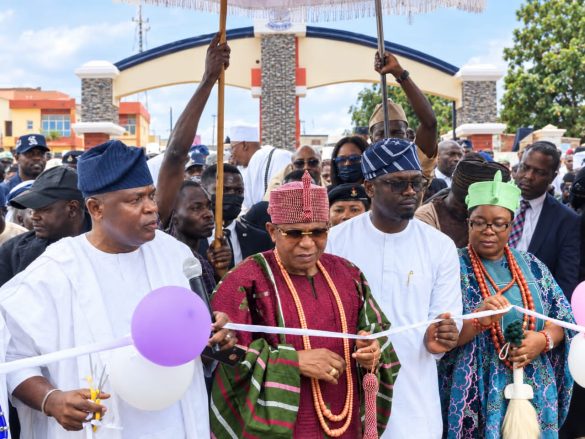
The monarch spoke during the inauguration of the newly redesigned entrance to the palace, describing the intervention as a significant step towards preserving the cultural heritage of the Akure people.
Oba Aladelusi said the facelift had transformed the appearance of the palace and given the historic institution an outlook more befitting of its importance to the community.
He disclosed that the project was undertaken through Olawande’s intervention with the support of the 10th Anniversary Coronation Committee as part of broader efforts to renovate sections of the palace.
According to the monarch, the significance of the project went beyond the physical improvement of the palace, as it would also help draw attention to its historical and cultural importance.
He expressed appreciation to the minister for identifying with the traditional institution and contributing to the preservation of one of Akure’s most notable landmarks.
The Deji urged Akure indigenes, government authorities and corporate organisations to support initiatives aimed at protecting the city’s historical sites and traditional institutions.
He noted that preserving the palace and other heritage assets should be regarded as a collective responsibility, particularly as urban development continues to change the physical landscape of the city.
The monarch expressed hope that the latest intervention would encourage further assistance for the renovation of other parts of the palace and promote greater appreciation of Akure’s history and cultural identity.
He also said community development should not be limited to government programmes, adding that individuals and public officials could contribute by supporting projects that preserve culture and history.
Speaking on the project, Olawande said the historical importance of the palace motivated his decision to support its renovation and redesign.
The minister described the palace as more than the residence of the traditional ruler, saying it represented the history, traditions and collective identity of the Akure people.
Olawande stressed the need to preserve such heritage sites for younger generations, who, he said, should have opportunities to understand and connect with their cultural roots.
He said, “I believe that the Deji’s Palace is not just a building; it is a symbol of who we are as Akure people. It carries our history, our culture and the story of generations before us.
“I deemed it necessary to renovate and redesign the palace because we cannot continue to talk about preserving our heritage while allowing important symbols of that heritage to deteriorate.
“This intervention is my own contribution to preserving the history of Akure for the younger generation. They must be able to see, appreciate and connect with the heritage that belongs to them.”
The minister explained that the redesign was intended to improve the palace’s environment without altering its cultural identity.
“The redesign is not about changing the identity of the palace. It is about giving this historic institution an environment that reflects its importance while retaining its cultural character,” he said.
Olawande added that the palace had remained an important centre of Akure’s cultural life and had served as the seat of successive Dejis.
The Deji’s Palace, known for its historical, architectural and cultural significance, was declared a national historical monument in 1990.