By Wale Ojo-Lanre
Should I attend the burial of Mr Clement Ige on Saturday?
Please, does it really worth it for me to spare my time, wake up early, buy fuel and drive all the way to Ibadan to pay my last respect to the late Mr Clement Ige, an Ogotun-Ekiti product, a veteran journalist, a former Guardian reporter, but spent his most prolific professional years in the Nigerian Tribune and a man who would be committed to Mother Earth in Ibadan on Saturday, June 6, 2026?
Should I go?
Why should I leave my base on Saturday morning and drive to Ibadan to join Shola, Korede and the other children of Mr Clement Ige in bidding farewell to their father? After all, he was not my biological relation. He was not from Usi-Ekiti. He was not my uncle. He was not my brother by blood.
But life is deeper than blood.
There are people who pass through one’s life quietly, yet leave footprints too deep for time to erase. There are bosses who merely supervise. There are editors who merely assign stories. There are seniors who merely sit in positions. But there are rare men who pick raw talents, sharpen them, discipline them, protect them, inspire them and release them into the world as stars.
Mr Clement Ige was one of such rare men.
He was my Oga.
At the Nigerian Tribune, Imalefalafia, Ibadan, where he spent some of his most professionally prolific years, Mr Clement Ige was the Features Editor under whom I served. But to describe him only as my editor would be to underrate his impact on my life. He was my trainer. He was my professional guardian. He was a human developer. He was a destiny shaper. He was one of those men God planted on my path to shape my journalism, my character, my work ethic and my understanding of life.
I am deeply saddened by his death.
Honestly, I feel he should have lived longer than this. Men like Mr Clement Ige are not ordinary men. They are institutions in human form. They are builders of people. They are silent architects of many destinies. They do not make noise about their impact, but their impact makes noise in the lives of those they touched.
He picked me up after my early professional baptism of fire under a hard Ghanaian journalist, Mr Antwi. He picked me up when I was still finding my feet in journalism. He believed in me beyond what I even knew of myself. He saw me not just as a reporter, but as a reliable, dedicated and promising brother. He trained me beyond reasonable doubt in the art, ethics and dignity of journalism. He did not train me only to write. He trained me to think. He trained me to observe. He trained me to be useful. He trained me to be upright.
One of the greatest gifts he gave me was ethical courage.
Mr Clement Ige firmly discouraged me from joining the brown-envelope clique. He made me understand early that a journalist who sells his conscience for gratification has mortgaged his dignity. He taught me that journalism should not be reduced to begging, lobbying, corner-cutting or shameless dependence on the very people one is assigned to report. He trained me to be proud to say, anywhere and anytime, “I am a journalist who has never demanded gratification or brown envelope in the course of my official assignment.”
That alone is a legacy.
But he did more.
He opened my eyes to the larger possibilities of journalism. He taught me that a journalist must not live by salary alone. He taught me how to become a mediapreneur before the word became fashionable. He encouraged me to publish books, write speeches, handle media consultancy, generate ideas and create extra revenue without compromising professional honour. He taught me the art of generating goodwill rather than asking for money in the course of duty.
He taught me that work does not kill. Laziness kills dreams. Indiscipline kills destiny. He taught me to rise early, work hard, think fast, dare boldly and remain productive. He was a paragon of honesty, a teacher of “Ori ko ju ori lo,” and a believer in the principle that every man must develop his own head, his own gift, his own usefulness and his own destiny.
I remember how he pushed me to buy a plot of land in 1993 for ₦6,000, an amount I paid gradually over one year. At that time, it looked like a small step. Today, I know it was one of the practical seeds of discipline, foresight and self-development that he planted in me.
I also remember how an idea came to me to capitalise on the song of King Sunny Ade, “Elejigbo Obalase Oba,” which eventually gave birth to the biography of the Ogiyan of Ejigbo. The launching of that book brought in the money with which I started the building of my first house. Mr Clement Ige was part of that mindset that made me understand that ideas are assets, and that a journalist must know how to convert creativity into honourable livelihood.
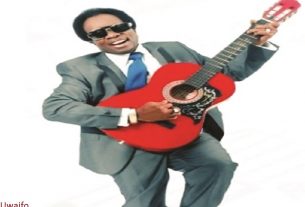
He also facilitated my relationship with King Sunny Ade, Micho Ade, Emperor Pick Peters and others. He opened doors, created links, encouraged initiatives and gave me the push to dare. He did not cage the talents under him. He released them. He did not fear the growth of those he mentored. He celebrated it.
Whenever we embarked on assignments, Mr Clement Ige displayed a rare spirit of generosity. He would fuel his car, buy food for me, spend his own resources and still share whatever came in the spirit of “Ori ko ju ori lo.” He was not selfish. He was not petty. He was not mean. He understood leadership as sacrifice.
When I became Chairman of the Oyo State Council of the Nigeria Union of Journalists, he organised a get-together for me with Ambassador Yemi Farounbi at the Development Support Centre,
Iyaganku, Ibadan. That gesture remains unforgettable. It showed the depth of his loyalty, the purity of his friendship and the pride he took in the progress of those he once trained.
Mr Clement Ige was upright. He was loyal to his friends. He was committed to whatever he laid his hands upon. He was an honest struggler, a disciplined professional and a man who carried dignity without arrogance. He was not a noise-maker. He was a builder. He picked stars and developed them. He shaped people quietly, and many of us who passed through him became better because of his touch.
For about ten years, we were not as close as we used to be because of my Alarinka life, my travels, my engagements and the restless movement that has defined much of my journey. But distance never erased respect. Time never reduced gratitude. Absence never cancelled memory. A true Oga remains an Oga. A true mentor remains a mentor. A man who helped shape your life remains permanently engraved in your story.
So, should I attend Mr Clement Ige’s burial on Saturday?
Yes.
I should go.
I should go because gratitude is not a matter of convenience. I should go because honour must not die in the heart of those who received kindness. I should go because a man who shaped one’s life deserves one final salute. I should go because Mr Clement Ige was not just my former editor; he was a destiny shaper.
Today, as I mourn Mr Clement Ige, I mourn not only a former Features Editor of the Nigerian Tribune. I mourn a trainer of men. I mourn a professional father. I mourn a rare journalist. I mourn a man who believed in me, corrected me, guided me, challenged me and helped me to become more than I imagined.
I cannot forget him.
I will not forget him.
My Oga, Mr Clement Ige, you gave so much of yourself to others. You developed people. You shaped careers. You planted discipline. You taught ethics. You inspired enterprise. You modelled honesty. You lived as a quiet force behind many success stories.
May God forgive your shortcomings, reward your good works, comfort your family and grant you peaceful rest.
Good night, my Oga.
Good night, my trainer.
Good night, great human developer.
Good night, Mr Clement Ige.
Sun re o, Oga Clement Ige.