By Steve Otaloro
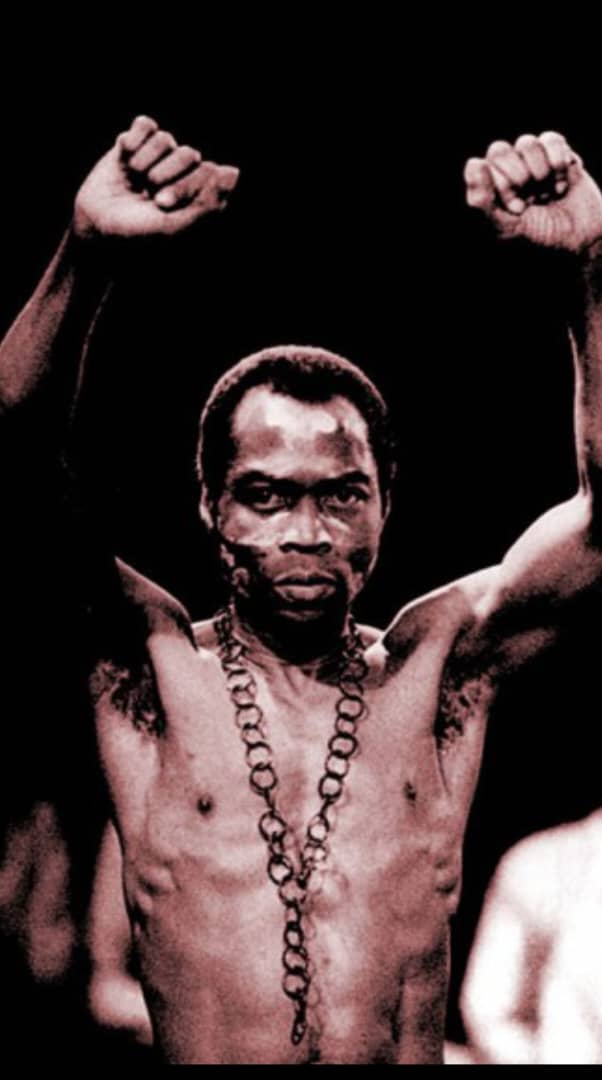
Long before Afrobeats became a global commercial force- before sold-out arenas, chart-topping singles, and streaming milestones- there was Fela Aníkúlápó Kuti, the singular force who created the sound that now dominates global music culture.
What the world celebrates today as Afrobeats did not emerge from convenience or algorithmic success; it was forged through resistance, experimentation, and an unyielding commitment to truth. That is Fela’s enduring legacy.
The current controversy that attempts to compare contemporary stars- most notably Wizkid-to Fela should be understood for what it is: an unthinkable comparison born of excitement, not analysis. At best, it is a slip of the tongue by those who confuse global popularity with historical transformation.
Wizkid and his peers are extraordinarily successful musicians operating within a genre that already exists. Fela, by contrast, invented a genre, gave it ideological depth, musical complexity, and global relevance, and then paid a personal price for defending it.
Fela’s greatness was never about hit songs or fleeting acclaim. It was about architecting a new musical language- Afrobeat-that fused jazz, funk, highlife, African polyrhythms, and radical political consciousness into something the world had never heard before.
Today’s Afrobeats stars stand on that foundation, whether acknowledged or not. Creating a genre alters the course of music history; excelling within it confirms its reach. The difference is fundamental.
More remarkably, Fela’s music has not aged into nostalgia. Twenty-seven years after his death, his songs still interrogate corruption, authoritarianism, colonial residue, police brutality, and social injustice with unnerving accuracy. His lyrics remain contemporary because the conditions he fought against persist. That timeless relevance is why Fela is studied, sampled, debated, and revered- not just as a musician, but as a cultural and political force.
Fela fought battles most artists would never dare confront. He endured arrests, beatings, imprisonment, censorship, and the destruction of his commune. Yet he never retreated, never diluted his message, and never compromised his art for comfort or approval. He stood alone against power, armed only with music, conviction, and courage. He composed not to make hit songs, sang not for money or fame, but purely for societal betterment. That combination is exceedingly rare.
Today’s global stars- Wizkid, Davido, Burna Boy, Tiwa Savage, Ayra Starr, Rema, and others- deserve their flowers. They have carried Nigerian music to heights previously unimaginable. But iconhood is not measured by charts, endorsements, or festival lineups. It is measured by long-term civilizational impact. On that scale, Fela remains peerless.
It is therefore fitting- though long overdue- that the Grammy Awards intend to honour Fela Anikulapo Kuti posthumously for his contribution to world music. This recognition, coming 27 years after his passing, is not an act of sentimentality; it is a historical correction. The world is finally acknowledging what Africa has always known.
No one can ever be Fela again. Not his contemporaries. Not his successors. Not even his children, accomplished as some of them are. Fela was a once-in-a-millennium phenomenon- a man who did not just make music, but made history.
Fela Anikulapo Kuti: a life that rewrote music, a voice that defied oppression, a legacy that time could never silence.