
By Steve Otaloro
In moments when prophecy intersects with policy and vision aligns with execution, history quietly begins to turn. Such is the season Ondo State appears to have entered, following a prophetic declaration by a renowned cleric that foretells a sweeping transformation of the Sunshine State and a defining political destiny for Nigeria’s leadership. Far from sounding like mere spiritual rhetoric, the unfolding realities on the ground increasingly suggest that governance, guided by purpose and providence, is beginning to mirror prophecy both in Ondo State’s accelerating renaissance and in the broader national trajectory under President Bola Ahmed Tinubu.
A revered prophet and widely respected cleric has declared that Ondo State stands on the threshold of a remarkable rebirth, destined to undergo far-reaching transformation and emerge as one of the most desirable and progressive states in the Nigerian federation by 2026. The prophecy was pronounced by Pastor Toye Ebijomore, a man whose previous revelations concerning Nigeria and President Bola Ahmed Tinubu are regarded by many as uncannily precise and consistently fulfilled.
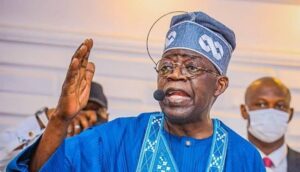
According to the cleric, President Tinubu is destined not only to secure a decisive victory in the 2027 presidential election but also to deftly navigate and overcome the entrenched political forces arrayed against his administration. Even more remarkable is the prophecy that, before the close of his tenure, he will initiate a historic renaming of Nigeriashifting from its commonly used colonial designation to an indigenous appellation- a symbolic act of renewal, reinvention, and the nation’s long-awaited rebirth.
From my vantage point, the unfolding events in Ondo State strongly suggest that prophecy is already finding expression in governance. What is taking shape in the Sunshine State today bears the unmistakable imprint of divine orchestration rather than political coincidence. God, it would seem, is using Governor Lucky Orimisan Aiyedatiwa as a vessel to reposition Ondo State from its long-standing identity as a predominantly civil-service and agrarian enclave into a rising industrial and economic frontier.
Once narrowly defined by bureaucracy and subsistence agriculture, Ondo State is now charting a bold new course. Proposals for a functional refinery, a trade free zone, a seaport, and modular industrial clusters signal a decisive shift in economic architecture. These ambitions are further reinforced by extensive road and infrastructure projects clearly outlined in the current fiscal year’s budget- laying foundations not merely for present convenience but for long-term prosperity.
As Scripture declares, “See, I am doing a new thing; now it springs forth; do you not perceive it?” (Isaiah 43:19).
Complementing this economic recalibration is the ongoing facelift of Akure, the state capital. The city has become a living theatre of renewal-an octopus of construction unfurling its limbs across major corridors and public spaces. Roads are being reshaped, infrastructure reimagined, and urban aesthetics elevated. Day and night, even through festive seasons and yuletide repose, the rhythm of development continues unabated. Beautification has become relentless, as though the land itself has received a summons to awaken.
Indeed, the morning already shows the day. What is unfolding in Ondo State today signals a scale of transformation hitherto unseen in its history. Governor Aiyedatiwa’s revolution is quiet but consequential- measured, deliberate, and deeply felt. It is governance that does not shout yet speaks volumes through results. In time, even the doubting Thomases will touch the evidence of progress and believe.
Poetically and practically, Governor Aiyedatiwa presents himself as a chosen steward- one raised not for theatrics but for restoration. His administration’s OUR EASE programme encapsulates this mission. Anchored on Opportunity, Unity, Resilience, and Efficient Service Delivery, OUR EASE is both philosophy and framework: a covenant of responsive governance, inclusive growth, infrastructural renewal, and people-centered administration. It seeks to simplify governance, expand economic opportunity, strengthen social cohesion, and restore public confidence in leadership.
As for President Bola Ahmed Tinubu’s projected victory in the 2027 presidential election, it has increasingly become a notorious truth- one clearer even to the opposition than to his supporters. His achievements, political depth, strategic foresight, and resilience remain formidable. However, the prophecy concerning the renaming of Nigeria remains a revelation awaiting its appointed time. On that, prudence demands patience.
As the Scriptures counsel, “Though the vision tarries, wait for it; for it shall surely come, it will not delay.” (Habakkuk 2:3).
Until then, time remains the ultimate interpreter. But if current signs are anything to go by, both Ondo State and the nation appear to be standing at the edge of a new chapter- one where prophecy and performance are no longer strangers, but partners in the slow, steady march of history.
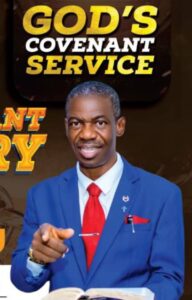
Prophet Toye Ebijomore