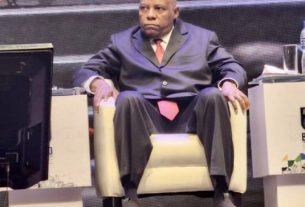
By Steve Otaloro
It was none other than the illustrious Dr. Nnamdi Azikiwe, the immortal Zik of Africa, who, in the fevered constitutional caucuses of the 1950s, rose in vehement opposition to Chief Obafemi Awolowo’s sagacious proposal to entrench a secession clause in the embryonic republic’s founding charter. Azikiwe contended that such a provision would sow dragon’s teeth of dismemberment in a nation yet to draw its first sovereign breath. How poignant the irony that, seven decades thence, it is his own kinsmen the indomitable Igbo of south-eastern Nigeria who have become the most impassioned choristers of the very disintegration he laboured to forestall.
Today, the strident clamour for “Biafra” or outright secession issues less from cool-headed empirical diagnosis of an irredeemably failed union than from a visceral, almost primordial animus directed at the incumbent president, Asiwaju Bola Ahmed Tinubu, a Yoruba son of the South-west. The litany of grievances is by now ritualistic: “Ndigbo are marginalised,” “the presidency has been denied us,” “systemic exclusion stalks our every endeavour.”
Yet these same aggrieved voices preside over the pulsating arteries of Nigerian commerce from the sprawling emporia of Alaba and Ladipo to the teeming bazaars of Onitsha Main to Kano sprawling city Market and Aba’s Ariaria. An Igbo entrepreneur may plant his banner in the remotest hamlet of Sokoto or the dusty plains of Borno and flourish exceedingly; the reciprocal feat is, more often than not, met with implacable hostility. In this voluntary federation of unequals, commerce remains the Igbo’s most formidable Excalibur, and they brandish it with consummate mastery.
The lamentation over the elusive presidency betrays a profound misreading of the delicate choreography of power in a multi-ethnic crucible. In Nigeria’s raucous democracy, the path to Aso Rock is never blazed by grievance alone; it is forged through intricate coalitions, deft horse-trading, and the patient weaving of alliances that transcend the narrow ramparts of tribe and faith. Until the south-east cultivates the strategic imagination to forge such trans-ethnic bridges rather than retreat into fortified ethnic citadels at every electoral turn, the presidency will remain a tantalising mirage shimmering on the distant horizon.
Even were the heavens to part tomorrow and an Igbo sworn in beneath the green-white-green, the agitation would not dissolve into serene acquiescence. Certain appetites are constitutionally insatiable; the goalposts would simply be uprooted and replanted elsewhere resource control, perpetual rotation of offices, new states, novel grievances yet unborn.
Peaceful Separation Is Not a Novelty in Human History
Far from the apocalyptic demonisation routinely visited upon the notion, separation need not be synonymous with carnage. History’s annals gleam with exemplars of nations that parted with civility and thereafter prospered through salutary rivalry:
• 1776: The American colonies declared independence (war ensued only because the metropolis refused acquiescence)
• 1830: Belgium seceded amicably from the United Kingdom of the Netherlands.
• 1905: Norway dissolved its union with Sweden without a single rifle shot—one of the most courteous divorces ever recorded.
• 1965: Singapore, expelled from Malaysia, transmuted rejection into resounding triumph, consistently eclipsing its former partner in every metric of human development.
• 1993: Czechoslovakia’s Velvet Divorce birthed the Czech Republic and Slovakia in an atmosphere of mutual esteem.
Singapore did not ascend to global pre-eminence by remaining Malaysia’s fractious appendage; it soared the moment liberty was thrust upon it. Norway, Czechia, Slovakia all testify that honourable separation can ignite competitive excellence rather than perpetual enmity.
Across contemporary Europe, no serious multi-ethnic polity permits indefinite domination of one nation by another without either conferring robust autonomy (Switzerland, Belgium, Spain) or facilitating dignified departure (Czechoslovakia, Yugoslavia, the Soviet Union). What Nigerians glibly term “tribes” are, in European nomenclature, nations each possessed of distinct tongues, histories, and collective destinies.
The British, those unrivalled virtuosos of divide et impera, in 1914 forcibly yoked together irreconcilable protectorates and christened the resulting contraption “Nigeria” a name lifted, with casual arrogance, from the river that courses through it. Almost every other colonial possession swiftly cast off the European label and reclaimed its soul through autochthonous nomenclature: Gold Coast became Ghana, Upper Volta metamorphosed into Burkina Faso (“Land of Incorruptible People”), Dahomey was reborn as Benin, Nyasaland as Malawi, the northern and southern Rhodesias as Zambia and Zimbabwe. Yet Nigeria alone clings with almost superstitious fervour to the colonial appellation its peoples never chose.
Even the whispered rumour now circulating in the internet that the country may be rebranded the “United States of Nigeria” strikes one as a timid half-measure, a mere cosmetic tinkering with the master’s discarded stationery. It is still the same inherited address, only with a federal prefix tacked on like an apologetic afterthought. True liberation of the national spirit would demand not a hesitant amendment but a complete, audacious change of name one forged in the crucible of indigenous consensus, untainted by the linguistic residue of empire. Until such a day arrives, we remain tenants in a house whose very title deed still bears the coloniser’s signature.
There is nothing sacrilegious in a people concluding, after a century of arduous cohabitation, that the union no longer serves their highest flourishing. Marriage is not incarceration; when trust, affection, and mutual advantage have withered, civilised peoples dissolve the bond and stride forward unencumbered.
Yet herein lies the ultimate paradox: were a sober, transparently conducted referendum held among Ndigbo tomorrow free from coercion, free from the fevered theatrics of ethnic irredentism the overwhelming majority would, in all likelihood, elect to remain within one indivisible Nigeria. For it is precisely the vastness of this sprawling, populous federation that fertilises their commercial genius; a landlocked, resource-constrained Biafra would circumscribe the boundless horizons their entrepreneurial spirit demands. Moreover, the fiercely republican temperament of the Igbo where every son and daughter nurses legitimate presidential ambition would, in the compressed arena of a smaller polity, ignite interminable leadership convulsions that even the sturdiest democratic scaffolding could scarcely withstand.
Thus a referendum whose outcome reaffirmed unity would, with finality, cauterise the artificial wound of secessionist threat, allowing the Igbo to thrive unchallenged within the larger canvas of Nigeria, while simultaneously extinguishing any lingering pretext for destabilising the nation’s hard-won, if imperfect, cohesion. Separate honourably if you must but first ask the people, in daylight and truth, what they truly desire. History suggests the answer may confound the loudest prophets of disintegration.
Steve Otaloro is a political analyst, governance commentator, and international policy observer.