- President, Putin, Biden, others pay tribute to ex- Soviet Union leader
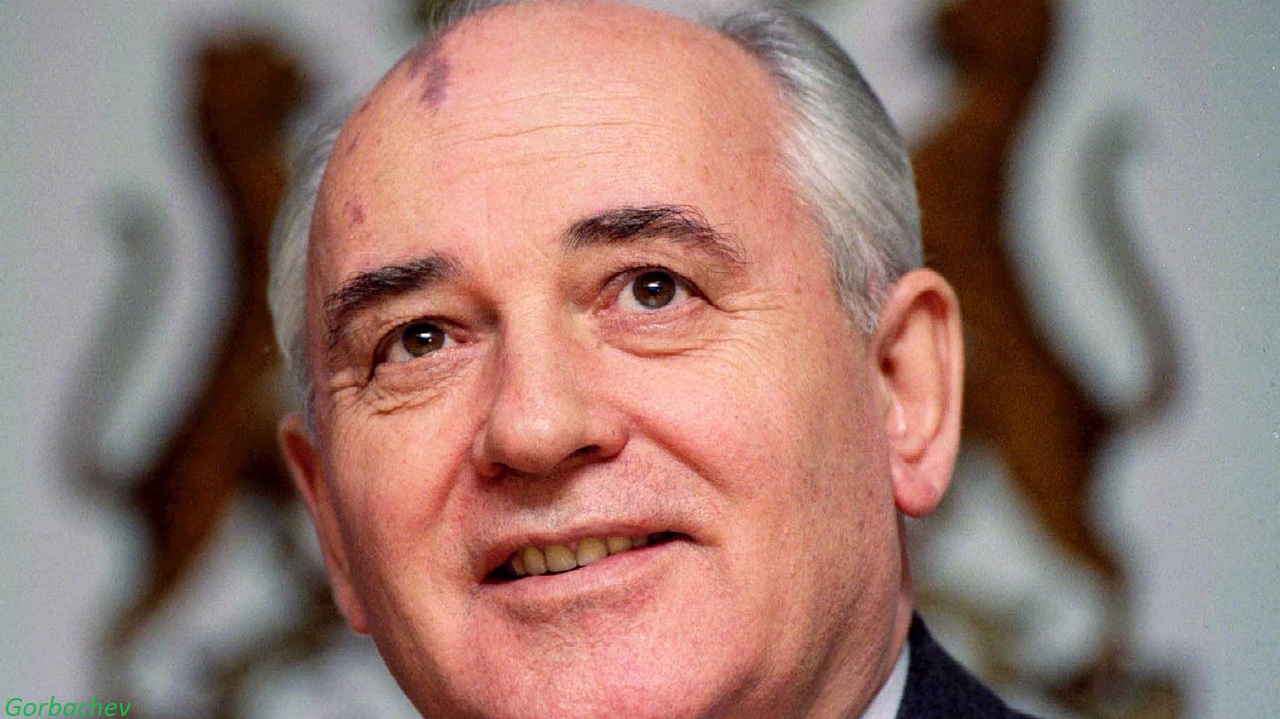
President Muhammadu Buhari has described the last leader of the former Soviet Union, Mr. Mikhail Gorbachev, as “a courageous reformer, who will be remembered for years to come because of his immeasurable contributions to world peace and openness in his own once rigidly closed society.”.
Reacting to the death of Gorbachev at 91 on Tuesday, President Buhari said: “The late Gorbachev was a remarkable gentleman whose reformist agenda had fundamentally changed the Soviet society through his policy of Perestroika and Glasnost, both of which set the stage for economic and political transformation of his own country and that of others in the defunct Soviet Union.”
According to a statement issued by his Senior Special Assistant on Media and Publicity, Mallam Garba Shehu, President Buhari explained that, “although Gorbachev’s political career was consumed by those reforms, history and posterity will be kind to him for placing the interests of the Soviet people above his own ambition.”
According to the Nigerian leader, “the impact of Gorbachev’s legacy was not limited to the former Soviet Union, but it also affected the wider world, such as his voluntary dissolution of the Warsaw Pact military alliance in pursuit of permanent peace in the world.”
The President added that “we cannot forget in a hurry how Gorbachev advocated for the destruction of nuclear weapons by both the former Soviet Union and the United States during his meeting with Ronald Reagan.”
“Although Gorbachev died without achieving his dream of a nuclear-free world, his genuine commitment to durable international peace and security would never be forgotten.”
Russia’s President Vladimir Putin said Gorbachev had a “huge impact on the course of history.”
He had understood reforms were necessary, Putin said – while the head of the UN, António Guterres, hailed a “tireless advocate for peace.”
Putin’s spokesman, however, said Gorbachev had been wrong to believe in “eternal romance” with the West.
Gorbachev took power in 1985, before the Soviet Union collapsed by 1991. He introduced reforms, but was unable to prevent the slow collapse of the union – and many Russians blamed him for the years of turmoil that ensued.
In his message, President Putin said: “He deeply understood that reforms were necessary, he strove to offer his own solutions to urgent problems.”
Putin and Gorbachev had a strained relationship – their last meeting reportedly in 2006.
Most recently, Gorbachev was said to have been unhappy with Putin’s decision to invade Ukraine, even though he had supported the annexation of Crimea in 2014.
The Russian leader’s spokesman, Dmitry Peskov, said Gorbachev had “sincerely wanted to believe that the Cold War would end, and that it would usher in a period of eternal romance between a new Soviet Union and the world, the West. This romanticism turned out to be wrong.”
Peskov then berated Western countries that have opposed the invasion of Ukraine, imposed crippling sanctions on Russia, and provided weapons to Kyiv.
In his tribute, UK Prime Minister Boris Johnson said he admired Gorbachev’s courage and integrity, adding: “In a time of Putin’s aggression in Ukraine, his tireless commitment to opening up Soviet society remains an example to us all.”
U.S. President Joe Biden called him a “rare leader”, while UN Secretary General António Guterres said: “The world has lost a towering global leader, committed multilateralist, and tireless advocate for peace.”
The hospital in Moscow where Gorbachev died said he had been suffering from a long and serious illness.
In recent years, his health had been in decline and he had been in and out of hospital. In June, international media reported that he was suffering from a kidney ailment, though his cause of death has not been announced.
He will be buried in Moscow’s Novodevichy cemetery, the resting place of many prominent Russians. It is not clear whether he will receive a state funeral.
Gorbachev became general secretary of the Soviet Communist Party, and de facto leader of the country, in 1985.
The Nation