
Sources: Chinua Achebe’s Signature as obtained from the Internet, and also from his autograph (signature) as inscribed by him on the title of his famous book: Things Fall Apart
By Ben Ezeohagwu
From graphological point of view, it is a known fact that human personality traits and behavioural pattern can be ascertained and revealed through the graphoanalysis of handwritten documents, such as handwriting (script), signature (autograph) or drawing specimen as opined by Richard Craze (1994) in his book: “Graphology for Beginners”; Robert Holder (1969) in his book: “You can analyze handwriting” and Jide -Oni Charles (2000) in his book entitled: “Principles of graphoanalysis”, among others.
This psycholinguistic science (Graphology or Graphoanalysis) has been researched about as early as 17th century in developed nations of the world, as can be deduced from Camillo Baldi (1622) in his treatise: “The means of knowing the Habits and Qualities of A writer from his Letters”; and later on… in 1872 by Jean Hippolyte Michon (1806-1881) in his book entitled: “The Mysteries of Handwriting and A system of graphology”, among others.
Ezeohagwu (2018) in his revised edition of his book entitled: “As A Man writes” opines that handwriting, signature or drawing is neurological brain- invigoratingly developed and graphically frozen movement pattern on paper, which reflects that every thought, feeling or emotion generated by a handwriter takes a form which embodies and expresses the essential meaning of the thought, feeling or emotion, and also represents a pattern in the brain.
Whenever this same thought, feeling or emotion is continually generated (nourished) becoming habitual, it produces its specific form, this form in due time produces specific human character trait which can be observed in any human neuromuscular movement pattern such as expressed through handwriting (script), signature (autograph) or drawing specimen.
In other words, each personality trait is represented by neurological brain pattern; each neurological brain pattern produces a unique neuromuscular movement that is the same for every person who has that particular personality trait.
However, handwriting, signature or drawing consists of integrated resultant chemistry of the handwriter’s thoughts, feelings, words, desires, emotions and experiences, subsequently translated into the trail of ink features (psychographic features) left on the paper. Those Psychographic features of handwriting, signature or drawing truly reveal who the author is, that is, the manner of man behind the pen that produces such graphically frozen movement pattern of ink features on paper.
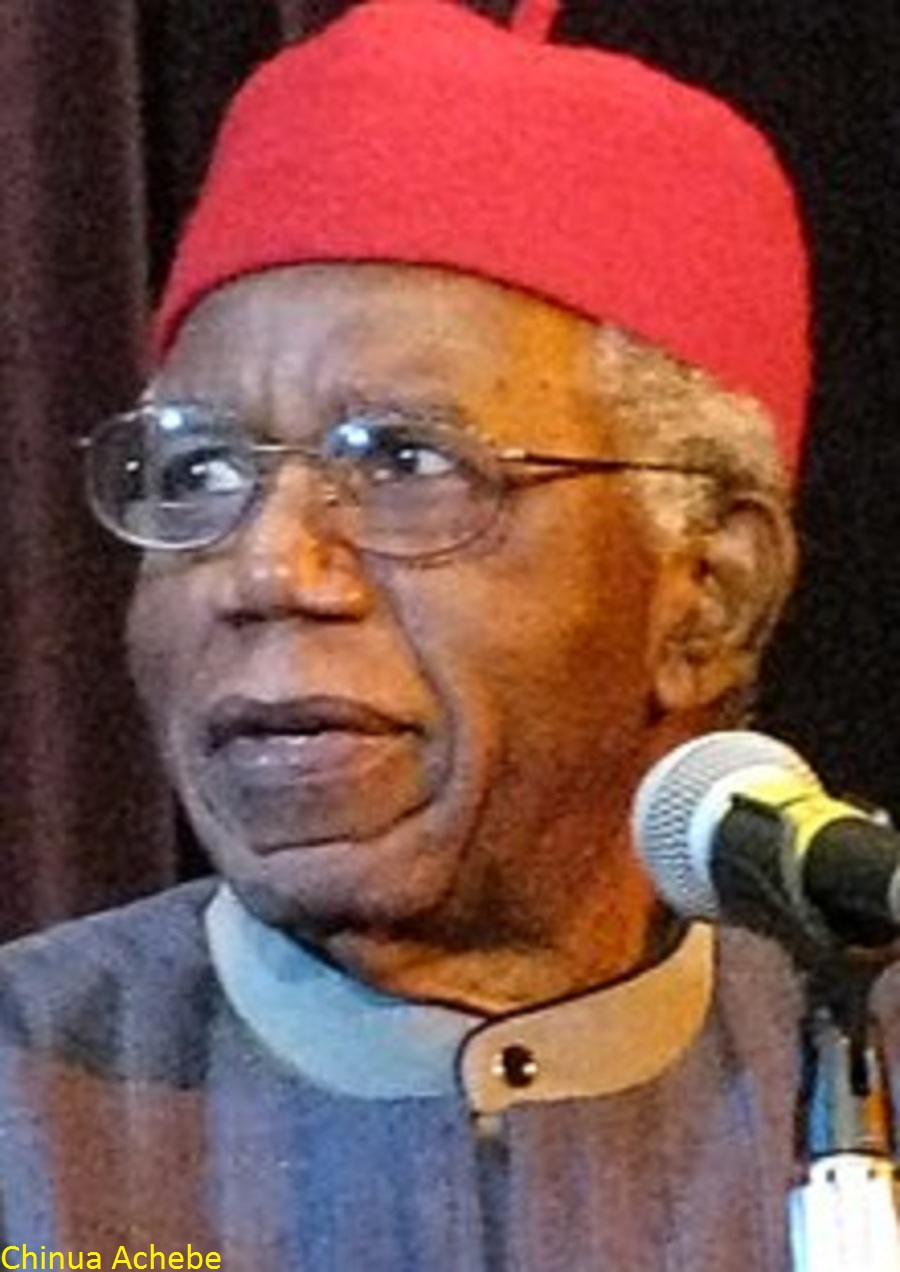
In focus here is the graphoanalysis of the signature of a renowned Nigerian Writer, Chinua Achebe (1930-2013) – who is considered as one of the greatest African writers of his generation.
Chinua Achebe’s signature as I obtained it from Google this year (2019) under the title of “Images” as inscribed by him on his famous book entitled: Things Fall Apart reveals quite vividly his personality traits and behavioural pattern as deduced from graphoanalytic principles of a number of scholarly published works, namely: Jean Hippolyte Michon (1872); Camillo Baldi (1622); Robert Holder (1969); Richard Craze (1994); Jide-Oni Charles (2000), and Ezeohagwu (2018) among others, are as follow:
One of the noticeable signature features of Chinua Achebe is his distinctly big and heavily moderately pressured and bold signature, which means he (Chinua Achebe) is courageous, determined, self-confident, frank, ambitious, enthusiastic, optimistic, expansive and endowed with strong willpower.
He manifests clearly distinct and cursively inscribed signature style – which means he is disciplined, articulate, logical, highly intelligent, thoroughbred, self-effacing, upright, unyielding, modest, lively, diligent, patient, refined, cultured, has a remarkable force of character and willpower, and penchant for perfection and ideal.
His signature also exhibits distinctively inscribed forward slant signature and appealingly curved and balanced features, which means he is creatively artistic and simply expressive, nobly lively, humane, open-minded, generous, ingenuous, incisively decisive and decisively blunt.
He manifests a rectilinear signature, that is… his signature goes straight from the beginning of a line to the end without wobbling in ascending or descending manner which portrays he has a high sense of self-control, he is refined, disciplined and possesses immense grit.
The next psychographic feature of Chinua Achebe’s signature is his considerately spaced and regularly patterned letters, which means he is considerably considerate, broad-minded, impartial, concise, exemplary, consistent and insistent in his views and positions to issues of interest.
His signature manifests uniform size and well-formed middle-zone letters, distinctly penned bigger capital letters and fairly balanced trizonal psychographic features, which denote that he is persistently a stable, diligent and patient individual in the pursuit of his views and goals; he may not readily change his position on issues against his conviction.
Furthermore, his signature exhibits a heavily pressured ‘i’ – dot, and ‘i’ – dot that is fairly moderately high and inscribed fairly to the right of its appropriate position, which means that he is orderly consistent, self – confident , enthusiastic, forward – looking and ambitious in his activities or pursuits.
The stroke breaks in his script are possibly the result of a car crash he had that affected his spine while travelling in 1990 from the eastern part of Nigeria to Lagos, which of course affected his pressure texture rhythm of handwriting flow as such, since the central nervous system is involved in handwriting movement process.
In conclusion, no doubt, Africa is blessed in the personage of Chinua Achebe (1930-2013) whose human capital potentials and literary inventions are only fairly utilized in Africa; while the developed nations celebrate his genius and contributions more than other developing cultures. It is hoped that providence may in future brings such developed human species like him again in considerable quantity and quality to lead further the world of Literature beyond such future prospects.
- Ben Ezeohagwu is Chancellor and Professor of Graphonomy, African American University, Porto-Novo, Republic of Benin; +234 8173175540; E-mail: benezeohagwu@ yahoo.com.