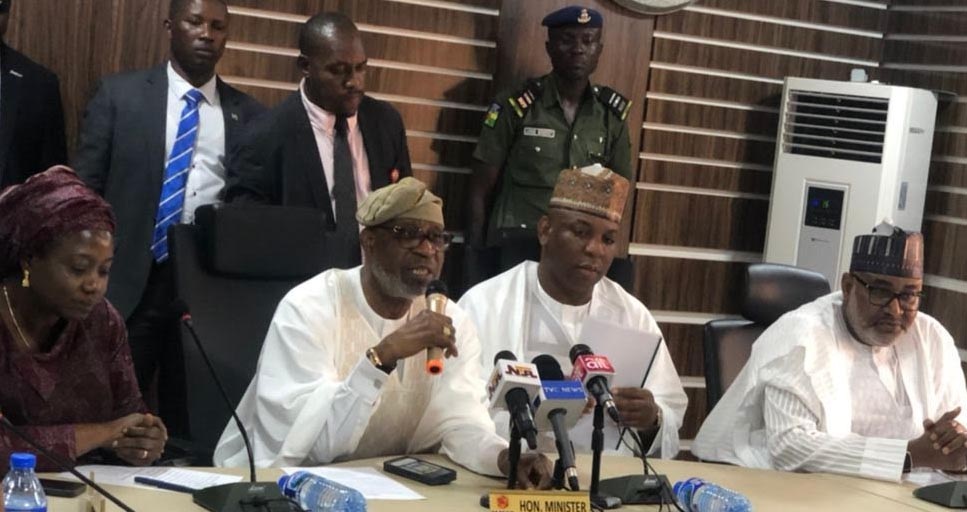
Dele Alake addresses staff of the Ministry
The Minister of Solid Minerals, Dele Alake, has explained the reasons behind his appointment to the Ministry by President Bola Ahmed Tinubu, which stirred controversies.
Speaking Monday on the assumption of office at the Ministry, he credited his appointment to his sense of responsibility, expertise and track record, which he said, propelled President Tinubu’s decision.
He therefore charged every stakeholder to contribute to the drive to achieve set goals, stressing that “there is no time to sit back.”
The Minister stated that he specifically asked the President to assign the Ministry to him contrary to the general perception that he would be given a particular portfolio.
Alake said the much talked about portfolio speculated for him was not necessarily tailored for only him.
He said, “My portfolio has been the upset of the entire cabinet because, given my antecedents, exposure, and experience in the area of perception, information management, and the likes, many people have pigeonholed me for the information ministry. So, we decided to shock everybody.
“Now, if you all can sit down to analyze the global trend of economic development, you would note that the hydrocarbon which is associated with the oil is fading out and the world is moving towards alternative energy such as gas, electric cars, and the rest.
“So, what is the next economic growth factor? It definitely has to be solid mineral.”
Alake further said that it was not about the portfolio or ministry that he is assigned to but the results that he will yield for Nigerians.
“The Ministry of Solid Minerals Development as you know is a sensitive position in this period of economic renewal. The administration is ready to give a new lease of life to the sector.
“The Ministry is key to the administration and the President wanted someone that he trust, and believed would deliver effectively”, Alake said.
“I am going to set an agenda with focus and objectives; we will get the results. Now, we are not going to be allowing civil service structures to stifle us from creativity and flourishing. What we need is attitudinal change.”
The Guardian