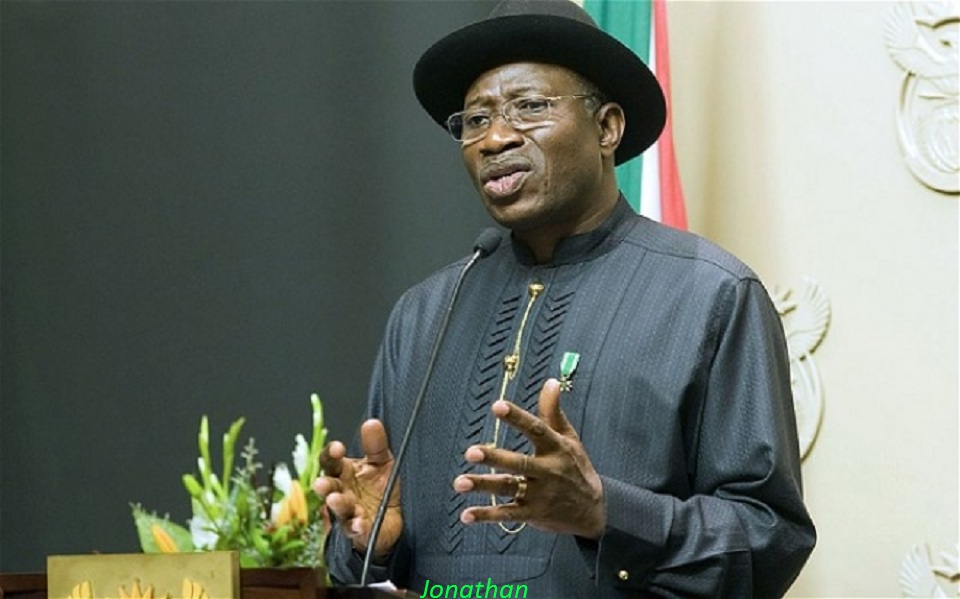
Former President, Dr. Goodluck Jonathan on Tuesday expressed grave concern over the growing apprehension about the likelihood of crises following the 2027 general elections, warning that rising political intolerance, thuggery and ethnic rivalry could threaten Nigeria’s peace and national unity.
Speaking in Abuja at the 2026 Goodluck Jonathan Foundation Peace Conference with the theme: ‘Safeguarding trust and strengthening social cohesion in a competitive political environment’, he condemned the growing tendency among politicians to run political organisations and campaign teams like cult groups, where opponents are regarded as enemies to be attacked, killed or maimed.
The former President warned that Nigeria could not afford to ignore the growing concerns about the direction of its political environment, particularly as the country approaches another fiercely contested general election.
He likened INEC to a referee in a football competition, the judiciary to video assistant referees and the general public to supporters, arguing that citizens must openly reject political excesses rather than limit their democratic responsibilities to voting.
He said: “Rather than the confidence and optimism we should be inspiring, there is growing apprehension about the likelihood of crises that may follow our elections. We must not ignore these concerns by the people, and we must do everything to prevent it as a nation and as people.”
Jonathan particularly condemned the exploitation of young Nigerians as instruments of political violence, warning that the growing unwillingness of politicians to accommodate opposing views was dangerous to democratic survival.
He also expressed concern over conflicting judicial pronouncements on political matters, warning that declining confidence in the Courts could push citizens towards self-help and ultimately anarchy.
H said: “Equally disturbing are controversies surrounding some judicial pronouncements. And I’m a bit careful whenever it comes to judicial pronouncements. What worries the most is courts of the same powers giving different pronouncements on the same matter, and sometimes lower courts sitting as an appellate court to even superior courts. So when ordinary people observe this, people get worried. And a growing concern in Nigeria again is like—I don’t know how to put it down, I wanted to say window shopping of courts, but that is not a correct description. People will go to courts that they think those who operate those courts are their friends, and they can carry something from Sokoto to Yenegoa, from Yenegoa to Kano, and they are making—those of us who are not lawyers start asking what is happening in the country.
“INEC needs to look into some of these and streamline approaches to litigations in Nigeria so that people will have confidence in the courts. When citizens begin to lose faith in the courts and resort to self-help, the consequences can be very, very disastrous. Because if we don’t have confidence in our courts, the next step is self-help, and I will not go to court, so I have to help myself. And that is a sign of anarchy, and we must not get to that point. The descent from a loss of confidence in institutions to anarchy is a danger we must collectively prevent, and we must not allow it to happen.
“There are growing concerns that our coming elections may degenerate into destructive ethnic rivalry at both the national and state levels, because the pattern of emerging issues could now ignite ethnic rivalry. And there’s nothing as bad as when ethnicity or religion is brought into election and become confrontational; you can no longer solve the problem.
“Nothing could be more dangerous to our national existence than the deliberate encouragement of ethnic rivalry. We must never allow political ambition to undermine the bonds that hold us together as one nation and one country, both at the national level and at the state level.
These are precisely the concerns that inform this conference,” he noted.
On leadership recruitment, the former President urged Nigerians to prioritise competence, credibility and public service above ethnic, religious and other primordial considerations.
He said: “Let us choose competence over prejudice, service over personal ambition, and national interest over narrow considerations. Our democracy must produce leaders capable of uniting our people and advancing our collective development.”
Jonathan also called for stronger preventive diplomacy, inclusive economic development and responsible use of digital platforms, warning that artificial intelligence-generated images, fabricated audio recordings and manipulated videos could inflame ethnic and religious tensions during the election period.
The former President also recalled his decision to accept the outcome of the 2015 presidential election and facilitate a peaceful transfer of power, described the experience as an enduring lesson in democratic statesmanship.
He maintained that political competition must never be allowed to destroy the country’s shared identity, declaring that no electoral victory was worth the sacrifice of national peace and no political ambition should outweigh the responsibility to preserve Nigeria.
In his remarks, Chairman, Independent National Electoral Commission (INEC), Professor Joash Amupitan, represented by National Commissioner, Mrs. May Agbamuche-Mbu, declared that the Commission had no preferred political party, favoured candidate or hidden agenda ahead of the 2027 general elections.
Amupitan disclosed that the number of verified voters had surpassed 100 million following the removal of more than 1.6 million invalid records through Continuous Voter Registration and Automated Biometric Identification System audits.
He said the Commission had also introduced operational and technological improvements under the Electoral Act 2026, including the procurement of 57,000 new Bimodal Voter Accreditation System devices and an upgraded IReV platform designed to reject polling unit results that fail arithmetic checks or indicate over-voting.
The INEC chairman further announced that the Commission would conduct a nationwide mock accreditation and result transmission exercise on November 28, 2026, across the 36 states and the Federal Capital Territory to test its preparedness for the 2027 elections.
However, he warned that technological improvements alone could not guarantee credible elections without responsible conduct by political parties and their supporters, condemning recent incidents of political violence, intimidation and attacks on campaign convoys.
Issuing a stern warning to political actors, sponsors and their supporters, Professor Amupitan said security agencies would work with INEC to identify and prosecute those responsible for violent campaigns, while stressing that attacks on election officials would attract decisive legal consequences.
He also cited Sections 96 and 97 of the Electoral Act 2026, which prohibit abusive and inflammatory campaign language, the deployment of thugs and private guards at political rallies, and the use of force to intimidate voters or political opponents.
He noted that the law provides for fines of up to N5 million or 12 months’ imprisonment for offending individuals, while political parties could face fines of up to N10 million for initial breaches. Under Section 148, he added, INEC is empowered to prosecute electoral offenders upon receiving investigative case files from the police.
On election security, INEC Chairman disclosed that the Commission is strengthening collaboration with security agencies through the Inter-Agency Consultative Committee on Election Security (ICCES), while establishing a dedicated Artificial Intelligence Division to monitor digital threats, verify online content and combat misinformation.
Amupitan said the Commission’s loyalty remained with the Nigerian Constitution, Electoral Act and the sovereign will of the electorate, declaring: “We have no preferred party, no favoured candidate, and no hidden agenda beyond ensuring that every valid vote is counted and that the declared outcome reflects the true choice of the electorate.”
While declaring the conference open, former Vice-President, Architect Namadi Sambo described the theme as particularly relevant to Nigeria’s democratic development, stressing that political competition must not be allowed to undermine national identity, weaken institutions or threaten the country’s unity.
Architect Sambo said, “Democracy thrives on trust, mutual respect, credible institutions, and the confidence of citizens as exercised in the political process. While competition is an essential feature of democratic governance, it must never be allowed to undermine our shared national identity, weaken our institutions, or threaten the unity and stability of our dear country.”
He urged political actors to regard differences as opportunities for constructive engagement rather than sources of division, insisting that national cohesion must transcend political affiliations and personal interests.
According to him, “We must deliberately build bridges across our ethnic, religious, and political differences and create an environment where we can all be together. Our democracy must be competitive, but our nation must remain united.”
In his keynote address, former President of the ECOWAS Commission, Dr. Omar Alieu Touray, warned that the central challenge confronting African democracies was how to sustain vigorous political competition without allowing political differences to destroy the bonds holding citizens together.
Touray, who noted that Nigeria’s January 2027 elections would attract considerable regional and international attention, said the country’s electoral outcome would have implications for democratic stability, security and economic prosperity across West Africa.
He said, “How can societies sustain vigorous political competition without allowing political differences to destroy the bonds that hold their people together? Put differently, how do we ensure that democracy produces governments while preserving nations?”
The former ECOWAS Commission President identified six critical conditions for managing political competition peacefully, including national consensus on democratic principles, building public trust, responsible political engagement, preventive diplomacy, inclusive national development and tackling misinformation.
Citing the experiences of Côte d’Ivoire, Kenya, Ghana, Senegal and Sierra Leone, Touray maintained that political competition did not inevitably produce instability, but that the quality of institutions, the behaviour of leaders and citizens’ commitment to democratic norms determined the outcome.
He particularly cited the 2007-2008 post-election violence in Kenya and the 2010 disputed presidential election in Côte d’Ivoire as examples of how political disputes intertwined with ethnic mobilisation could threaten national stability.
Touray also recalled how dialogue facilitated by ECOWAS, the African Union and the Commonwealth helped address political tensions in Sierra Leone following its 2023 elections, resulting in an Agreement for National Unity.
He said the experience demonstrated that “the most successful peacebuilding intervention is often the crisis that never occurs because leaders chose dialogue before confrontation.”
Speaking on behalf of the Minister of Defence, General Christopher Musa, his Special Adviser on Strategic Communications, Mercy Bala, said national security went beyond the deployment of military personnel, acquisition of equipment and strengthening of operational capabilities.
She argued that sustainable security depended equally on citizens’ confidence in public institutions, peaceful relationships among communities and the willingness of Nigerians to coexist despite their differences.
According to her, “A nation may possess considerable military and security capabilities, but where there is widespread distrust, social division and political intolerance, its stability can still be threatened.
“This is why we must recognise that social cohesion is not simply a social development objective; it is an essential component of national security.”
The Defence Minister further warned political leaders against inflammatory language, hate speech, misinformation and divisive narratives, insisting that no political ambition was worth the loss of innocent lives, destruction of property or destabilisation of the country.
He also called for greater professionalism and political neutrality among security agencies, alongside stronger collaboration between government institutions, traditional rulers, religious leaders, civil society organisations and the media.
Earlier, Executive Director of the Goodluck Jonathan Foundation, Ms. Ann Iyonu, said the conference was convened against the backdrop of political realignments, persistent insecurity, economic pressures and declining public confidence in democratic institutions.
Iyonu disclosed that a 2026 Afrobarometer survey released on November 11 showed that fewer than four in 10 Nigerians expressed confidence that the 2027 general elections would be free and fair, while a majority anticipated electoral abuses, including vote buying, political violence and disregard for electoral laws.
She said the findings underscored the urgency of rebuilding public confidence, adding that Nigeria’s ability to conduct peaceful and credible elections was not only a domestic concern but also a regional peace and security imperative.
Tribune