

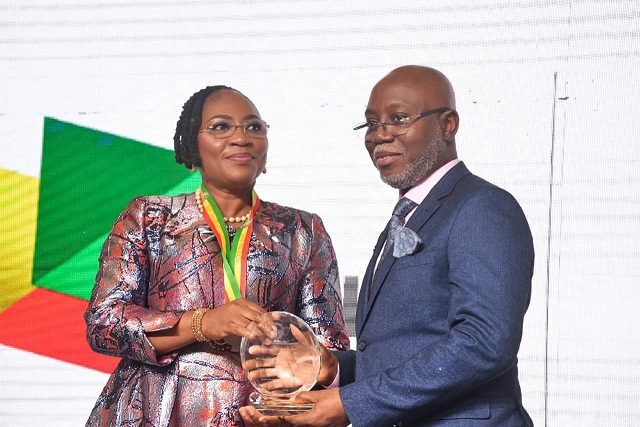
Ondo State Governor, Hon. Lucky Orimisan Aiyedatiwa, has stepped up efforts to attract investment into the state’s oil and gas sector, calling for increased exploration and production to harness its hydrocarbon resources.
He assured prospective investors of a conducive and secure business environment, disclosing that Ondo ranked fifth among Nigeria’s oil-producing states.
Aiyedatiwa spoke on Monday at the 44th Annual International Conference and Exhibition of the Nigerian Association of Petroleum Explorationists (NAPE), held at Eko hotel, Victoria Island in Lagos.
He reaffirmed his administration’s commitment to attracting strategic investments, strengthening institutional collaboration and building mutually beneficial partnerships with reputable industry operators.
He described the petroleum industry as critical to Nigeria’s economic growth and national development, noting that increased production, energy security, economic diversification and industrial competitiveness required renewed commitment to exploration, improved geological intelligence and technological adaptability.
To reinforce confidence in the state as an investment destination, the governor declared: “Ondo State is one of the safest states in Nigeria, one of the most secure states in Nigeria for investment.”
He urged investors to prioritise responsible upstream operations, insisting that the benefits of resource development must translate into employment, economic opportunities and improved living standards.
“The true value of natural resources must transcend production statistics, export earnings and government revenues,” he said.
He further maintained that “the ultimate justification for resource exploitation lies in its capacity to transform lives, empower communities and create enduring shared prosperity”.
The governor said his administration prioritised development interventions in oil-producing communities, particularly in infrastructure, education, healthcare, youth empowerment and sustainable livelihoods.
He described host communities as indispensable partners in petroleum development, stressing that they deserved equitable access to opportunities and meaningful stakes in the benefits of oil operations.
On indigenous capacity, Aiyedatiwa said Nigeria must move beyond being predominantly a resource-producing nation and establish itself as a centre of technical expertise, scientific innovation, technological advancement and industrial value creation.
He called for the integration of universities, research institutions, professional associations such as NAPE and indigenous service companies into emerging opportunities in the energy sector.
He also advocated stronger industry-academia collaboration, knowledge transfer and applied research to equip young Nigerian geoscientists, engineers and other technical professionals with relevant expertise.
Addressing the global energy transition, the governor said the shift towards cleaner and more sustainable energy systems must accommodate the developmental circumstances, energy needs and economic aspirations of emerging economies such as Nigeria.
He described the conference theme,
“Unlocking More Barrels: Driving Reserves Growth Through Exploration, Local Capability and Adaptive Technology”, as timely, identifying technological innovation, resource optimisation, environmental responsibility and energy security as critical considerations in the changing global energy landscape.
He urged participants to develop practical outcomes, actionable recommendations and lasting partnerships capable of stimulating investment, accelerating growth, strengthening indigenous participation, improving operational efficiency, increasing output and expanding opportunities for the next generation of Nigerian energy professionals.
Aiyedatiwa commended NAPE for its contributions to the petroleum industry and reaffirmed the state’s readiness to collaborate with credible investors, industry operators, research institutions and other stakeholders committed to responsible resource development.
Also speaking, the Minister of State for Petroleum Resources (Oil), Senator Heineken Lokpobiri, called for deliberate efforts to strengthen Nigeria’s position in the changing global energy landscape through increased investment, collaboration and sustainable oil production.
He said Nigeria was strategically positioned to benefit from developments in the global energy industry, urging stakeholders to ensure the country was not left behind.
“The global energy landscape is being redesigned. And my question to you is, when will Nigeria’s position be renewed?” he asked.
Lokpobiri disclosed that he was working to connect companies and investment groups operating in Nigeria to deepen collaboration and mobilise funding for planned projects.
He explained that spreading investments across different locations would help sustain operations whenever disruptions occurred in particular areas.
The minister urged industry players to support universities, practical engineering training and manpower development, emphasising that skilled professionals were essential to sustainable exploration.
He said Nigeria must move beyond celebrating its oil reserves and take concrete steps to unlock the resources, bring them to market and improve the economy.
Similarly, the Minister of State for Petroleum Resources (Gas), Rt. Hon. Ekperikpe Ekpo, disclosed that Nigeria’s natural gas reserves stood at 215 trillion cubic feet as of January 1, 2026.
Ekpo, represented by the ministry Director, Elisha Benjamin, described the conference theme as timely and strategic.
He said the reserves offered Nigeria an opportunity to become a leading global gas supplier, stressing the need to translate the country’s resource potential into sustainable production, investment, industrial development and employment.
He identified deliberate investment in exploration, particularly non-associated gas, advanced seismic imaging and artificial intelligence as critical to unlocking the resources.
He also called for stronger local technical capabilities, technology transfer, innovation and indigenous technological leadership.
In her lecture, the Special Adviser to the President on Energy (Oil and Gas), Olu A. Verheijen, stressed the need to dismantle barriers to Nigeria’s progress and unlock greater opportunities for the country.
She called for efforts to “unlock more barriers” to pave the way for “a greater future for Nigeria”.
Earlier, NAPE President, Olajumoke Cecilia Ajayi, called for increased investment in Nigerian professionals and indigenous companies to strengthen the country’s capacity to tackle complex oil exploration challenges.
Ajayi, who is also the Managing Director and Chief Executive Officer of West African Exploration and Production Company, said the discovery of new oil reserves depended on geological expertise, investment, technology and human capacity development.
She stressed the need to move local content from participation to capability, enabling Nigerian professionals and companies to handle increasingly complex technical, operational and commercial challenges.
“If we are to unlock Nigeria’s next generation of barrels, we must also unlock the potential of our people,” she said.
Ajayi identified advanced seismic imaging, basin modelling, artificial intelligence and machine learning as essential tools for modern exploration, stressing, however, that technology could not replace geological expertise.
She called for stronger collaboration among government, industry and academia, as well as regulatory stability, security and reliable data to attract exploration investment.
Earlier, the Country Manager of LMK-Halliburton Nigeria and Chairman of the Conference Planning Committee, Dr Anthony Ofoma, urged oil and gas professionals to embrace technological innovation, continuous learning and collaboration to unlock greater value from exploration.
Ofoma who is also the President-elect of NAPE, said the conference was designed to promote technical knowledge sharing, business development, mentorship and strategic discussions on the future of the energy industry.
Ofoma highlighted the technical sessions, management session on energy security, executive session, technology business forum, exhibition and African Night, urging participants, particularly young professionals and students, to maximise the opportunities for learning, networking and career development.
The Hope


