By Ade Oyeyemi
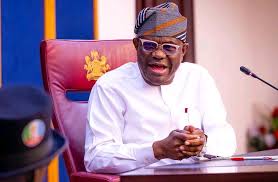
The Minister of the Federal Capital Territory, Nyesom Wike, has denied allegations that he manipulated the 2023 presidential election in the South-South to favour President Bola Tinubu over the Labour Party candidate, Peter Obi.
Wike, who spoke with journalists in Abuja on Wednesday, described the allegation as a “baseless narrative” driven largely by social media reactions to his recent comments on the election.
The controversy followed his appearance on TVC’s Journalists’ Hangout, where he disclosed that the then Peoples Democratic Party G5 governors adopted a strategy aimed at preventing the party’s presidential candidate, Atiku Abubakar, from benefiting fully from the South-South region in the 2023 election.
Wike explained that the group considered Atiku a major political threat because the PDP had significant support in the region. He said the strategy was to allow Obi to benefit from votes in some areas rather than allow Atiku to consolidate the PDP’s traditional support.
He, however, rejected suggestions that the strategy amounted to altering election results or manipulating result sheets.
“People who don’t understand, how can they say I rigged the election? How would I have done it? So, I just took the result sheets, wrote it, and gave it to INEC?” Wike asked.
The FCT minister argued that conclusions about election outcomes could not reasonably be drawn from social media trends or limited observations of polling units.
“I’ve always said social media does not win elections. You have about 176,000 polling units, and probably you have seen 300 polling units and then you rush to the conclusion that so-and-so has won.
“Election outcomes are not predicted this way,” he said.
Wike also questioned whether allegations of electoral manipulation were substantiated during the legal challenges that followed the 2023 presidential election.
“You remember that when they went to the tribunal, did anybody tender any result from Rivers to say, ‘Look, this is the result; we won’?” he asked.
Explaining the G5’s strategy, Wike said the group believed that allowing Obi to take votes in areas where the PDP was strong would reduce Atiku’s advantage.
“We felt that Atiku was more of a factor in that election than Obi. So our strategy was that, make sure that you vote for Obi to win in order to deny Atiku the votes,” he said.
He specifically referred to the South-South, saying the PDP’s strength in the region meant that an outright victory for Atiku could have strengthened his presidential bid.
“South-South was purely a PDP state and so if we had voted for PDP all through, then Atiku would have won. That was a threat,” Wike added.
According to him, Rivers State was treated differently because the G5 believed an Obi victory there could have wider political implications. Earlier reports of his remarks also quoted him as saying the group deliberately prevented Obi from winning Rivers while allowing him to make gains in Edo and Cross River.
Wike further argued that Obi’s popularity on social media did not necessarily translate into enough votes to determine the overall presidential result.
“Obi wasn’t a threat. Obi was merely a threat by social media. Even if Obi had secured Rivers outright, it would not have altered the outcome of the presidential race.
“Assuming Obi won Rivers, add it for him. Would he have won the election?” he asked.
The minister also maintained that political actors could not simply manipulate elections in areas where they lacked grassroots support, saying voters would resist such attempts.
“When you talk about rigging, you cannot rig an election where you are not popular. You cannot. If you try that, then you see what will happen to you. People will resist it,” he said.
Wike said the G5’s actions were based on a political calculation directed primarily at Atiku and insisted that the group’s strategy had achieved its intended objective.
“We had our strategy, and that strategy worked well for us.
“Our major opponent was Atiku Abubakar and if we didn’t do that, something would have happened,” he said.
The G5 comprised Wike, Seyi Makinde, Samuel Ortom, Okezie Ikpeazu and Ifeanyi Ugwuanyi. The group had opposed Atiku’s emergence as the PDP’s presidential candidate and subsequently declined to support his campaign during the 2023 election.
Wike’s latest comments have generated renewed debate over the role played by the G5 in the 2023 presidential contest, with critics interpreting his account as an admission of electoral interference, while Wike maintains that the group’s actions amounted to political strategy rather than rigging.