- laments plight of displaced children, demands stronger action on security
By Michael Ofulue, Osogbo
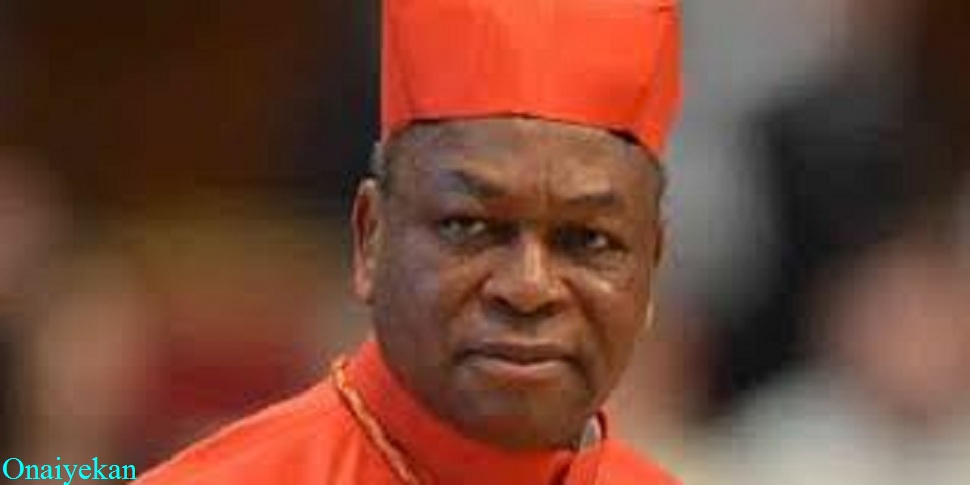
His Eminence, John Cardinal Onaiyekan, has warned the Federal Government that continued failure to adequately protect citizens from insecurity could push frustrated communities towards self-help.
Onaiyekan, who spoke while responding to questions from parishioners of St. Vincent de Paul Catholic Parish, expressed concern over the worsening security situation in the country, particularly the North-East, where years of insurgency have displaced millions of people and left thousands of children vulnerable.
The cardinal said the primary responsibility for protecting lives and property and caring for citizens displaced by violence rests with government, stressing that religious organisations could only complement, but not replace, the statutory responsibilities of the state.
According to him, the Catholic Church has continued to support victims of insurgency because it cannot ignore people suffering in communities where it operates, but the Church does not have the resources or mandate to permanently take over government’s responsibilities.
“Taking care of IDP camps is not the duty of the Church. It is the responsibility of government,” he said.
Onaiyekan said governments controlled enormous public resources and should devote adequate funds to security, protection of citizens and the welfare of internally displaced persons.
He warned that where government failed to provide adequate protection, citizens could become increasingly inclined to seek alternative means of defending themselves
.
The cardinal, however, cautioned against a situation in which individuals and communities would establish competing armed structures, stressing that the constitutional responsibility for maintaining law and order remained with authorised security agencies.
He said the growing calls for community self-defence in some parts of the country were a reflection of the fears and frustrations of citizens who felt inadequately protected.
According to him, when security agencies fail to prevent attacks or respond effectively to threats, communities are often left vulnerable.
He therefore called on government to strengthen the police, military and other security institutions and ensure that they were adequately equipped and deployed.
“If the police and military are properly equipped and deployed, citizens will have less reason to look for alternative means of protection,” he said.
Onaiyekan also referred to the establishment of Amotekun in the South-West, saying the security outfit emerged from efforts by regional governments to improve community protection.
He, however, noted that reported disagreements between conventional security agencies and community-based security arrangements underscored the complexity of Nigeria’s security challenges.
He called for greater investment in security personnel, equipment, intelligence gathering and community-based early warning mechanisms.
.
The cardinal acknowledged measures taken by the administration of President Bola Ahmed Tinubu to improve the welfare and strength of security agencies, including recruitment into the Nigerian Army and efforts to improve police remuneration.
He, however, said improved salaries alone could not address the scale of insecurity confronting the country.
According to him, security personnel who risk their lives to protect Nigerians require not only better remuneration but also adequate equipment, training, intelligence and operational support.
He said government must ensure that security agencies had the capacity to respond quickly and effectively to threats.
Onaiyekan stressed that Nigerians should not be left to carry the burden of insecurity when government has the primary responsibility for protecting lives and property.
He said communities affected by violence needed concrete action rather than promises, adding that government policies and budgetary allocations should translate into tangible improvements in security.
Concern over self-defence
The cardinal also addressed concerns over citizens’ attempts to protect themselves in communities experiencing repeated attacks.
He referred to reports from parts of the country, including Benue State, where residents have expressed fears over attacks and sought locally organised means of protection.
Onaiyekan questioned the frustration of citizens who feel vulnerable when armed criminal elements continue to operate while ordinary residents may face legal consequences for unlawful possession of firearms.
He called for effective and even-handed enforcement of the law, urging security agencies to focus on disarming criminal groups and preventing attacks.
He nevertheless stressed that the solution to insecurity should not be the proliferation of privately armed groups.
Rather, he called for a stronger, better-equipped and more accountable security system capable of protecting communities and reducing the circumstances that encourage citizens to resort to self-help.
Maiduguri Diocese laments humanitarian crisis
Earlier, the Auxiliary Bishop of Maiduguri Diocese, who also spoke on the security situation in the North-East, particularly Maiduguri, highlighted the enormous humanitarian consequences of the prolonged insurgency.
The bishop said about 2.2 million people had been displaced by the crisis, with children constituting a significant proportion of the affected population.
He said the Catholic Diocese of Maiduguri had continued to provide assistance to displaced persons and children despite the enormous financial and logistical challenges involved.
According to him, the Church became deeply involved in humanitarian intervention because it could not ignore the suffering of people affected by violence.
He, however, stressed that the Church’s intervention should complement government responsibility and should not amount to a transfer of government’s statutory obligations to religious institutions.
The bishop said the Catholic Church would continue to assist vulnerable people within the limits of its resources, but warned that the humanitarian burden could become unsustainable if government failed to take decisive action.
Over 5,000 children receiving care
The Auxiliary Bishop said more than 5,000 children affected by the insurgency were currently receiving care, with many having lost one or both parents.
He explained that the prolonged crisis had disrupted families and livelihoods, leaving many children exposed to displacement, hunger, trauma and loss of parental care.
According to him, the humanitarian situation in the North-East required a coordinated response involving the Federal Government, state governments, security agencies, local authorities, religious organisations, humanitarian agencies and affected communities.
He said the Catholic Church would continue to stand with victims of violence, but maintained that religious organisations could not permanently replace government in the provision of security and basic social services.
Onaiyekan also advised Nigerians not to place all their expectations for solving societal problems on religious leaders.
He told the parishioners that bishops, priests and other Church leaders could advocate for justice, support vulnerable people and speak against wrongdoing, but could not replace government institutions
“Don’t send all your problems to the bishop,” he told the parishioners.
He urged citizens to engage their elected representatives directly and demand answers on issues affecting their communities.
According to him, Nigerians should ask political candidates what they intended to do about insecurity, unemployment, education, healthcare and other challenges before voting for them.
He said elected officials should also be held accountable for promises made during election campaigns.
The cardinal further urged Nigerians to reject vote buying, warning that accepting money, food, clothing or other material benefits in exchange for votes could weaken citizens’ ability to demand accountability from elected leaders.
He encouraged voters to focus on issues affecting their communities and demand clear commitments from political candidates.
According to him, elections should provide citizens with an opportunity to question candidates about their plans for security, development, employment, education and social welfare.
He said voters should not merely listen to campaign promises but should continue to monitor the performance of elected officials after elections.
Onaiyekan stressed that democracy provides citizens with mechanisms to demand accountability from those holding public office.
Call for stronger citizen participation
The cardinal called for greater participation by Nigerians in the democratic process, urging citizens to make security and other public-interest issues central to political discussion
He said communities affected by killings, attacks, displacement and destruction of property should demand clear answers from political candidates on how they intended to protect citizens and rebuild affected areas.
He maintained that political office comes with a responsibility to protect citizens and improve their welfare.
Onaiyekan’s intervention combined concern over the humanitarian consequences of insecurity with a call for stronger government action, improved security and greater citizen participation in governance.
He stressed that while the Catholic Church would continue to support victims of violence, the ultimate responsibility for protecting citizens, securing communities and providing sustainable support for internally displaced persons remained with government.