By John Dike, Osogbo
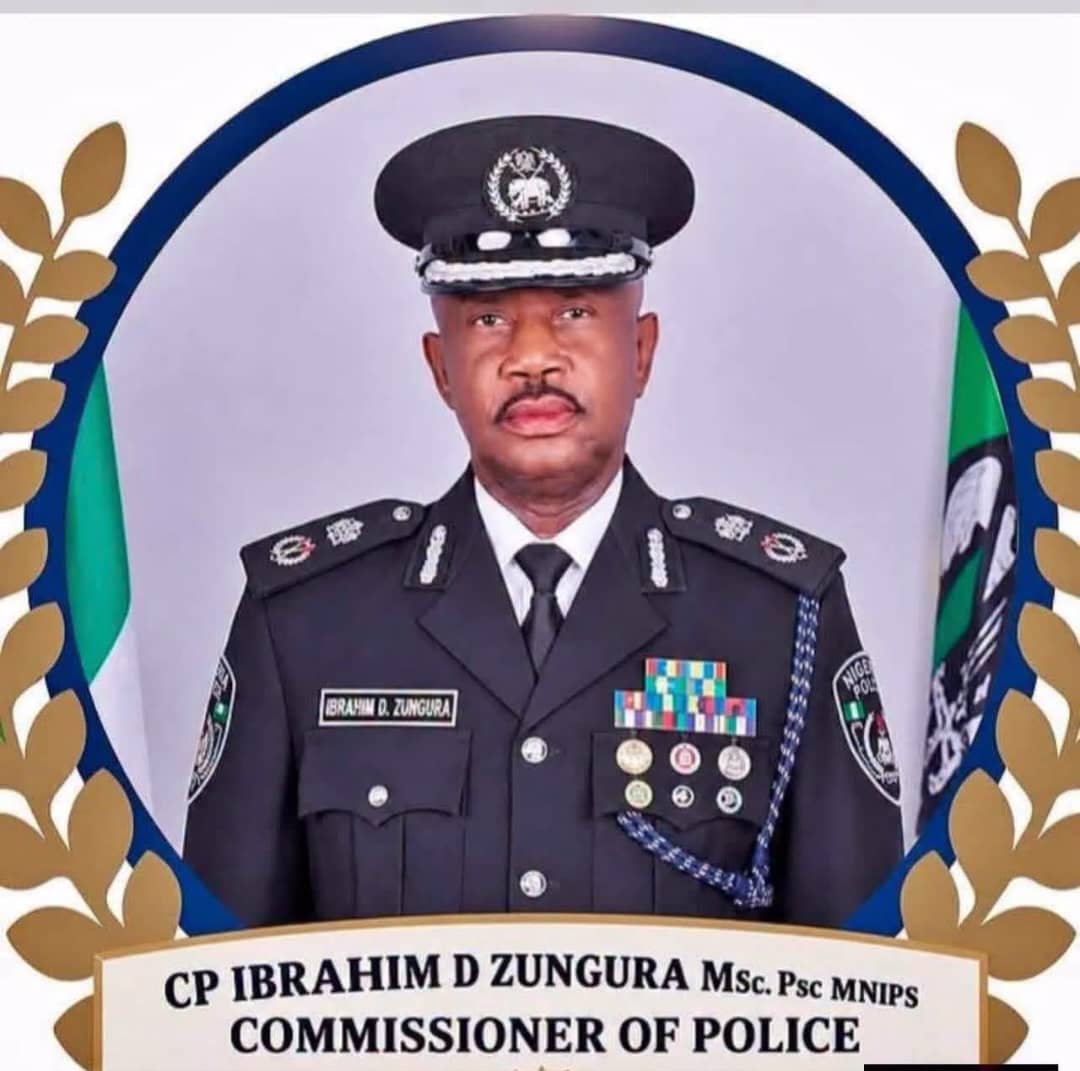
When CP Ibrahim Umar D. Zungura arrived in Osun State as the new Commissioner of Police, he did not have the luxury of a ceremonial beginning.
The usual rituals associated with the arrival of a new police chief—inspection of formations, meetings with officers, courtesy visits and familiarisation with the command, were immediately overshadowed by the realities confronting the state.
Instead of settling first into his office at the Osun State Police Command headquarters in Osogbo, Zungura headed towards Ikire in Irewole Local Government Area, where a deadly incident involving a police patrol team had left two civilians dead and two police officers injured.
It was an unusually symbolic beginning to a new command.
The Kano-born senior police officer arrived at a time when Osun was attempting to close one chapter of political competition following the August 15 governorship election, while the wounds, accusations and security concerns generated by the election were still fresh.
His first major task, therefore, is not simply to fight crime. It is to convince a deeply watchful public that the police can be trusted to protect everybody—irrespective of political affiliation, social status, ethnicity, religion or connection to power.
A state still struggling with the aftermath of an election
The August 15 governorship election has come and gone, but its political consequences continue to reverberate across Osun.
The election produced a victor, but it also left behind disputes over violence, arrests, alleged intimidation, the conduct of security personnel and the treatment of political actors. In several parts of the state, political disagreements have not completely disappeared.
The situation in Ikire has become the most prominent example.
The town, which is in Irewole Local Government Area, has been at the centre of controversy following the deadly encounter involving a police patrol team.
The incident has generated competing narratives and political accusations, making it one of the first major security issues Zungura must confront.
For the new Commissioner, the danger is that if the police response is perceived as partisan or incomplete, it could further deepen public distrust.
If, on the other hand, the investigation is transparent, professional and credible, it could provide an early opportunity for the new police leadership to demonstrate that the command has entered a new phase.
The Ikire incident occurred on August 24 along the Ibadan-Ife Expressway. The police said a patrol team attached to the Ikire Division, accompanied by the Divisional Police Officer, was responding to a distress call concerning the alleged abduction of a man identified simply as Sunkanmi.
According to the police account, the officers came under sudden gunfire after arriving at the location.
The attackers allegedly fired at the police vehicle and succeeded in taking one of the officers’ AK-47 rifles.
The police subsequently alleged that the stolen rifle was used to fire indiscriminately, resulting in the deaths of two civilians.
The deceased were identified as 49-year-old Nurení Sobowale of Odeda Area, Abeokuta, and 43-year-old Saheed Akinrole of Adeagbo Compound, Ikire.
Two police officers were also seriously injured.
The patrol vehicle was reportedly taken away by the attackers before being abandoned and recovered by the police. It sustained multiple bullet holes and a shattered windscreen.
Nine expended ammunition shells were recovered from the scene and secured for forensic examination.
The police later ordered an investigation and deployed tactical and intelligence personnel to track those responsible.
But the incident did not end with the recovery of the vehicle.
It quickly became a political and public confidence issue.
Governor Ademola Adeleke demanded disciplinary action against the Ikire DPO, saying the officer had been “fingered” in the incident and had allegedly become a threat to the people he was posted to protect.
“Based on all details of the attacks, I request immediate commencement of disciplinary action against the DPO. He has become a threat to the people he was posted to protect,” the governor said.
The demand has placed Zungura at the centre of an uncomfortable question: Can the new Commissioner investigate his own officers objectively while also satisfying a public increasingly demanding police accountability?
His handling of the matter will likely be one of the earliest indicators of the kind of Commissioner he intends to be.
Adeleke’s warning and the political dimension
During Zungura’s courtesy visit to the Government House in Osogbo, Governor Adeleke did not hide his concerns.
The governor told the new Commissioner that Osun had passed through turbulent political moments and that post-election reconciliation remained incomplete in some areas.
He asked the new police leadership to rebuild public confidence by addressing what he described as police conduct that had created the impression that the Force was partisan and anti-people.
“Let us rebuild public trust in the police. You must make deliberate efforts to remove many areas of current police conduct that paints it as partisan and anti-people,” Adeleke said.
That statement is important because the perception of police neutrality is as important as actual neutrality.
A police command may insist that it is impartial, but if large sections of the population believe otherwise, the legitimacy of its operations becomes weakened.
Adeleke also asked Zungura to reorganise some operational units where necessary.
The governor alleged that there was a perception that some units had become a “home base of APC thugs.”
Such allegations are politically sensitive and require careful handling. The new Commissioner must avoid allowing the police to become an instrument in the hands of either the ruling party or the opposition.
The credibility of his command will depend partly on how successfully he can separate policing from politics.
Five demands, one central message
The five demands presented by Governor Adeleke to the new Commissioner can essentially be reduced to one broad request:
Make the police trustworthy again.
The governor asked for the rebuilding of public confidence.
He demanded stronger cooperation between the government and the command.
He called for the reorganisation of allegedly compromised operational units.
He requested full police participation in the Osun State Security Council.
And he appealed for the release of Accord Party members arrested in connection with the post-election crisis, whom he described as political detainees.
Adeleke also promised government support for police operations without political conditions.
“Our government is ready to support police operations without any string attached. What we seek is fair policing,” he said.
The message is clear.
The state government wants cooperation, but it also wants accountability.
That places Zungura in a delicate position.
He must cooperate with the government while demonstrating that the police command is not under political control.
Zungura’s answer
The new Commissioner appears to understand the nature of the challenge.
He promised that professionalism, impartiality, fairness and respect for the rule of law would define his leadership.
“I promise to work with the state government for peace and stability of the state. I will be fair to all and I will prove my commitment in the next few weeks. Osun is a peaceful state and we will work to address all outstanding issues,” Zungura said.
He also promised to establish a stronger relationship between the police and residents.
That promise will be particularly important.
Policing cannot be effective in a society where residents are afraid to approach officers, unwilling to provide intelligence or convinced that their complaints will not receive fair treatment.
For Zungura, rebuilding that relationship could be one of his most important achievements.
The police cannot fight crime without the public
Modern policing depends heavily on information.
Criminals rarely announce their plans to the police.
Information usually comes from residents, community leaders, transport workers, traders, landlords, youth groups and ordinary citizens.
When those groups trust the police, intelligence flows.
When they do not, criminal activities can flourish in silence.
Osun therefore needs a police command that residents can approach without fear.
Zungura’s promise to restore public confidence must translate into practical measures.
Police stations must become places where complaints are received professionally.
Victims must be treated with dignity.
Suspects must be investigated according to the law.
Officers who abuse their authority must face disciplinary measures.
And police personnel who perform their duties professionally must be protected from political interference.
Internal discipline will be crucial
One of the most difficult responsibilities before the new Commissioner will be managing his own officers.
A police Commissioner can demand obedience from political actors and members of the public, but he must also demonstrate that the same law applies within the Force.
The Ikire controversy has already brought this issue into sharp focus.
If an investigation establishes wrongdoing by any officer, the public will expect appropriate action.
At the same time, officers accused without sufficient evidence will expect protection against unjust punishment.
The balance is difficult but essential.
A Commissioner with investigative experience
Zungura brings more than three decades of policing experience to Osun.
Born on February 1, 1967, he joined the Nigeria Police Force on June 10, 1994. He holds LL.B and BL qualifications and has served in various capacities within the Force.
His previous experience includes work at the Force Criminal Investigation Department in Abuja, where he served as DCP, General Investigation.
That background is significant.
Osun’s immediate challenges require a Commissioner who understands not only conventional policing but also criminal investigation, evidence gathering, intelligence coordination and prosecution.
The Ikire investigation, in particular, will require careful evidence management if the truth is to be established beyond political narratives.
The challenge of political policing
Perhaps the most difficult challenge facing Zungura is preventing the police from becoming trapped in Osun’s political battles.
The state has historically witnessed intense competition among political parties. Election periods can turn ordinary political disagreements into security threats.
The police are often caught between competing accusations.
One side may accuse them of favouring the government. Another may accuse them of protecting the opposition. A third group may accuse them of selective arrests.
The Commissioner therefore needs to establish clear operational principles.
The same offence must attract the same response regardless of who commits it.
A member of the ruling party who breaks the law must face the law. An opposition politician who does the same must also face the law.
The police cannot afford double standards.
Community policing and traditional institutions
Another area Zungura may need to strengthen is community-based security cooperation.
Osun has a strong network of traditional rulers, community leaders, youth organisations, market associations, transport unions and religious institutions.
These structures can provide valuable early-warning intelligence.
A Commissioner who engages them regularly can build a network that extends beyond police stations.
The objective should not be to turn citizens into vigilantes.
Rather, it should be to establish reliable channels through which suspicious activities, emerging conflicts and security threats can be reported before they become violent.
The wider security picture
Beyond political violence, Zungura will inherit the routine security responsibilities of Osun.
Kidnapping, cult-related violence, robbery, land disputes, communal conflicts, domestic violence, drug-related offences and other forms of criminality require sustained attention.
The command will also need to maintain security along major highways and around commercial centres.
Osun’s strategic position in the South-West means that its roads connect several important states.
The Ibadan-Ife axis, for example, is an important transportation corridor. The security of such routes affects not only Osun residents but travellers and businesses moving across the region.
Working with other security agencies
The governor’s request that the police participate fully in the State Security Council also highlights another important issue: no single security agency can effectively secure Osun alone.
The police must work closely with the Nigeria Security and Civil Defence Corps, Amotekun Corps, military formations, intelligence agencies, local authorities and community structures.
Information sharing is particularly important.
When agencies operate in isolation, intelligence gaps can emerge.
When they coordinate, threats can be identified and addressed more quickly.
Zungura’s leadership will therefore be judged partly by how well he builds inter-agency cooperation.
The burden of public expectation
There is another challenge that cannot be ignored: expectations.
A new Commissioner often arrives with public expectations that every security problem will immediately disappear.
“That is unrealistic.
Crime cannot be eliminated overnight, but confidence can be built gradually.
People can begin to see improvements in police response times.
Complaints can be handled more professionally. Investigations can become more transparent. Community meetings can become more regular.
Officers can become more visible in vulnerable areas.
And cases can be followed through to prosecution.
These are the small but measurable changes through which public trust is usually restored.
The first few weeks will matter
Zungura has already promised that he will demonstrate his commitment within his first few weeks.
Those weeks will be important.
His handling of the Ikire investigation will be watched closely.
His relationship with the state government will be scrutinised.
Political parties will monitor the conduct of the command.
Civil society organisations will demand accountability.
And ordinary residents will judge him based on their everyday encounters with police officers.
For the Commissioner, the task is therefore not merely to issue directives from the Command headquarters.
He must establish a culture.
A culture in which officers understand that professionalism is not optional.
A culture in which political connections cannot determine police action.
A culture in which residents know that the police exist to protect them.
A chance to reset the command
Every new police Commissioner inherits problems from his predecessor.
But every new Commissioner also gets an opportunity to reset the institution.
For Zungura, the timing could hardly be more demanding—or more significant.
He has arrived after a politically intense election.
He has inherited a command facing questions about public confidence.
He has walked directly into the controversy surrounding Ikire.
He has been presented with five demands by the state governor.
And he has publicly promised impartiality.
The question now is how those promises will translate into action.
Will the new Commissioner be able to investigate sensitive cases without fear or favour?
Will he discipline erring officers while protecting those who perform their duties professionally?
Will he prevent political actors from influencing policing?
Will he rebuild cooperation between the police and communities?
Will he make the command more responsive to residents?
And, perhaps most importantly, will Osun residents begin to believe that the police belong to everyone?
Beyond the election
The August 15 election is now history.
The task before Osun is to prevent its aftermath from becoming a permanent source of instability.
That requires political leaders to lower the temperature.
It requires opposition parties to accept the rule of law.
It requires the government to respect institutional independence.
And it requires the police to remain firmly professional and impartial.
Zungura cannot accomplish this alone.
But as Commissioner of Police, he occupies a critical position in the process.
His warning that the law will catch up with anybody who foments trouble, regardless of status, is the kind of message a state emerging from political tension needs to hear.
The more difficult part, however, will be proving that the warning applies equally to everybody.
That is where the real test begins.
For CP Ibrahim Umar D. Zungura, the road ahead in Osun is unlikely to be easy.
But if he succeeds in turning his pledge of fairness into visible action, his tenure could become more than another change of police leadership.
It could become an opportunity to rebuild the most important currency between the police and the people they serve.