- 2.33m voters, 3,763 polling units, 332 wards covered by machines for August 15 poll
By John Dike, Osogbo
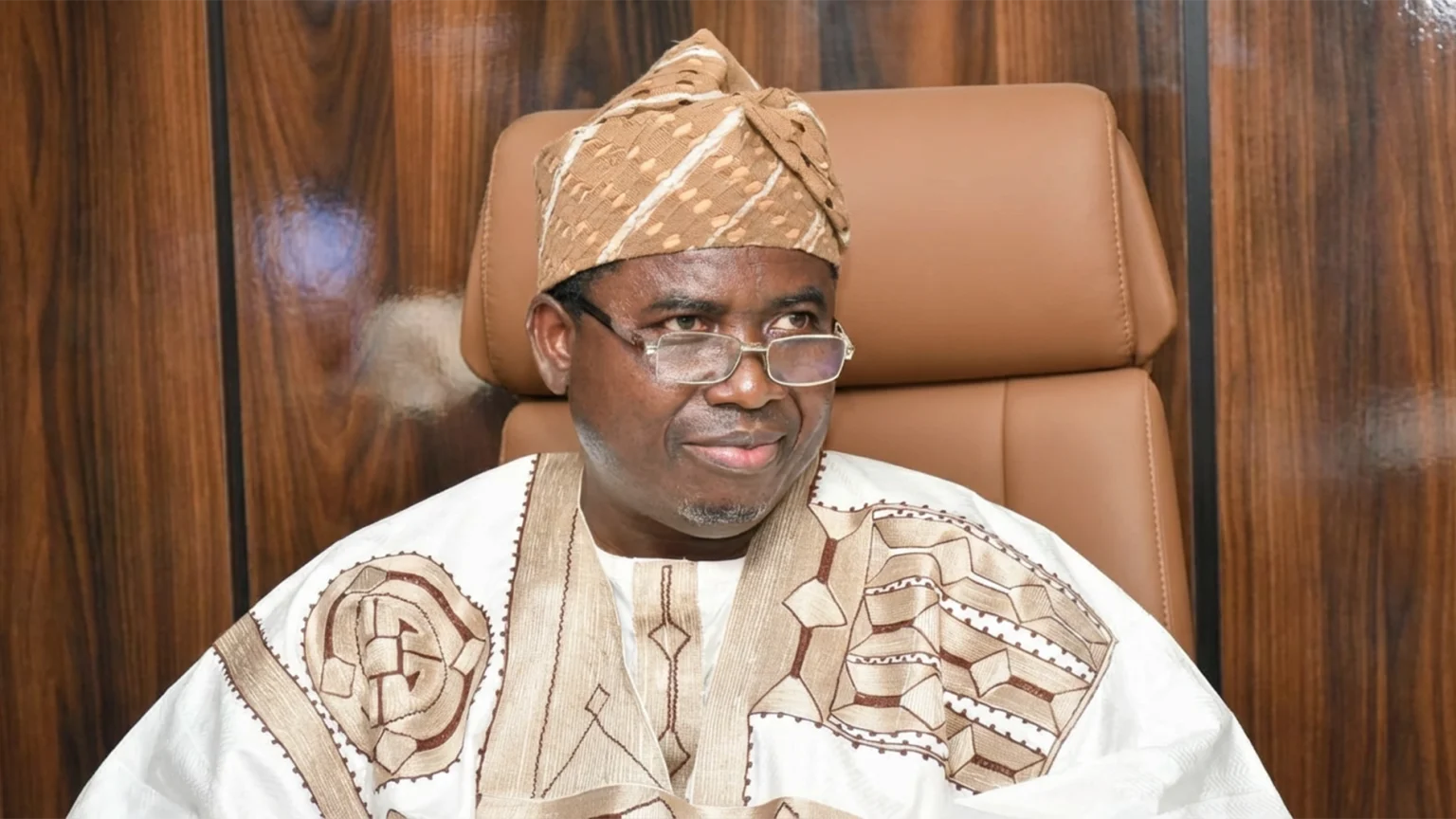
The Chairman of the Independent National Electoral Commission (INEC), Prof. Joash Amupitan, SAN, has assured voters in Osun State that stolen Permanent Voter Cards (PVCs) cannot be used to cast ballots without successful biometric verification on the Bimodal Voter Accreditation System (BVAS).
He said the Commission had taken note of reports of stolen uncollected PVCs in parts of the state, including Okuku in Odo-Otin Local Government Area and Ife Central, but stressed that possession of a PVC alone was not sufficient to enable anyone to vote.
He explained that every voter would be subjected to biometric accreditation before being allowed to vote, making stolen PVCs useless to anyone attempting to use them fraudulently.
The INEC chairman, who spoke on Thursday in Osogbo at the formal signing of the Osun State Governorship Election Peace Accord, said the Commission had put adequate technological, operational and security measures in place to protect the integrity of the August 15 election.
He said serial numbers of stolen PVCs could be blacklisted, while law enforcement agencies were already pursuing those allegedly responsible for the thefts.
According to him, affected voters were being provided with replacement cards or authorised digital verification PVC downloads where applicable.
Amupitan stated that biometric verification through BVAS remained the statutory means of accrediting voters, stressing that there would be no manual accreditation during the election.
He said the Commission was not interested in determining which candidate would win the election, but was committed to ensuring that the process through which the winner emerged was lawful, credible, transparent and acceptable.
The INEC chairman said the August 15 election would be conducted across 30 Local Government Areas and the Modakeke Area Office, covering 332 Registration Areas, otherwise known as wards, and 3,763 polling units.
He disclosed that following the automated biometric cleansing of the voter register, the certified Register of Voters for the election now stood at 2,339,233 eligible voters.
To strengthen the technological process, Amupitan said INEC had deployed 4,427 BVAS devices for the election, including 664 backup units representing a 15 per cent operational reserve.
He said the BVAS machines had been customised for Osun State, while the Commission had also strengthened its result management system to ensure that polling unit results were electronically uploaded after voting.
The INEC chairman disclosed that seven of the nine activities contained in the Commission’s election timetable had been completed, leaving the conclusion of campaigns on Thursday, August 13, and the conduct of the election on Saturday, August 15.
He said the Commission’s administrative timetable had recently been subjected to legal challenges but noted that the Court of Appeal had affirmed INEC’s statutory authority to enforce its election timetable.
Amupitan also disclosed that 322,822 newly registered voters, representing 62 per cent, had collected their PVCs at the close of the primary collection exercise.
He said the Commission had, however, extended PVC collection at its Local Government Area offices until Friday, July 31, to enable more eligible voters retrieve their cards.
According to him, security agencies operating under the Inter-Agency Consultative Committee on Election Security (ICCES) would maintain high-visibility patrols around PVC collection centres.
The INEC chairman expressed concern over reports of violence and threats in some parts of Osun State, warning that insecurity posed a direct threat to the sanctity of the ballot.
He said the Commission had consequently shifted its security strategy from reactive monitoring to proactive prevention, with intelligence-led measures being deployed to polling units and collation centres.
“As Chairman, it weighs heavily on me that the environment for this election must be one of peace, not intimidation,” Amupitan said.
He added: “We will not allow the democratic will of the people to be subverted by fear or force.”
Amupitan said INEC was working with the Nigeria Police Force and the Armed Forces to protect election personnel, materials and voters, warning that any attempt to disrupt the election would be met with the full force of the law.
He also warned political parties, candidates and their supporters against violence, vote-buying, inflammatory rhetoric and other actions capable of undermining the credibility of the election.
On vote-buying, the INEC chairman said the Commission was working with the Economic and Financial Crimes Commission (EFCC), the Independent Corrupt Practices and Other Related Offences Commission (ICPC) and the Office of the Attorney-General of the Federation to tackle the practice.
He disclosed that plainclothes financial intelligence officers would be deployed around polling unit perimeters to detect attempts to buy or sell votes.
“Anyone attempting to buy or sell votes—whether through physical cash or digital transfers—will be arrested and prosecuted under the Electoral Act 2026,” he warned.
Amupitan also announced that INEC would conduct a statewide Mock Accreditation Exercise on Saturday, August 1, across 12 selected local government areas as part of its final preparations for the election.
The exercise will take place in Osun Central in Osogbo, Olorunda, Ifelodun and Boripe; Osun East in Ilesa West, Ilesa East, Oriade and Obokun; and Osun West in Egbedore, Ede North, Ede South and Ejigbo.
He invited candidates, political party representatives, election observers and journalists to witness the exercise, describing it as a final test of the Commission’s technological and operational readiness.
According to him, the mock accreditation would enable INEC to identify and resolve possible challenges before voters arrive at polling units on election day.
Beyond the technological preparations, Amupitan appealed to political leaders to ensure that the Peace Accord signed by the 14 participating political parties was respected at the grassroots.
He said the agreement should not be treated as a ceremonial arrangement or merely an opportunity for political actors to take photographs, but as a genuine commitment to peaceful democratic competition.
“It is not the signatures written today that preserve democracy; it is the character of the leaders who hold the pen,”
Amupitan warned that political campaigns characterised by incitement, private armed groups and attempts to subvert the electoral process could compromise the election even before voting commenced.
He urged candidates to take the message of peace contained in the accord to their ward executives, polling agents and supporters.
According to him, no political victory achieved at the expense of human lives and public safety could be considered meaningful.
“Demobilise the use of violence, curb inflammatory rhetoric, and let the ballot box alone decide,” he urged the contestants.
The INEC chairman said the Commission had also incorporated its Electoral Risk Management framework into preparations for the Osun election.
He explained that the framework had enabled INEC and security stakeholders to identify localised risk corridors, emerging threats and potential flashpoints across the state and develop mitigation measures.
He listed parts of Atakumosa East and West, Boripe, Ede North and South, Ife Central, Ifedayo, Ila, Osogbo, Ifelodun and Oriade Local Government Areas among locations requiring particular attention.
He said the affected areas would receive specialised and high-visibility security deployments.
According to Amupitan, security forces had been issued strict operational directives to prevent violence and disruption of the electoral process while maintaining professional neutrality.
The INEC chairman also stressed the need for an inclusive election, saying the Commission had provided assistive devices at polling units to enable persons living with disabilities and other vulnerable voters to participate.
He listed Braille ballot guides for visually impaired voters, magnifying glasses for persons with low vision, EC40H posters for hearing-impaired voters and priority voting queues for persons with disabilities, pregnant women and elderly voters.
Amupitan, however, warned that all the technological and security preparations would amount to little if eligible voters failed to turn out to exercise their civic rights.
He described voter apathy as a major threat to democracy and challenged political parties and civil society organisations to mobilise voters peacefully for the election.
He urged the people of Osun State to preserve the state’s reputation as the “Land of Virtue” by demonstrating political maturity before, during and after the poll.
The INEC chairman said the August 15 election should serve as an example of democratic maturity ahead of the 2027 general election, when the Commission’s manpower and logistical requirements would increase significantly.
He said the signing of the Peace Accord should send a clear message to the people that political competition could take place without violence.
Amupitan urged the 14 participating political parties, candidates, running mates and their supporters to adhere strictly to both the letters and spirit of the agreement.
“Let us work together to ensure that Saturday, 15th August 2026, is remembered not for division or discord, but as a triumph of the Nigerian democratic spirit,” he said.
The Peace Accord signing was attended by former Head of State and Chairman of the National Peace Committee, General Abdulsalami Abubakar; Sultan of Sokoto, Muhammadu Sa’ad Abubakar III; Convener of the National Peace Committee, Bishop Matthew Hassan Kukah; Osun State Governor; Inspector-General of Police; traditional rulers; political party leaders and candidates; security agencies; civil society organisations; religious leaders and members of the media.
The accord is expected to bind participating political actors to peaceful campaigns and conduct before, during and after the August 15 governorship election.