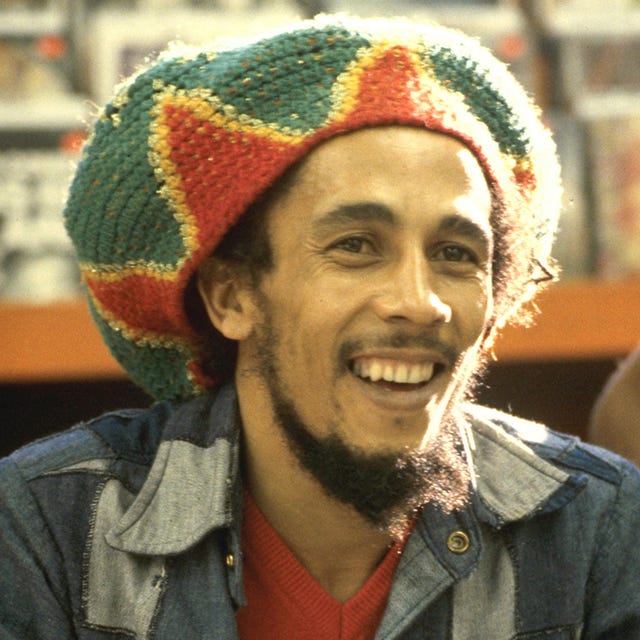
Photo Credit: Getty Images
*Bob Marley Was ARRESTED for His Songs.*
*But what he did in Court SILENCED Everyone.*
*The place was Kingston, Jamaica, and the date was February 23rd, 1979 – 9 a.m.*
*Bob Marley sat in the defendant’s chair at the Supreme Court of Jamaica, facing charges that could have ended his career forever.*
*The man who had brought peace to warring political factions, whose music had spread love across the globe, was being accused of inciting public disorder through seditious musical content.*
*The prosecutor, Attorney General Harold Morrison, stood before Judge Patricia Williams with a stack of Bob’s lyrics, ready to prove that reggae music was a threat to Jamaican society.*
*What would happen over the next 3 hours would become one of the most extraordinary moments in legal history and change how the world viewed the relationship between music and freedom.*
*Three weeks earlier, January 30th, 1979, the trouble had started during a concert at National Stadium at Kingston.*
*Bob Marley had performed Get Up, Stand Up and dedicated it to the people suffering under political oppression.*
*The crowd had responded with such passion that some politicians became nervous when Bob sang the lines, “Get up, stand up, stand up for your rights. Get up, stand up, don’t give up the fight.”*
*15,000 people had stood as one, raising their fists, demanding change. It was a moment of unity that transcended political parties, but it terrified those in power.*
*The next day, member of Parliament Charles Davidson filed a complaint with the Attorney General’s office. The charge was that Bob Marley was using music to incite revolution.*
*Davidson argued : his lyrics are seditious. He is teaching young people to rebel against authority, to challenge the government, to disrupt social order. This isn’t entertainment, but political manipulation disguised as art.*
*Within a week, Bob Marley was served with an arrest warrant.February 23rd, 9 CABUM, Supreme Court. Judge Patricia Williams looked down at Bob Marley from her bench. She was a 52 years old judge, known for her strict interpretation of the law and had little patience for what she considered disruption of social order.*
*Attorney General Morrison began his opening statement. Your honor, the defendant, Robert Marley, has used his platform as a musician to undermine respect for authority and incite citizens to rebel against lawful government. His songs contain dangerous messages that encourage young people to stand up against authority, to fight the system, and to reject the social structures that maintain order in our society.*
*Morrison held up printed lyrics. In his song, Burnon and Luton, Mr. Marley sings about burning and looting. In I Shot the Sheriff, he promotes violence against law enforcement. In Get Up, Stand Up, he explicitly calls for resistance against authority. Judge Williams listened intently. As Morrison continued, “Music has power, your honor.*
*When someone with Mr. Marley’s influence tells thousands of young people to get up, stand up, fight. Those words have consequences. We’ve seen increased protests, civil disobedience, and disrespect for authority since his music gained popularity.*
*Bob Marley’s attorney – David Chen, stood to respond. Your honor, Mr. Marley’s music promotes love, unity, and social justice, not violence. His lyrics speak about fighting oppression, not fighting people. There’s a difference between encouraging people to stand up for their rights and encouraging them to break the law. Judge Williams looked at Bob Marley, who had remained silent throughout the proceedings.*
*Mr. Marley, do you understand that if convicted, you could face up to 5 years in prison and be banned from performing in Jamaica? Bob stood slowly, and replied : “Yes, your honor, I understand. How do you plead to the charges of inciting public disorder through seditious musical content? Bob’s voice was calm, but clear. Not guilty, your honor.*
*To be continued tomorrow, God willing.*
Top of the day to you 👍