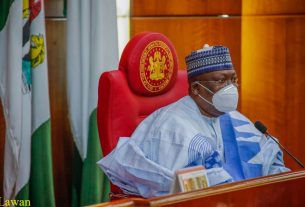
With the defection of Zamfara State Governor, Dauda Lawal, from the Peoples Democratic Party (PDP), on Monday, Nigeria’s ruling party now controls 32 states of the federation, leaving only four to the opposition parties.
The governor said his decision followed extensive consultations with political leaders, elders and stakeholders across the state
He said, in a statement issued on Monday by the Director General, Media and Communication in the Office of the Governor, Nuhu Salihu Anka, that his decision was taken “in the overriding interest of stability, progress and the sustainable development of Zamfara State.”
The statement explained that Lawal’s move from the PDP to the APC came after concerns over the prolonged internal crisis, leadership disagreements and unresolved structural challenges within the opposition party at both the national and state levels.
“These challenges have continued to create uncertainty and distractions that could hinder effective governance and the delivery of democratic dividends to the people of Zamfara State,” the statement said.
The governor was quoted as saying that his primary responsibility remained ensuring peace, security and development in Zamfara, adding that aligning with the APC would provide greater unity, stability and stronger cooperation with the Federal Government.
The final deliberation leading to the defection was held at the Government House in Gusau, under the coordination of the Deputy Governor alongside senior government officials and key political stakeholders.
With the development, the APC now controls 32 states, leaving only four states under opposition parties.
The opposition-controlled states include Abia State, governed by Alex Otti of the Labour Party (LP); Anambra State, led by Charles Soludo of the All Progressives Grand Alliance (APGA); and Bauchi and Oyo states governed by the PDP’s Bala Mohammed and Seyi Makinde, respectively.
Lawal, however, expressed appreciation to members and supporters of the PDP for their support over the years but said prevailing political realities made the decision necessary.
The Zamfara State Government also urged citizens and political stakeholders to remain calm and support the administration as the state “enters a new political phase aimed at promoting unity, stability and development.”