By; Steve Otaloro
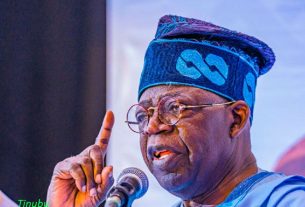
In a bold and consequential policy shift, President Bola Ahmed Tinubu has directed the cessation of the 30% management fee deduction previously retained by the Nigerian National Petroleum Company Limited (NNPCL) on oil revenues. Henceforth, all oil revenues- net of statutory deductions- will be remitted directly into the Federation Account. This policy realignment has far‑reaching implications for fiscal federalism, state resources, and Nigeria’s broader economic trajectory.
Why This Policy Matters
For decades, the NNPCL’s management fee- a significant earmark of gross oil proceeds- reduced the actual amount available for distribution to the three tiers of government (Federal, State, and Local) through the Federation Account Allocation Committee (FAAC). By eliminating this extractive deduction, a larger pool of resources becomes available for equitable allocation.
Expected Benefits
1. Increased FAAC Allocations
By directing more oil revenue into the Federation Account:
-States and Local Governments receive larger monthly FAAC disbursements.
-Enhanced fiscal space can enable improved service delivery in education, healthcare, infrastructure, security, and social safety nets at the grassroots.
This is especially significant given the revenue volatility associated with oil price fluctuations and the historical pressure on subnational budgets.
2. Strengthening Fiscal Federalism
The revised policy affirms the constitutional spirit of fiscal federalism by:
-Reducing opaque deductions that erode revenue available for shared allocation.
-Enhancing transparency in oil revenue flows.
-Giving states greater predictability and autonomy in planning and budgeting.
3. Bolstering Investor and Market Confidence
Nigeria’s economy is gradually stabilizing amidst multiple reforms. The recent moderation of the naira‑to‑dollar exchange rate reflects increased confidence in the policy environment. Redirecting all oil revenue to the Federation Account enhances fiscal clarity- a key signal to domestic and foreign investors seeking predictable revenue governance.
Does More Money Mean Real Progress?
The answer is optimistic but contingent. More revenue allocation to states and local governments can translate into real progress if paired with:
-Effective fiscal governance at all levels of government.
-Rigorous accountability mechanisms for budget implementation.
-Strategic prioritization of social and economic development projects.
In this context, President Tinubu’s policy sets up the enabler- expanded fiscal resources- but the outcome depends on responsible stewardship by subnational governments. When properly managed, larger FAAC allocations can fuel:
-Agricultural productivity through rural infrastructure.
-Healthcare improvements via targeted funding for facilities and workforce.
-Education outcomes through school reinvestments and scholarship support.
-Resilience against socio‑economic shocks through locally designed safety nets.
A Renewed Hope for Nigeria’s Fiscal Future
President Tinubu’s decision aligns with broader reforms aimed at stabilizing Nigeria’s economy and decentralizing revenue benefits. This includes:
-Exchange rate unification to restore competitiveness.
-Reinvigorated investment in key sectors.
-Policy consistency that reassures markets and citizens alike.
Critically, this move signals a commitment to equitable resource sharing and greater federal‑state collaboration- foundations without which economic growth cannot be inclusive or sustainable.
Conclusion
By ending the NNPCL’s 30% management fee deduction and ensuring all oil revenues flow into the Federation Account, President Tinubu has taken a decisive step toward enhancing Nigeria’s fiscal integrity and expanding development funding for states. This decision is not merely accounting reform; it is a strategic recalibration that, if matched with strong public financial management and governance across all levels, could meaningfully advance socio‑economic progress for millions of Nigerians.
Steve Otaloro is a public commentator and policy analyst specializing in developmental goals, fiscal governance, and Nigeria’s socio-economic progress. He writes extensively on government reforms, public finance, and strategies for sustainable and inclusive growth.