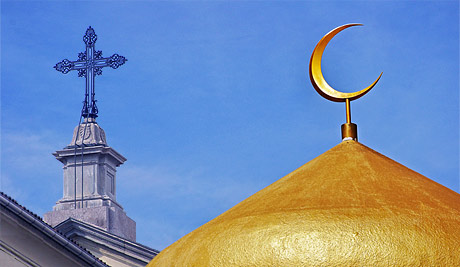
Christians and Muslims in Nigeria have commenced their 2026 fasting season almost simultaneously, in what religious leaders describe as a rare convergence of Lent and Ramadan.
Leaders of both faiths described the development as unique and urged followers to use the season to draw closer to God, love one another, and pray for peace and development in Nigeria. They advised the faithful to see the period as a time for spiritual renewal, seeking forgiveness, mercy and engaging in sacrificial giving.
In Christendom, Ash Wednesday, observed yesterday, marks the beginning of Lent, a 40-day season of reflection, fasting and renewal. Across the country and around the world, churches gathered worshippers for morning Mass and evening services to commence the sacred journey.
On Ash Wednesday, millions of Christians attended church services where ashes were placed on their foreheads in the shape of a cross as a symbol of repentance, humility and spiritual renewal ahead of Easter.
For Muslims, Ramadan is one of the holiest months of the year, during which the faithful fast from pre-dawn to sunset for 29 or 30 days.
Speaking on the commencement of Lent yesterday, a Catholic priest at St Patrick Catholic Church, Isolo, Lagos, Fr John Okerulu, called for greater attention and support for the less privileged in Nigeria.
Okerulu said, “Lent is a time of spiritual retreat and rejuvenation. Just as we change our car engine oil, eat and sweep to maintain our environment, our souls also need spiritual maintenance. We get stained, we sin and do things that are not good for the soul. Lent is a time to look inward and retreat in order to care for our souls, and we do this through self-denial.
“We fast and abstain from food to discipline the flesh so that the soul may be lifted to divine things. Apostle Paul said the flesh wars against the soul, so we put our flesh under control so that the soul can prevail. Above all, fasting teaches us to abstain from sin. Lent is not limited to putting ashes on the forehead; the ashes remind us that we are dust and will return to dust. Often, we become engrossed in the pursuit of temporal things and forget why God created us, where we came from and where we shall go.”
He emphasised the need for sacrificial living to make society better for all, adding that leaders must shun greed and govern with the fear of God.
He added, “When we fast and refrain from eating, we must remember that there are people who do not have food. We should give to them, be kind and embrace charity. If we cultivate this virtue, Nigeria will be a better place.”
We must do good to everyone, not only Christians.”
The Parish Priest of St Jude Catholic Church, Rev Fr Patrick Okoye, said the parish held three Masses for schoolchildren and adults to prepare them for the Lenten journey.
He explained that the Lenten season is rooted in ancient Jewish and early Christian customs of using ashes to symbolise repentance, mourning, and human mortality, as reflected in Genesis 3:19.
Okoye noted that Ash Wednesday was formally established in the Catholic Church in the 8th century and evolved from earlier public penance practices in the 4th to 6th centuries, when individuals guilty of serious sins began a period of exclusion from the Church.
Meanwhile, a cleric in Ilaro, Ogun State, Sulaimon Olorungbebe, said Ramadan is a period for Muslims to draw closer to Allah and assist the less privileged in society. He encouraged well-to-do Muslims to extend support to the needy, including non-Muslims around them.
He stressed that the 2026 Ramadan calls for discipline, noting that the country is going through difficult times and needs prayers.
“Fasting is divine for the soul. Ramadan is a detox not just for the body, but for the heart,” he said.
A student of the Federal Polytechnic, Ilaro, Opeyemi Ismail, expressed optimism that the holy month of Ramadan would bring blessings to all.
Also speaking, the Director-General of the Institute for Peace and Conflict Resolution (IPCR), Dr Joseph Ochogwu, called on Nigerians to reject extremism and embrace unity as Christians and Muslims observe Lent and Ramadan concurrently.
In a statement yesterday, Ochogwu described the rare coincidence of the two sacred seasons as a unique opportunity to strengthen harmonious relationships and promote peaceful coexistence across religious divides.
He noted that both Lent and Ramadan are marked by fasting, prayer, sacrifice and deep spiritual reflection, stressing that the shared values inherent in the observances should inspire greater understanding and tolerance among Nigerians.
According to him, the alignment of the holy seasons serves as a reminder that despite religious differences, Nigerians share a common humanity and national identity.
Ochogwu emphasised the need for citizens to reject extremist interpretations of religion and focus instead on moral teachings that unite communities.
He warned that divisive rhetoric and intolerance threaten national cohesion, particularly at a time when the country faces security challenges and social tensions.
He urged religious leaders, community stakeholders, and youth groups to use the period to deepen interfaith dialogue, mutual respect, and a collective commitment to peacebuilding.
The Guardian