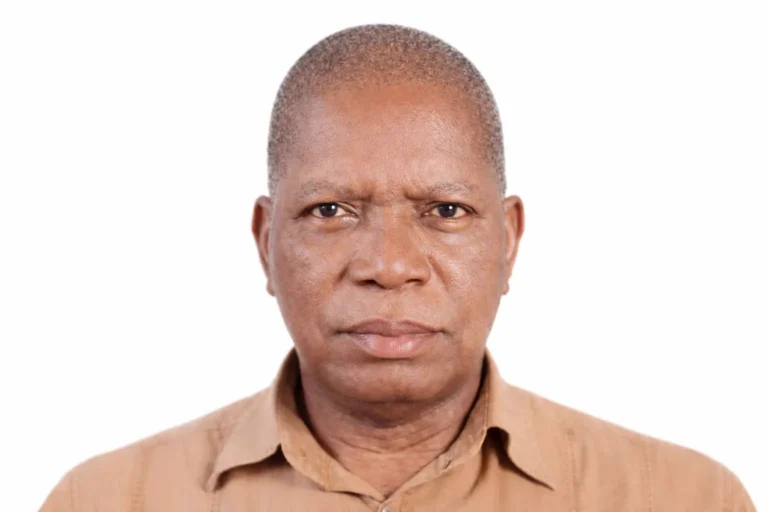
Mr. Lewis Obi, one of Nigeria’s most influential editors and a defining figure of modern feature writing, has passed away. In multiple checks, Enugu Metro confirmed from close friends and family members that he died two weeks ago in Enugu, Nigeria. He was 77.
Obi’s death closes the chapter on a journalism career shaped by literary excellence, editorial courage, and a willingness to confront power at great personal risk.
A native of Amurri in Nkanu West LGA of Enugu State, Obi belonged to a generation of editors who believed journalism was both a craft and a civic duty. He began his education at Methodist Central School, Agbani, and ended it at the University of Lagos where he read Mass Communication. Obi was a favourite student of the late communications scholar, Professor Alfred Opubor.
In practice, he first made his mark as a star features writer at the Daily Times, earning a reputation for prose that combined elegance with depth.
Years later, his work caught the attention of the late Chief Moshood Abiola, who recruited him into the Concord Group as Features Editor of National Concord. That move launched Obi into the centre of Nigeria’s most influential media organisation of the era.
By the early 1980s, Lewis Obi had become a senior figure within the Concord Press, rising from features editor to the editorial board before being appointed Editor of African Concord, one of the group’s flagship weekly magazines. From serving as the magazine’s founding editor (which began as Concord Weekly before its rebranding as African Concord), he was upgraded to Editor-in-Chief, and Managing Director, from where he played a catalytic role in its growth and influence.
Under his leadership, African Concord became a major platform for investigative, political and analytical journalism during the volatile late 1980s and early 1990s. The magazine attracted leading Nigerian and international intellectuals as columnists, including Patrick Wilmot, Cameron Duodu, Femi Aribisala, and Frederick Forsyth, and was widely read in Lagos and beyond.
Obi’s leadership coincided with an era of military repression and press censorship, first under General Ibrahim Babangida and later under General Sani Abacha. African Concord’s critical reporting brought it into repeated confrontation with the state. Obi himself was among senior editors briefly detained over its coverage.
The danger escalated after a particularly explosive publication that exposed the activities of Abacha’s feared security enforcer, Hamza Al-Mustapha. According to colleagues, this triggered a manhunt for Obi. Forced underground, he eventually escaped Nigeria through the NADECO route, crossing into Benin Republic before flying to the United States for safety.
Unfortunately, Al Mustafa was able to track down and arrest editor Soji Omotunde and his deputy, Obiora Chukwumba, and to subject them to intense interrogation. Their eventual release came only after Pope John Paul II, during his historic visit to Nigeria in the final years of the Abacha regime, reportedly made a special plea on their behalf. The episode remains one of the stark reminders of the risks faced by Nigerian journalists of that era.
Beyond his courage as an editor, Lewis Obi’s most enduring legacy lies in his role as a mentor of writers. He believed passionately that great journalism begins with great writing. He was known for recruiting talent based on literary ability rather than formal reporting pedigree, insisting that “anyone can be trained to report, but not everyone can write.”
That philosophy shaped an entire generation. Journalists who passed through his newsroom include Dele Momodu, Babafemi Ojudu, Bayo Onanuga, Okey Ndibe, Sam Omatseye, Okey Ifionu, Obiorah Chukwumba, among many others. Legend had it that Obi famously promoted Bayo Onanuga twice within a single year to the envy of his colleagues, later nominating Onanuga to succeed him as editor, with Ohi Alegbe as deputy.
Tributes from his protégés consistently describe him as a rare editor who combined intellectual rigour with generosity of spirit. To many, he was not just a boss, but a gatekeeper who opened doors at decisive moments.
Lewis Obi was married and is survived by his children.
Though he spent his later years away from the media spotlight, his influence never dimmed. In Nigerian newsrooms today — in the standards of writing, the courage to question authority, and the belief in mentoring young talent — the imprint of Lewis Obi remains unmistakable.
Enugu Metro