A former Vice Chancellor of the University of Ibadan, Prof. Idowu Olayinka, has suggested ways to revamp Nigeria’s univsity system to cope with the increasing challenges.
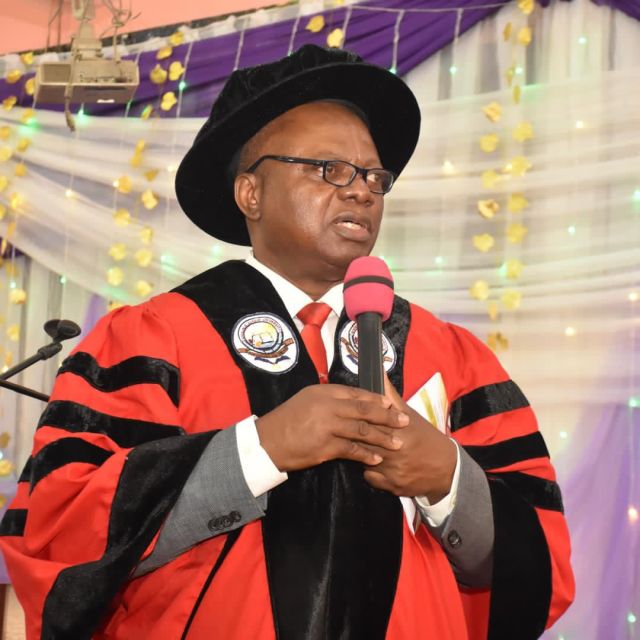
He spoke on Thursday while delivering the 14th Convocation Lecture of Adekunle Ajasin University, Akungba Akoko, where he called for increased investment in the education sector to boost the country’s university admission capacity.
This, he said, is necessary to cater to the growing population and demand for higher education in Nigeria.
However, he warned that admission seekers would continue to seek educational opportunities abroad unless Nigerian varsities make deliberate efforts to expand their capacity to accommodate the growing number of qualified candidates.
His lecture was titled “Strengthening the Academic Tradition in the Nigerian University System.’
He said, “Nigeria’s population is expected to grow by approximately 130 million people by 2050, potentially reaching over 400 million and becoming the world’s third most populous nation, surpassed only by India and China. Moreover, the country has a predominantly young population, with around 43% of its citizens under the age of 15 in 2025. As this large youth cohort reaches university age, the number of potential candidates will surge.”
Stressing the need to maintain a delicate balance between access to university education and the quality and cost of running it, he noted that a university degree remains necessary for securing better employment opportunities and social mobility in Nigeria.
Olayinka identified the distinguishing factors of 21st-century-compliant universities and suggested what should be done to deepen the academic tradition in Nigerian varsities.
The factors include: high-quality human resources, adequate funding, physical and digital infrastructure, innovative and visionary management, pedagogical and intellectual property infrastructure, internationalisation, a stable academic calendar, a merit-based admission process, and the availability of affordable, decent hostels both on and off campus.
He cited contemporary challenges that must be surmounted to further strengthen the varsity system. According to him, these are, inadequate funding, incessant strikes by staff unions, inefficient service delivery, ageing academic staff, degrading teaching and research equipment, inadequate staff development and low morale, increased costs of services on campuses, and a lack of synergy between varsities’ historical roles and the low-quality skills of graduates, which leave gaps in the economy.
Bemoaning the implications of the incessant ASUU strikes in the universities, he disclosed that the wages earned by Nigerian academics are among the lowest on the African continent, which discourages talented individuals from joining academia as a lifelong career.
He warned, “A nation that impoverishes its teachers undermines its future. Nigeria must learn that intellectual labour cannot be chained, and scholars cannot be caged. Lecturers are global citizens who belong to a borderless world of thought, and a government that fails to honour them is, ultimately, dishonouring itself.”
Olayinka suggested the provision of adequate and qualified staff in all departments through a competitive and transparent recruitment process to improve the academic staff-to-student ratio. He added that staff development schemes, including attendance at seminars, conferences and workshops, must be pursued more rigorously to ensure that young lecturers can advance in their careers.
“All teaching staff should continue to be encouraged to take advantage of the ICT facilities in the university, especially in teaching and supervising postgraduate students. Under special arrangements, supervision of postgraduate students should be allowed to continue for up to three years after the supervisor has retired.”
He added, “More efficient use should be made of emeritus professors and other adjunct staff, especially in postgraduate teaching and supervision, as part of their academic activities. A conscious effort should be made to maintain existing teaching and research facilities. There should also be adequate provision for the acquisition of new equipment and facilities to aid teaching and research.”
The don emphasised the need for an appropriate mix of early-career academics, such as Senior Lecturers, and Readers/Professors in a department. He explained that this would allow for the gradual and systematic replacement of retiring academic staff, ensuring the smoother running of departments and the inclusion of young scholars.
In his speech, the Vice Chancellor and Chairman of the event, Prof. Olugbenga Ige, defined the university’s Convocation Lecture as an opportunity to engage with transformative ideas that compel the right authorities to reflect deeply on the future of the university in a rapidly evolving society.
He commended Olayinka for continuously upholding the academic tradition he has always studied and taught, describing him as both a consummate scholar and a visionary administrator.